
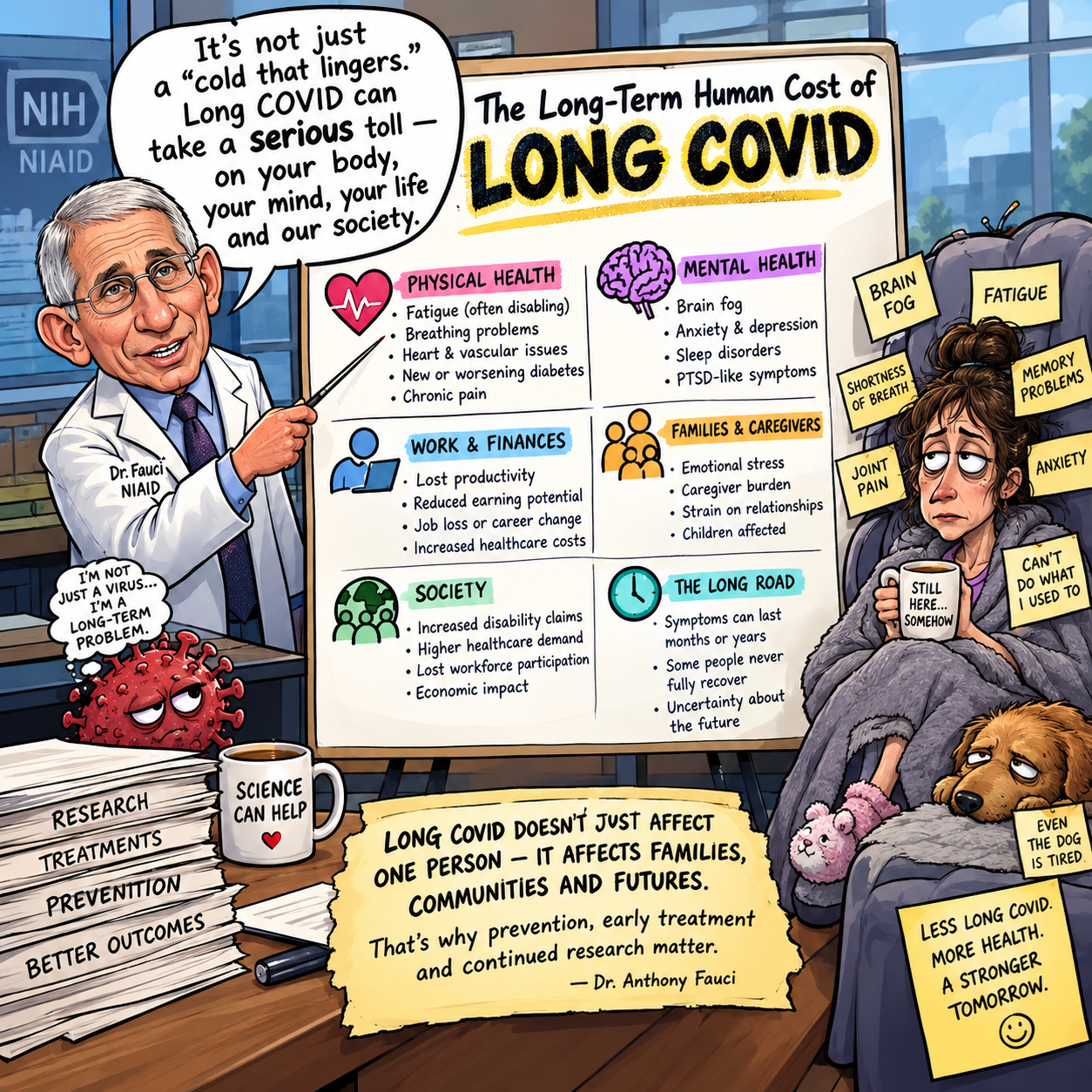
Author: John Murphy, CEO, COVID-19 Long-haul Foundation
Abstract
Background
Long COVID is a complex post-infectious condition that can persist for months or years after acute SARS-CoV-2 infection. Fatigue, cognitive dysfunction, depressive symptoms, sleep disturbance, autonomic abnormalities, and impaired physical functioning frequently coexist, producing consequences that extend beyond conventional measures of disease and mortality. The psychiatric significance of Long COVID lies not only in the prevalence of mood symptoms, but in the possibility that chronic biological dysfunction, reduced functional capacity, social isolation, and economic insecurity interact to produce sustained psychological distress and loss of quality of life.
Objective
To examine the long-term human burden of Long COVID through a psychiatric framework, with particular attention to fatigue, depression, functional disability, social participation, and health-related quality of life; to distinguish biological, psychological, and socioeconomic pathways; and to identify priorities for psychiatric research and clinical care.
Methods
A narrative synthesis of foundational Long COVID epidemiology, psychiatric outcome research, fatigue and quality-of-life studies, and recent reports concerning psychological interventions. The review integrates findings from clinical and population research while distinguishing direct observations from causal interpretations. It is not a systematic review or a completed meta-analysis.
Findings
Long COVID is associated with persistent physical and cognitive symptoms, reduced functioning, and mental-health consequences. Fatigue is a clinically important manifestation that may coexist with post-exertional symptom exacerbation, sleep disturbance, autonomic dysfunction, and mood symptoms. Depression may be both a consequence of chronic illness and a contributor to reduced activity, social participation, and perceived wellbeing. The available literature supports an association between Long COVID and adverse mental-health and quality-of-life outcomes, but estimates vary substantially according to case definition, population, symptom duration, and measurement instrument.
Psychological interventions may improve depression, anxiety, fatigue, and self-perceived health-related quality of life in selected populations, although the evidence does not establish that psychological treatment reverses the underlying biological disease.
Interpretation
The human cost of Long COVID requires integrated psychiatric, neurological, medical, rehabilitation, and social care. Depression should not be used to dismiss persistent physical symptoms, and fatigue should not be assumed to be exclusively psychiatric. Future research must use longitudinal designs, validated psychiatric diagnoses, objective functional measures, patient-reported outcomes, and biological phenotyping to establish causal pathways and identify effective treatments.
Introduction: The human burden beyond infection
The history of infectious disease is often written in terms of acute mortality, hospitalization, and recovery. Long COVID challenges that chronology. For a substantial proportion of affected individuals, the end of viral infection does not coincide with the restoration of health, function, employment, social participation, or psychological wellbeing.
The condition commonly termed Long COVID or post-COVID-19 condition encompasses a wide spectrum of persistent or relapsing symptoms following SARS-CoV-2 infection. The World Health Organization’s clinical definition emphasizes symptoms that arise after infection, persist for at least two months, and are not better explained by an alternative diagnosis, although clinical presentations vary and diagnostic approaches continue to evolve.^1
Fatigue occupies a central position in this syndrome. It is often accompanied by cognitive dysfunction, sleep disturbance, pain, orthostatic intolerance, respiratory symptoms, and post-exertional worsening. The psychiatric consequences may include depressive symptoms, anxiety, demoralization, loss of confidence, reduced social engagement, and disruption of occupational identity.
Yet the relationship between Long COVID and depression cannot be understood through a simple model in which persistent physical symptoms produce an understandable emotional reaction. Such a model risks underestimating the biological complexity of post-infectious illness. Conversely, a purely biological account risks neglecting the psychological and social mechanisms through which chronic illness becomes a long-term human tragedy.
The appropriate conceptual framework is therefore multidimensional: Long COVID may involve biological processes that contribute to fatigue and cognitive dysfunction, while the resulting loss of autonomy, social participation, income, and future expectations can amplify psychiatric morbidity.
The principal thesis of this review is that the psychiatric burden of Long COVID is not an incidental accompaniment to physical illness. It is an important component of the disease’s long-term consequences and should be measured, treated, and researched as such.
1. Long COVID as a chronic illness with psychiatric consequences
1.1 The problem of definition
Long COVID is not a single disease entity with one uniform pathological mechanism. It is a heterogeneous condition with varying symptom clusters, trajectories, and degrees of disability. This heterogeneity creates substantial methodological difficulty when estimating the prevalence of fatigue, depression, and reduced quality of life.
A population study that defines Long COVID by self-reported symptoms may produce a different estimate from a specialist clinic that enrolls patients with persistent multisystem disability. Similarly, estimates of depression depend on whether investigators use symptom questionnaires, diagnostic interviews, medical records, or medication prescriptions.
These distinctions are not trivial. A score indicating depressive symptoms does not necessarily establish major depressive disorder, and a diagnosis of depression does not establish that all fatigue or cognitive impairment is psychiatric in origin.
The psychiatric literature must therefore distinguish:
- Depressive symptoms from major depressive disorder.
- Fatigue from depression-related low energy.
- Cognitive dysfunction from subjective distress.
- Demoralization from a formal depressive illness.
- Disability from psychiatric incapacity.
- Association from causation.
1.2 Epidemiological evidence
A major cohort study of post-acute COVID-19 outcomes published in The Lancet Psychiatry reported increased risks of several neurological and psychiatric diagnoses during the six months following infection, compared with matched control groups.^2 The study provided important evidence that psychiatric outcomes can remain elevated after the acute phase of COVID-19.
However, such studies should not be interpreted as demonstrating that every person with Long COVID develops depression or that all persistent fatigue is caused by a psychiatric disorder. The clinical and biological heterogeneity of Long COVID requires a more precise approach.
A 2024 systematic review of interventions for mental health, cognition, and psychological wellbeing in Long COVID identified a growing but heterogeneous intervention literature.^3 The review’s existence is important: it indicates that mental-health outcomes have become a recognized component of Long COVID research rather than a peripheral concern.
2. Fatigue: The central clinical burden
2.1 Fatigue is not merely sleepiness
Fatigue is among the most frequently reported and functionally consequential symptoms of Long COVID. It may be described as exhaustion, lack of energy, reduced stamina, inability to sustain concentration, or a disproportionate worsening of symptoms following physical or cognitive exertion.
The clinical distinction between fatigue and sleepiness is essential. Sleepiness refers primarily to the propensity to fall asleep. Fatigue may occur without an increased propensity to sleep and may involve a profound reduction in the ability to initiate or sustain activity.
Patients may report that routine tasks such as showering, preparing food, walking short distances, reading, or participating in conversation require disproportionate effort. The resulting disability may be invisible to observers and difficult to communicate through conventional clinical measurements.
2.2 Fatigue and post-exertional symptom exacerbation
Post-exertional symptom exacerbation (PESE), also described in some contexts as post-exertional malaise, is characterized by worsening of symptoms following physical, cognitive, emotional, or other exertion. It may involve delayed deterioration, prolonged recovery, and a disproportionate loss of function.
PESE is particularly important in psychiatric research because it complicates the interpretation of activity levels and behavioral interventions. A reduction in activity may reflect an adaptive response to physiological limitations rather than depression-related avoidance.
Similarly, a patient who declines exercise may not be demonstrating a lack of motivation in the conventional psychiatric sense. The decision may reflect previous experience that exertion precipitates severe symptoms.
2.3 Biological pathways under investigation
Several biological mechanisms have been investigated in relation to Long COVID fatigue:
Autonomic dysfunction. Altered cardiovascular and autonomic regulation may contribute to exercise intolerance, dizziness, and impaired physical capacity.
Inflammatory and immune mechanisms. Persistent immune activation or dysregulation may influence energy metabolism and neurological function.
Mitochondrial and metabolic dysfunction. Altered cellular energy production has been proposed as a contributor to persistent fatigue.
Sleep disorders. Sleep apnea, insomnia, circadian disturbance, and other sleep conditions may independently worsen fatigue and cognition.
Neurological dysfunction. Cognitive impairment, altered sensory processing, and other neurological manifestations may interact with fatigue.
These mechanisms remain an active area of research. Their relative contributions vary among individuals, and no single biomarker currently establishes the cause of fatigue in a particular patient.
2.4 Fatigue and psychiatric symptoms: a bidirectional relationship
The relationship between fatigue and depression is bidirectional and potentially reinforcing.
A person who experiences profound fatigue may become socially isolated, unable to work, unable to exercise, and unable to participate in previously meaningful activities. These losses may increase the risk of depression.
Depression may, in turn, worsen perceived fatigue, sleep quality, motivation, concentration, and the ability to cope with chronic symptoms.
This interaction should not be interpreted as proof that depression is the primary cause of fatigue. Rather, it illustrates why clinical assessment must evaluate both biological and psychiatric contributors.
2.5 The danger of diagnostic reductionism
A central concern in Long COVID care is the risk that persistent physical symptoms will be attributed prematurely to depression, anxiety, deconditioning, or maladaptive illness behavior.
Such attribution can produce diagnostic delay, inadequate investigation, and erosion of trust between patients and clinicians.
The opposite error is equally problematic: assuming that a biological explanation excludes depression or that psychiatric care is irrelevant. Patients with genuine biological illness can also develop major depressive disorder, anxiety disorders, trauma-related symptoms, or demoralization.
The correct clinical position is not either/or. It is simultaneous assessment.
3. Depression and the psychology of persistent illness
3.1 Depression as a multidimensional disorder
Major depressive disorder is characterized by persistent depressed mood and/or loss of interest or pleasure, accompanied by associated cognitive, emotional, somatic, and functional symptoms. These may include sleep disturbance, appetite changes, psychomotor changes, guilt, hopelessness, impaired concentration, and suicidal ideation.
In Long COVID, several of these symptoms overlap with the physical and neurological manifestations of the disease. Fatigue, sleep disturbance, cognitive slowing, and reduced activity may be present in both conditions.
Consequently, depression assessment should focus on the full syndrome rather than rely on fatigue or reduced activity alone.
3.2 Biological vulnerability and chronic inflammation
One possible pathway linking COVID-19 and depression involves inflammatory and neuroimmune mechanisms. Cytokines and other immune mediators can influence neurotransmitter systems, neuroendocrine regulation, sleep, and behavior.
Inflammation-related changes have been investigated in depressive disorders and post-infectious conditions. However, the presence of inflammatory markers in Long COVID does not establish that inflammation is the cause of depression in every affected individual.
A biologically informed psychiatric model should remain open to multiple mechanisms, including:
- Neuroinflammation.
- Altered stress-response systems.
- Sleep and circadian disturbance.
- Autonomic dysfunction.
- Chronic pain.
- Cognitive dysfunction.
- Social isolation and loss of role.
- Financial and occupational stress.
3.3 Anhedonia, loss of identity, and reduced participation
Anhedonia refers to diminished ability to experience pleasure or interest. It is a core feature of depressive illness, but it should be distinguished from the inability to participate in pleasurable activities because of physical disability.
A person who cannot attend a family gathering because of fatigue may experience sadness or frustration without having anhedonia. Conversely, a person who no longer experiences pleasure even when physically able to participate may have a clinically significant depressive symptom.
The distinction is important for both diagnosis and treatment.
Chronic illness can also disrupt identity. A previously active professional, parent, caregiver, or community member may become dependent on others for routine tasks. The resulting loss of autonomy can have profound psychological consequences.
3.4 Demoralization and hopelessness
Demoralization is a state of distress associated with perceived inability to cope, loss of meaning, or a sense that one’s circumstances cannot be improved. It may overlap with depression but is not identical to it.
In Long COVID, demoralization may arise from:
- Repeated unsuccessful treatment attempts.
- Uncertainty about prognosis.
- Dismissal or disbelief by healthcare professionals.
- Loss of employment or financial security.
- Reduced social participation.
- Dependence on family members.
- Fear of permanent disability.
A comprehensive psychiatric assessment should identify these experiences without automatically converting them into a psychiatric diagnosis.
3.5 Suicidality and psychiatric safety
Persistent illness, social isolation, chronic pain, sleep disturbance, and loss of function can increase psychological vulnerability. Clinicians should assess suicidal ideation when clinically indicated, particularly when patients report hopelessness, severe depression, or significant functional deterioration.
A suicide-risk assessment should be conducted directly, respectfully, and without assuming that suicidal thoughts are an inevitable consequence of Long COVID. It should include evaluation of intent, planning, access to means, protective factors, and available support.
4. Loss of quality of life: The invisible outcome
4.1 Health-related quality of life
Health-related quality of life (HRQoL) is a multidimensional construct encompassing physical health, psychological wellbeing, social functioning, and the ability to perform daily activities.
In Long COVID, quality of life may be impaired even when conventional medical tests are relatively reassuring. Patients may experience:
- Inability to work or reduced working hours.
- Difficulty maintaining relationships.
- Reduced independence.
- Loss of recreational activities.
- Sleep disruption.
- Reduced mobility.
- Cognitive limitations.
- Financial insecurity.
- Uncertainty about the future.
These consequences may persist even when the original infection was mild.
A 2025 multicentre community-based study examined long-term HRQoL after COVID-19 recovery using the EQ-5D-5L instrument. The study reflects the growing recognition that post-COVID health outcomes should be measured through patient-reported quality-of-life instruments rather than mortality and hospitalization alone.^4
4.2 The social determinants of psychiatric burden
The psychological consequences of Long COVID are not distributed evenly. Employment, income, housing, family support, healthcare access, and pre-existing illness may influence both symptom burden and the capacity to recover.
An individual with financial resources may be able to reduce working hours, obtain specialist care, and modify their environment. Another person with the same biological symptoms may face eviction, loss of insurance, inability to afford treatment, or dependence on family members.
Thus, quality of life is not simply a function of disease severity. It is also a function of social protection and the availability of resources.
4.3 The economic consequences
The economic burden of Long COVID includes:
- Lost employment and reduced productivity.
- Disability-related income loss.
- Healthcare expenditure.
- Transportation and caregiving costs.
- Reduced household participation.
- Long-term occupational uncertainty.
These consequences may contribute to depression and anxiety, while depression and fatigue may further reduce the ability to maintain employment.
The relationship is therefore cyclical: illness may cause economic loss, economic loss may worsen psychological wellbeing, and worsening psychological wellbeing may impair coping and functioning.
4.4 Family and caregiver burden
Long COVID may affect entire households. Family members may assume responsibility for transportation, medication management, household tasks, and emotional support.
Caregivers may experience stress, sleep disruption, financial strain, and reduced personal freedom. These effects deserve attention in both research and clinical practice.
A patient-centered psychiatric approach should therefore consider family systems and caregiver wellbeing rather than focus exclusively on the individual symptom score.
5. Psychological interventions and the evidence for treatment
5.1 The role of psychological treatment
Psychological treatment may be valuable in Long COVID for several reasons:
- Treatment of comorbid depression or anxiety.
- Support for coping with chronic illness.
- Management of distress, uncertainty, and demoralization.
- Assistance with sleep and behavioral routines.
- Support for adjustment to changes in function.
- Facilitation of communication with family and clinicians.
- Improvement of quality of life.
These goals do not require the assumption that Long COVID is primarily psychological.
5.2 Evidence from intervention research
A 2026 report of a systematic review and meta-analysis of psychological interventions in Long COVID described improvements in anxiety, depression, fatigue, and self-perceived health-related quality of life. The review included 19 studies, with 14 contributing to meta-analysis; the reported findings included reductions in depression and fatigue and improvements in perceived health-related quality of life.^5
These findings are clinically encouraging, but their interpretation requires caution.
The included interventions may differ substantially in duration, therapeutic approach, patient selection, outcome measurement, and control condition. Improvements in symptom scores do not necessarily establish resolution of the underlying biological mechanisms of Long COVID.
Furthermore, psychological intervention studies may be affected by selection bias, expectation effects, differences in baseline severity, and incomplete long-term follow-up.
The appropriate conclusion is that psychological interventions may have a useful role in selected patients, while the magnitude and durability of benefit require further study.
5.3 Treatment must not become diagnostic dismissal
Psychological care should be offered as part of integrated treatment, not as a substitute for appropriate medical assessment.
A patient with persistent fatigue, cognitive dysfunction, autonomic symptoms, or neurological deficits may require investigation for sleep disorders, endocrine abnormalities, medication effects, cardiovascular disease, neurological disease, and other conditions.
Psychiatric treatment should address psychiatric symptoms while medical teams continue to evaluate persistent physical illness.
5.4 Pharmacological treatment
Antidepressant medication may be appropriate when a patient meets criteria for a depressive disorder or another established indication. However, evidence for antidepressants as disease-modifying treatments for Long COVID itself remains insufficient.
Treatment selection should consider:
- Symptom profile.
- Medical comorbidities.
- Medication interactions.
- Sleep disturbance.
- Orthostatic symptoms.
- Cardiovascular status.
- Renal and hepatic function.
- Risk of adverse effects.
The presence of Long COVID does not eliminate the need for ordinary psychiatric prescribing standards.
6. A psychiatric research framework for Long COVID
6.1 The central research question
To what extent do biological symptoms of Long COVID, psychiatric comorbidity, social disadvantage, and loss of function contribute independently and interactively to long-term depression, fatigue, and quality-of-life impairment?
This question is preferable to a simplistic inquiry into whether Long COVID is “physical” or “psychological.” The clinically meaningful issue is how these domains interact in real patients.
6.2 Proposed prospective cohort design
A prospective cohort should enroll patients with Long COVID and follow them over time using standardized clinical, psychiatric, and functional assessments.
Potential comparison groups include:
- Individuals with documented prior SARS-CoV-2 infection who have recovered.
- Individuals with persistent symptoms following other infections.
- Individuals without documented SARS-CoV-2 infection.
- Individuals with depression or fatigue predating COVID-19.
- Individuals with comparable chronic medical illness.
The comparison groups are important because depression and fatigue are common in the general population and in many chronic diseases.
6.3 Core outcome domains
| Domain | Suggested measures |
|---|---|
| Fatigue | Fatigue Severity Scale, Chalder Fatigue Questionnaire, PROMIS Fatigue |
| Depression | PHQ-9 for screening; structured diagnostic interview for major depressive disorder |
| Anxiety | GAD-7 or validated diagnostic assessment |
| Quality of life | EQ-5D-5L, SF-36, PROMIS Global Health |
| Function | Employment status, activities of daily living, physical activity, social participation |
| Cognition | Objective neuropsychological testing |
| Sleep | Validated sleep scales and, where indicated, sleep studies |
| PESE | Standardized symptom and exertion diary |
| Autonomic symptoms | Validated symptom scales and clinical testing when appropriate |
| Social determinants | Income, employment, housing, social support, caregiving responsibilities |
6.4 Statistical analysis
The primary analysis should distinguish between:
- Baseline psychiatric vulnerability.
- Acute COVID-19 severity.
- Persistent biological symptoms.
- Psychiatric comorbidity.
- Social and economic stressors.
- Longitudinal change in functioning.
Potential approaches include mixed-effects models, mediation analysis, latent class analysis, and longitudinal structural equation models.
The use of mediation analysis would permit investigation of whether functional disability mediates part of the relationship between Long COVID symptoms and depression. However, mediation estimates require appropriate temporal ordering and careful assumptions; they should not be interpreted as proof of causal pathways in observational data.
6.5 The importance of patient-reported outcomes
Objective biomarkers are important, but they cannot substitute for the patient’s experience of illness.
A patient may have normal routine laboratory tests while experiencing profound functional disability. Conversely, a patient may have an abnormal biomarker without substantial impairment in daily life.
The most informative research combines biological measures with validated patient-reported outcomes, clinical examination, and functional assessment.
7. Clinical implications for psychiatry
7.1 A biopsychosocial model is necessary but not sufficient
The biopsychosocial model is valuable because it recognizes that biological illness, psychological experience, and social circumstances interact. In Long COVID, however, the model must be applied with particular care.
A biological explanation should not be reduced to a psychosomatic explanation. Conversely, a biological explanation should not be used to deny the reality of depression, anxiety, or the psychological consequences of chronic illness.
The psychiatrist’s task is to evaluate the whole patient, including:
- The history of SARS-CoV-2 infection and subsequent symptoms.
- Pre-existing psychiatric conditions.
- New depressive or anxiety symptoms.
- Sleep and cognitive functioning.
- Physical disability and post-exertional worsening.
- Social isolation and loss of role.
- Financial and occupational consequences.
- Suicidal ideation and safety.
- Current medical treatments and potential adverse effects.
7.2 An integrated clinical pathway
Integrated psychiatric assessment
Persistent symptoms following COVID-19
Multidimensional assessment
Medical symptoms · Fatigue · Sleep · Cognition · Depression · Function · Social circumstances
Medical and neurological care
Investigate persistent symptoms and treat identified conditions.
Psychiatric care
Assess and treat depression, anxiety, sleep disorders, and psychological distress.
Rehabilitation and social support
Individualized functional support, pacing when appropriate, family care, and occupational assistance.
This pathway is a conceptual clinical framework, not a validated treatment protocol.
8. Discussion
8.1 The principal thesis
The long-term human cost of Long COVID cannot be adequately represented by counting infections, hospitalizations, or deaths. It must also account for the loss of energy, independence, work, social participation, and psychological wellbeing.
Fatigue is a particularly important component because it may be both biologically mediated and psychologically consequential. It can reduce activity, impair employment, disrupt family life, and contribute to depression and demoralization. Depression may then worsen the perception and experience of fatigue, creating a reinforcing cycle of illness and disability.
The available evidence supports the view that psychiatric symptoms and quality-of-life impairment are important aspects of Long COVID. However, it does not establish that depression is the universal cause of fatigue or that psychological treatment alone can reverse the underlying disease.
8.2 What the evidence does not establish
The current literature does not justify the following conclusions:
- That all Long COVID fatigue is caused by depression.
- That persistent fatigue is evidence of a psychiatric disorder.
- That psychological treatment cures the underlying biological disease.
- That all patients with Long COVID experience major depressive disorder.
- That one psychiatric mechanism explains the full spectrum of Long COVID.
- That a single biomarker can identify the cause of fatigue or depression in every patient.
The distinction between symptom association, psychiatric diagnosis, and biological causation must remain central to future research.
8.3 Limitations of this review
This manuscript is a narrative review and research perspective rather than a systematic review. It does not report a completed database search, formal risk-of-bias assessment, quantitative meta-analysis, or independent verification of every study published through September 2026.
The evidence base is heterogeneous. Studies differ in case definitions, populations, symptom duration, psychiatric instruments, control groups, and follow-up periods. Consequently, prevalence estimates and treatment-effect estimates should not be treated as interchangeable.
The recent intervention findings described above are based on secondary reporting and require verification against the original systematic review before being used as definitive quantitative evidence.
8.4 Research priorities
The next generation of Long COVID psychiatric research should prioritize:
- Longitudinal studies distinguishing pre-existing from post-infectious psychiatric symptoms.
- Standardized definitions of fatigue, depression, PESE, and disability.
- Multimodal biological and psychiatric phenotyping.
- Representative population-based sampling.
- Objective functional and employment outcomes.
- Long-term follow-up of psychological interventions.
- Studies of older adults and medically complex patients.
- Research addressing social inequality and caregiver burden.
- Patient-centered outcomes that reflect lived experience.
- Integrated trials that evaluate psychiatric and medical care together.
9. Conclusions
Long COVID represents a major challenge for contemporary psychiatry because it blurs the boundaries between biological disease, psychiatric morbidity, and social disability.
The persistent fatigue of Long COVID may be profoundly disabling. Depression may arise through biological, psychological, and social pathways. Loss of quality of life may result from the combined effects of physical symptoms, cognitive impairment, disrupted sleep, reduced independence, and diminished participation in work and society.
The central clinical implication is straightforward: patients with Long COVID deserve comprehensive assessment and treatment that recognizes both the biological reality of their symptoms and the psychiatric consequences of chronic illness.
The central research implication is equally important: psychiatric research must move beyond simplistic dichotomies between “physical” and “psychological” illness and instead investigate the mechanisms through which persistent symptoms, psychiatric vulnerability, and social circumstances interact over time.
The long-term human cost of Long COVID is not measured solely by the duration of symptoms. It is measured by the extent to which those symptoms alter a person’s ability to live, work, participate, and experience a meaningful life.
References
The references below include foundational sources and the recent intervention evidence identified during preparation.
Foundational definitions and epidemiology
1. World Health Organization. A clinical case definition of post COVID-19 condition by a Delphi consensus. October 6, 2021. Geneva: WHO.WHO clinical case definition of post-COVID-19 condition
2. Taquet M, Geddes JR, Husain M, Luciano S, Harrison PJ. 6-month neurological and psychiatric outcomes in 236,379 survivors of COVID-19: a retrospective cohort study using electronic health records. The Lancet Psychiatry. 2021;8:416–427.
3. Hawke LD, Nguyen ATP, Wang W, et al. Systematic review of interventions for mental health, cognition and psychological well-being in long COVID. BMJ Mental Health. 2024;27:e301133.Read the BMJ Mental Health systematic review
Fatigue and quality of life
4. Long-term health-related quality of life among individuals after COVID-19 recovery in a multicentric community-based study. Scientific Reports. 2025.Scientific Reports — Long-term health-related quality of life after COVID-19 recovery
5. Harenwall S, Heywood-Everett S, Henderson R, et al. The interactive effects of post-traumatic stress symptoms and breathlessness on fatigue severity in post-COVID-19 syndrome. Journal of Clinical Medicine. 2022.
6. Garrigues E, Janvier P, Kherabi Y, et al. Post-discharge persistent symptoms and health-related quality of life after hospitalization for COVID-19. The Journal of Infection. 2020;81:e4–e6.
Psychiatric symptoms and interventions
7. Rogers JP, Chesney E, Oliver D, et al. Psychiatric and neuropsychiatric presentations associated with severe coronavirus infections: a systematic review and meta-analysis with comparison to the COVID-19 pandemic. The Lancet Psychiatry. 2020;7:611–627.
8. Garriga-Salvó C, et al. Psychological interventions for long COVID: systematic review and meta-analysis. Health Psychology Review. 2026. Full publication details and original effect estimates require verification.
9. World Health Organization. Mental health of older adults. Updated 2026.WHO — Mental health of older adults
Footnotes
Footnote 1. The term Long COVID is used in this manuscript to refer to post-COVID-19 condition and related persistent post-infectious syndromes. Different studies may use different case definitions.
Footnote 2. A psychiatric diagnosis should be based on appropriate clinical criteria and assessment, not inferred from the presence of fatigue, cognitive dysfunction, or reduced activity alone.
Footnote 3. The relationship between fatigue and depression is potentially bidirectional. Observational studies cannot automatically establish whether depression causes fatigue, fatigue causes depression, or both arise from shared biological and social mechanisms.
Footnote 4. Post-exertional symptom exacerbation is clinically important in Long COVID and may affect the interpretation of activity-based interventions. Its definition and measurement should be standardized.
Footnote 5. Psychological intervention studies may demonstrate improvements in symptoms and quality of life without proving that the underlying biological disease has been reversed.
Footnote 6. Quality-of-life measures are essential outcomes because mortality and hospitalization do not capture the full burden of chronic illness.
Footnote 7. Social determinants such as employment, income, housing, healthcare access, and family support may influence both disease burden and psychiatric outcomes.
Footnote 8. The proposed research framework is intended to guide future study design and is not a validated clinical protocol.