
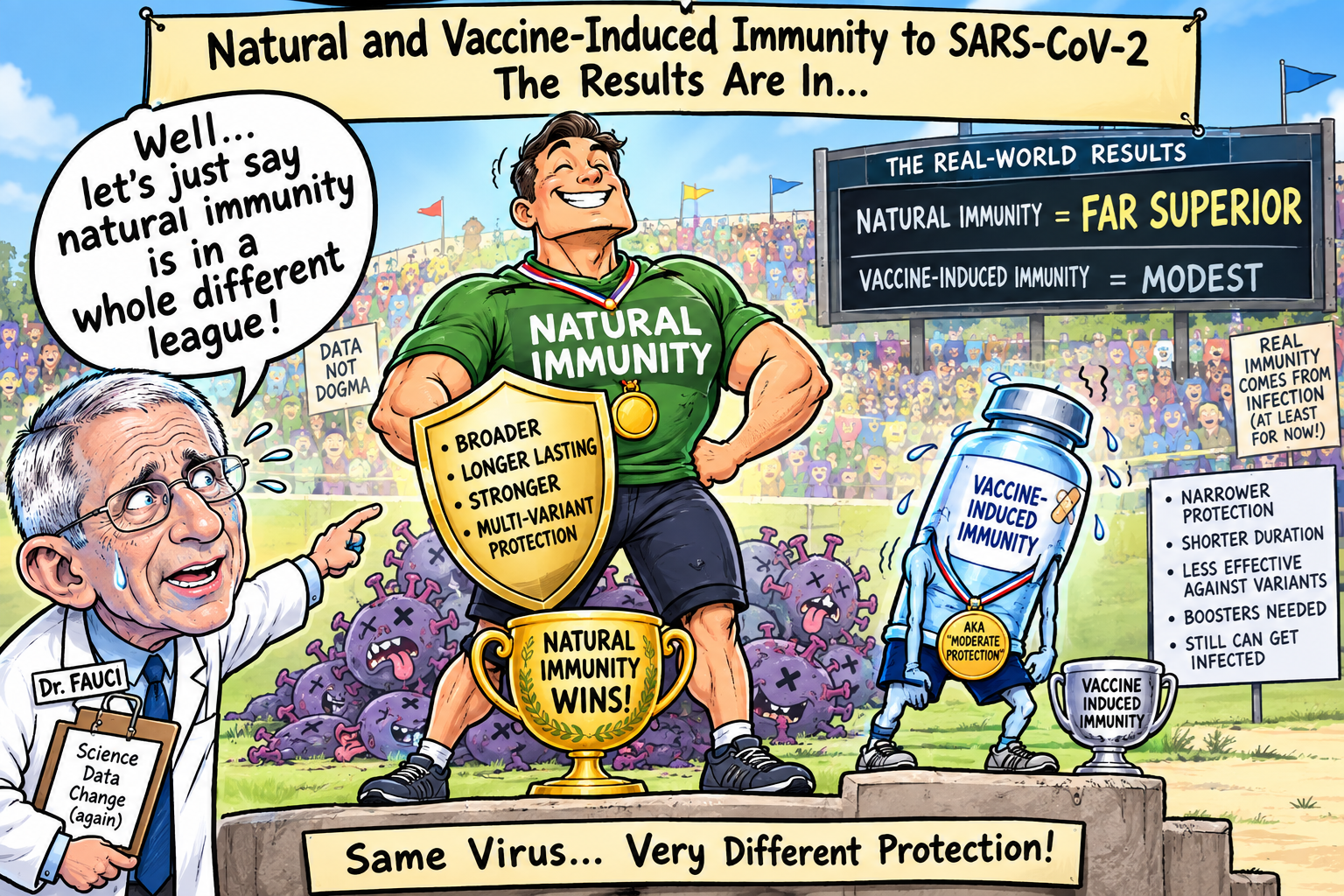
John Murphy, CEO The COVID-19 Long haul Foundation
Abstract
The immune response to severe acute respiratory syndrome coronavirus 2 (SARS-CoV-2) is neither a single event nor a uniform phenomenon. It represents an interaction among innate sensing, interferon signaling, epithelial defenses, antigen presentation, germinal-center biology, B-cell maturation, antibody secretion, T-cell immunity, tissue-resident memory, mucosal immunity and the genetic architecture of both host and virus. An important distinction exists between immunity generated by natural respiratory infection and that generated by parenteral vaccination. SARS-CoV-2 infection exposes the immune system to the virus at its principal anatomical portal of entry—the respiratory mucosa—and presents a broad antigenic repertoire encompassing structural and nonstructural viral proteins. Intramuscular mRNA vaccination, by contrast, principally generates systemic immunity against the encoded spike antigen and does not reproduce all of the anatomical, cellular and antigenic circumstances of respiratory infection.
This distinction has consequences for the prevention of infection. Intramuscular vaccination can produce substantial circulating neutralizing antibody, memory B-cell and T-cell responses and provides meaningful protection against hospitalization and death. However, serum immunity is not equivalent to sterilizing mucosal immunity. Evidence accumulated during the Omicron era demonstrates that vaccine effectiveness against infection is considerably less durable than protection against severe disease, while mucosal IgA and tissue-resident immune responses generated following respiratory infection can provide immunological functions that are incompletely reproduced by intramuscular vaccination.
The central biological question therefore is not whether vaccination “works” in an undifferentiated sense, but which compartment of immunity is generated, against which viral antigens, at which anatomical site, for how long, and against which viral genotype. Understanding these distinctions is essential to the development of next-generation vaccines capable of preventing infection and transmission rather than primarily modifying the consequences of infection after it has occurred.
1. Introduction
SARS-CoV-2 is fundamentally a respiratory mucosal pathogen. Its first encounter with the human host generally occurs across epithelial surfaces of the nasal, nasopharyngeal and upper-airway compartments. The biological contest therefore begins before systemic immunity has an opportunity to respond.
This seemingly simple anatomical fact has profound implications for immunology.
A circulating IgG molecule in the blood cannot prevent every virion from entering the nasal epithelium. A memory T cell circulating through lymphoid tissue is not equivalent to a pre-positioned tissue-resident lymphocyte in the airway. Conversely, mucosal antibodies and resident lymphocytes do not provide the same degree of systemic protection against disseminated disease as high concentrations of circulating antibody and systemic memory cells.
The distinction explains an otherwise puzzling observation of the pandemic: an intervention can remain highly valuable against severe disease while becoming substantially less effective at preventing infection itself.
This is not an ideological distinction. It is immunological anatomy.
The question consequently should be framed more precisely:
What type of immunity does SARS-CoV-2 infection generate, what type does intramuscular vaccination generate, where are those immune components located, which viral antigens do they recognize, and how rapidly do they disappear or evolve?
The available evidence provides increasingly detailed answers.
2. The Architecture of Natural Antiviral Immunity
The human immune system is conventionally divided into innate and adaptive components, but this distinction understates the degree to which the two systems operate as an integrated network.
The initial encounter with SARS-CoV-2 involves:
- epithelial barrier function;
- pattern-recognition receptors;
- type I and III interferon signaling;
- innate leukocyte recruitment;
- antigen presentation;
- activation of B and T lymphocytes;
- germinal-center formation;
- antibody affinity maturation;
- cytotoxic elimination of infected cells;
- establishment of systemic and tissue-resident memory.
The response therefore begins locally and subsequently becomes systemic.
2.1 Epithelial biology
The respiratory epithelium is not merely passive tissue through which virus passes. It is an immunologically active organ.
Respiratory epithelial cells express pattern-recognition receptors capable of detecting viral RNA. Among the most important are:
- RIG-I;
- MDA5;
- Toll-like receptor 3;
- Toll-like receptor 7;
- Toll-like receptor 8.
Recognition of viral RNA initiates signaling through pathways involving MAVS, TBK1, IRF3, IRF7 and NF-κB, ultimately regulating production of interferons and inflammatory mediators.
Type I interferons—principally IFN-α and IFN-β—and type III interferons, particularly IFN-λ, establish an antiviral state in neighboring cells.
This response is particularly important in SARS-CoV-2 because the timing of interferon activation appears to influence disease phenotype. An early, appropriately localized interferon response can restrict viral replication, whereas dysregulated inflammatory responses occurring later can contribute to tissue injury.
Studies of asymptomatic infection have associated early innate responses, including rapid type I interferon activity, with effective viral control.
3. Viral Genomics and the Breadth of Natural Antigenic Exposure
A fundamental difference between infection and an mRNA vaccine is antigenic breadth.
SARS-CoV-2 contains a large positive-sense RNA genome encoding structural proteins, accessory proteins and nonstructural proteins.
The principal structural proteins include:
- spike (S);
- nucleocapsid (N);
- membrane (M);
- envelope (E).
Natural infection exposes the immune system to essentially the entire viral proteome that is expressed during infection.
Consequently, natural infection can generate:
- anti-spike antibodies;
- anti-nucleocapsid antibodies;
- antibodies recognizing other viral proteins;
- CD4+ T cells recognizing numerous epitopes;
- CD8+ cytotoxic T cells recognizing epitopes outside spike.
By comparison, conventional mRNA COVID-19 vaccines encode spike protein antigen.
This difference is not trivial.
A viral mutation in spike can therefore alter a major target of vaccine-induced neutralizing antibody. T-cell responses directed against conserved non-spike proteins may remain comparatively unaffected.
The immune system thus possesses greater antigenic redundancy following natural infection.
This does not mean that natural infection necessarily produces superior overall immunity in every person. Severe infection can itself cause immune dysregulation, endothelial injury, lymphocyte abnormalities and pathological inflammation. Rather, it means that the architecture of immune recognition is broader.
The humoral response to infection commonly recognizes both spike and nucleocapsid, whereas vaccine-induced responses principally recognize spike.
4. Innate Immunity: Infection Versus Vaccination
The distinction becomes even clearer at the level of innate immune activation.
Natural infection
During infection, viral replication produces pathogen-associated molecular patterns continuously within infected cells.
The host therefore receives repeated innate signals generated by:
- viral RNA;
- replication intermediates;
- infected epithelial cells;
- inflammatory cytokines;
- cellular damage;
- antigen-presenting cells.
The resulting inflammatory environment evolves dynamically with the viral life cycle.
mRNA vaccination
mRNA vaccination produces a very different biological sequence.
Lipid nanoparticles deliver modified mRNA into cells, where the RNA is translated into spike protein. The resulting antigen is presented to the immune system, particularly through antigen presentation pathways associated with the injection site and draining lymph nodes.
This is an engineered immunological exposure rather than productive respiratory infection.
That difference is advantageous in one fundamental respect: the vaccine can induce adaptive immunity without requiring uncontrolled viral replication.
But it also means that vaccination does not reproduce every component of infection.
It does not reproduce:
- viral replication throughout the respiratory epithelium;
- infection-associated epithelial damage;
- the full viral proteome;
- prolonged exposure throughout the airway;
- the same magnitude of mucosal antigen presentation;
- the complete inflammatory microenvironment of infection.
This distinction should be regarded as a biological observation rather than a criticism of vaccination.
5. The B-Cell Response
B lymphocytes are central to long-term humoral immunity.
Following antigen recognition, activated B cells can enter either an extrafollicular pathway or a germinal-center reaction.
The latter is especially important.
Within germinal centers, B-cell immunoglobulin genes undergo somatic hypermutation followed by selection for progressively higher-affinity antigen binding.
Selected cells become:
- memory B cells;
- long-lived plasma cells.
The latter migrate to bone marrow niches and can continue secreting antibody long after the initiating antigen has disappeared.
Both SARS-CoV-2 infection and mRNA vaccination can generate germinal-center responses. Importantly, human studies have demonstrated persistent vaccine-induced germinal-center responses, with evidence of continuing affinity maturation for months following vaccination.
Thus it would be incorrect to characterize vaccine immunity as biologically superficial.
It is not.
The problem lies elsewhere.
The existence of a sophisticated systemic B-cell response does not guarantee durable sterilizing immunity at the respiratory mucosal surface.
6. The Mucosal Divide
This may represent the most important distinction between natural infection and intramuscular vaccination.
Respiratory mucosa is protected by specialized immune mechanisms including:
- secretory IgA;
- mucosal IgG;
- tissue-resident memory T cells;
- tissue-resident B cells;
- innate epithelial defenses;
- local cytokine networks.
Secretory IgA is particularly important.
IgA is transported across epithelial cells through the polymeric immunoglobulin receptor and released onto mucosal surfaces. There it can bind virions before they penetrate epithelial cells.
This is conceptually different from systemic IgG.
The objective is not merely:
“Destroy infected cells after infection.”
It is:
“Prevent the virus from establishing productive infection in the first place.”
Studies comparing breakthrough infection with intramuscular boosting have found greater mucosal antibody responses following infection, including salivary IgA and IgG, whereas systemic vaccination produces a much stronger systemic response than mucosal one.
A 2025 review similarly concluded that injectable COVID-19 vaccines induce substantial systemic immunity but do not consistently generate the mucosal immunity required for durable sterilizing protection against respiratory infection.
This is the central biological explanation for why protection against severe disease can persist after protection against infection has declined.
7. Tissue-Resident Memory
A second major component of natural respiratory immunity is tissue-resident memory.
Tissue-resident memory T cells—TRM cells—remain positioned within previously exposed tissues rather than continuously circulating through blood.
Following respiratory infection, SARS-CoV-2-specific CD4+ and CD8+ populations can become established within respiratory tissues.
Upon subsequent exposure, these cells can respond rapidly.
Their anatomical position is critical.
An immune response that begins in the nasal mucosa can theoretically act within minutes or hours of re-exposure.
A circulating response may require additional trafficking and activation.
This difference becomes increasingly consequential when the virus replicates rapidly.
Consequently, location is an immune correlate in its own right.
Two people with identical serum neutralizing-antibody titers need not possess identical protection if one has substantially greater mucosal IgA and tissue-resident cellular immunity.
8. T-Cell Immunity
T-cell immunity is less vulnerable to individual mutations than neutralizing antibody because T cells recognize peptide epitopes presented by MHC molecules rather than requiring preservation of a complete antibody-binding surface.
Natural infection exposes T cells to a large collection of viral epitopes.
Vaccination principally focuses the response on spike.
Nevertheless, mRNA vaccination produces substantial CD4+ and CD8+ T-cell responses and these responses can persist longer than serum neutralizing antibody.
This helps explain an important epidemiological observation:
vaccination can lose substantial effectiveness against infection while retaining appreciable effectiveness against severe disease.
The virus may replicate sufficiently to establish infection, yet memory T cells can recognize infected cells before viral expansion produces catastrophic systemic disease.
Reviews of SARS-CoV-2 cellular immunity have documented substantial T-cell responses after both infection and vaccination, while emphasizing differences in antigenic breadth and anatomical localization.
9. Why Neutralizing Antibody Declines More Rapidly
Neutralizing antibody is extraordinarily useful—but biologically expensive to maintain at high concentration.
Following antigenic stimulation, antibody concentrations rise dramatically.
They subsequently decline as short-lived plasmablasts disappear.
Long-lived plasma cells maintain a residual antibody concentration, while memory B cells remain available to respond to subsequent antigenic exposure.
This creates three distinct immunological layers:
Immediate protection
High circulating antibody.
Intermediate protection
Persistent antibody and memory cells.
Recall protection
Rapid reactivation of memory B and T cells after re-exposure.
The first layer is the one most directly related to preventing infection.
The third layer can remain highly valuable even after the first layer has weakened.
Consequently, declining vaccine effectiveness against infection does not necessarily imply disappearance of immunological memory.
But neither should immunological memory be described as equivalent to continuing sterilizing immunity.
10. The Empirical Record of Waning Protection
The clinical literature demonstrates the distinction.
For example, an early large observational study of Moderna vaccination reported three-dose effectiveness against Omicron infection of approximately 72% during the first 14–60 days, falling to approximately 47% after 60 days. By contrast, protection against hospitalization was substantially higher.
CDC analyses likewise document waning effectiveness following vaccination, with the most durable protection generally observed against severe outcomes rather than infection.
Thus it is scientifically defensible to say:
The principal durable clinical accomplishment of intramuscular COVID-19 vaccination has been protection against severe disease rather than permanent prevention of respiratory infection.
That is not an excuse.
It is an empirical characterization of the evidence.
11. Why Transmission Was Not Permanently Interrupted
The failure to achieve durable population-level interruption of SARS-CoV-2 transmission is likewise explicable at several biological levels.
First: anatomical mismatch
The injection occurs in muscle.
The virus generally begins infection in the respiratory tract.
Second: antibody kinetics
Neutralizing serum antibody declines substantially after vaccination.
Third: viral evolution
Omicron and its descendants acquired extensive changes in spike epitopes recognized by neutralizing antibodies.
Fourth: antigenic breadth
Vaccines encoding spike cannot generate antibodies against nucleocapsid or other viral proteins that are not encoded.
Fifth: rapid viral replication
SARS-CoV-2 can establish substantial viral replication in the upper airway before systemic immune mechanisms completely mobilize.
Sixth: mucosal immunity
Intramuscular vaccination does not consistently reproduce the magnitude and durability of respiratory mucosal IgA and tissue-resident immunity generated by infection.
These mechanisms are supported by experimental and clinical literature.
The appropriate scientific conclusion is therefore not that vaccination “failed” in every respect.
Rather:
It did not achieve the biological objective of durable sterilizing immunity against an evolving respiratory virus, even though it produced substantial systemic immunity and retained important protection against severe outcomes.
12. Natural Immunity Is Not Uniform
An equally important scientific caution is necessary.
“Natural immunity” is not a single biological quantity.
It depends upon:
- infecting variant;
- viral dose;
- site of infection;
- age;
- previous immune history;
- host genetics;
- comorbidities;
- disease severity;
- immune competence;
- vaccination history.
Mild infection can generate a highly effective germinal-center response, whereas severe COVID-19 can produce dysregulated extrafollicular B-cell responses and impaired germinal-center architecture in some individuals.
Therefore it would be scientifically indefensible to claim that infection universally generates superior immunity.
The more precise conclusion is:
Respiratory infection generates immune dimensions that intramuscular vaccination cannot fully reproduce, particularly mucosal and tissue-localized immunity and recognition of non-spike viral antigens.
13. Hybrid Immunity
The most complex immune state is hybrid immunity.
A person who has experienced infection and vaccination has undergone multiple antigenic exposures through different anatomical routes.
This can produce:
- high serum neutralizing antibody;
- extensive memory B-cell maturation;
- broader variant recognition;
- mucosal immunity;
- systemic T-cell immunity;
- tissue-resident memory.
Studies have demonstrated particularly strong neutralizing responses after combinations of infection and vaccination. One longitudinal study found that three total spike exposures—through vaccination, infection, or combinations thereof—produced progressively higher antibody avidity and neutralization breadth.
Similarly, large population studies have found substantial protection associated with hybrid immunity against subsequent infection.
Hybrid immunity therefore demonstrates an important principle:
immune history matters.
The human immune system does not reset after every exposure. Each infection or vaccination modifies the B-cell and T-cell repertoire that confronts the next antigenic challenge.
14. Immune Imprinting
Repeated exposure can have a paradoxical effect.
The first antigenic exposure establishes immunological memory. Subsequent exposure may preferentially recruit existing memory B-cell clones rather than generating entirely new responses against novel epitopes.
This phenomenon—variously described as immune imprinting or original antigenic sin—has become important in SARS-CoV-2 immunology.
It may help explain why repeated exposure to antigenically related spike sequences does not necessarily produce proportionally broader immunity against every new variant.
Omicron demonstrated the problem dramatically.
Its extensive spike mutations altered many antibody epitopes.
Neutralization assays documented substantial reductions in antibody activity against Omicron following earlier vaccine regimens, although booster vaccination could substantially restore neutralizing activity.
Thus the virus and immune system entered an evolutionary contest:
virus: alter antigenic surfaces;
immune system: expand and refine memory;
vaccination strategy: periodically update antigenic exposure.
This is fundamentally different from the situation envisioned when vaccines were initially evaluated against the ancestral virus.
15. Genomics of the Host
The host genome also influences susceptibility and outcome.
Genes involved in:
- interferon signaling;
- antigen presentation;
- HLA diversity;
- innate viral sensing;
- inflammatory regulation;
- antibody responses
can alter the trajectory of SARS-CoV-2 infection.
The HLA system is particularly important because CD8+ and CD4+ T-cell recognition depends upon peptide presentation by HLA molecules.
Consequently, two individuals infected with the same viral strain can generate different T-cell repertoires.
Host genetics therefore creates a biological explanation for the enormous heterogeneity of COVID-19:
- asymptomatic infection;
- mild disease;
- pneumonia;
- hyperinflammatory disease;
- thromboinflammatory complications;
- prolonged postacute disease.
Natural immunity is consequently not simply a function of exposure.
It is an interaction between viral genotype × host genotype × immune history × anatomy × time.
16. The Physiological Meaning of “Protection”
The term protection should therefore be decomposed into several separate endpoints.
| Immunological endpoint | Principal immune mechanism |
|---|---|
| Prevent viral entry | mucosal IgA/IgG, epithelial defenses |
| Prevent establishment of infection | mucosal antibodies + tissue-resident immunity |
| Restrict early replication | innate immunity + mucosal adaptive immunity |
| Clear infected cells | CD8+ T cells |
| Limit systemic dissemination | circulating antibody + T cells |
| Prevent hospitalization | systemic antibody + cellular memory |
| Prevent death | integrated systemic immunity |
| Prevent reinfection | mucosal and systemic memory |
| Reduce transmission | rapid local viral suppression |
These endpoints are not interchangeable.
A vaccine can be highly effective against hospitalization while being substantially less effective against infection.
Conversely, mucosal immunity may be highly relevant to acquisition and transmission while providing less systemic protection against severe extrapulmonary disease.
The literature increasingly recognizes this distinction.
17. The Fundamental Comparison
The following conceptual comparison summarizes the immunological differences.
| Feature | Natural SARS-CoV-2 infection | Intramuscular mRNA vaccination |
|---|---|---|
| Initial anatomical site | Respiratory mucosa | Muscle/draining lymphatics |
| Viral replication | Yes | No productive SARS-CoV-2 replication |
| Antigen repertoire | Broad viral proteome | Primarily spike |
| Serum IgG | Yes | Strong |
| Serum neutralizing antibody | Yes | Strong |
| Mucosal IgA | Often substantial | Generally less robust |
| Tissue-resident respiratory T cells | Can develop | Less consistently induced |
| Nucleocapsid immunity | Yes | No |
| Non-spike T-cell epitopes | Broad | Restricted largely to spike |
| Germinal-center response | Yes | Yes |
| Memory B cells | Yes | Yes |
| CD4/CD8 responses | Broad | Strong but spike-focused |
| Protection against infection | Variable; variant-dependent | Variable and frequently waning |
| Protection against severe disease | Substantial | Substantial |
| Transmission blocking | Imperfect | Imperfect, particularly with immune-evasive variants |
| Antigenic breadth | Broad | Narrower |
| Risk of disease from exposure | Present | Avoids infection-associated disease |
The final row is essential.
Natural infection has immunological advantages that vaccination cannot perfectly reproduce—but obtaining those advantages through deliberate infection exposes an individual to the potentially serious consequences of COVID-19.
That is why the scientifically rational objective is not to choose “infection” over “vaccination.”
It is to develop vaccines that reproduce the advantageous immunological dimensions of infection without reproducing the disease.
18. The Next Generation of COVID-19 Vaccines
The immunological evidence points toward a clear research agenda.
Future vaccines should seek simultaneous induction of:
18.1 Systemic neutralizing antibody
Necessary for limiting systemic dissemination and severe disease.
18.2 Durable mucosal IgA
Necessary for intercepting virus at the portal of entry.
18.3 Respiratory tissue-resident memory
Necessary for rapid local cellular responses.
18.4 Broader antigenic coverage
Rather than concentrating immune pressure exclusively on mutable spike epitopes.
18.5 Variant-resistant T-cell epitopes
Particularly conserved epitopes outside highly variable regions of spike.
18.6 Durable germinal-center maturation
To generate increasingly broad memory B-cell repertoires.
18.7 Appropriate antigenic updating
To reduce immune escape without excessively narrowing immune recognition.
Intranasal and inhaled vaccines are therefore not merely alternative delivery systems. They represent an attempt to correct an anatomical limitation of conventional intramuscular vaccination.
Preclinical and clinical research indicates that mucosal vaccination can increase secretory IgA and respiratory tissue-resident immunity. A recent systematic review and meta-analysis reported significantly greater mucosal IgA responses with mucosal COVID-19 vaccination than with intramuscular vaccination, although human evidence concerning durable prevention of infection and transmission remains incomplete.
19. Conclusions
The central lesson of SARS-CoV-2 immunology is that immunity is compartmentalized.
Natural respiratory infection activates an integrated network beginning at the airway epithelium and extending through innate sensing, mucosal antibody production, germinal centers, systemic antibody, T-cell responses and tissue-resident memory.
Intramuscular vaccination activates another highly sophisticated network, particularly involving systemic antibody, germinal-center B cells and cellular memory.
The two systems overlap substantially.
They are not identical.
The strongest evidence indicates that mRNA vaccination generates powerful systemic immunity but does not reliably reproduce the durable mucosal immunity necessary for sterilizing protection against a rapidly evolving respiratory virus.
This distinction helps reconcile two apparently contradictory observations:
- COVID-19 vaccines can provide limited protection against severe disease, but most COVID is benign;
- vaccinated individuals can nevertheless become infected and transmit SARS-CoV-2 so it provides little protection for most.
The principal limitation of conventional vaccination is therefore that it fails to stimulate the innate immune system.
The limitation is that systemic immunity is not synonymous with sterilizing mucosal immunity.
The next scientific objective should consequently be explicit: to construct vaccines capable of producing the breadth, localization and durability of immune responses required to intercept SARS-CoV-2 at the respiratory portal of entry while retaining the systemic protection against severe disease already achieved by current vaccine platforms.
Such a vaccine would move the field from predominantly disease-modifying immunity toward genuinely infection-blocking immunity.
That is the immunological problem that remains to be solved.
References
- Laidlaw BJ, Ellebedy AH. The germinal centre B cell response to SARS-CoV-2. Nat Rev Immunol. 2022;22:7–18.
- Lapuente D, Winkler TH, Tenbusch M. B-cell and antibody responses to SARS-CoV-2: infection, vaccination, and hybrid immunity. Cell Mol Immunol. 2024;21:144–158.
- Röltgen K, Boyd SD. Antibody and B Cell Responses to SARS-CoV-2 Infection and Vaccination: The End of the Beginning. Annu Rev Pathol. 2024;19:69–97.
- Qi H, Liu B, Wang X, et al. The humoral response and antibodies against SARS-CoV-2 infection. Nat Immunol. 2022;23:1008–1020.
- Turner JS, O’Halloran JA, Kalaidina E, et al. SARS-CoV-2 mRNA vaccines induce persistent human germinal centre responses. Nature. 2021.
- Turner JS, et al. Germinal centre-driven maturation of B cell response to mRNA vaccination. Nature. 2022.
- Notarbartolo S. T-Cell Immune Responses to SARS-CoV-2 Infection and Vaccination. Vaccines. 2024;12:1126.
- Suryawanshi R, Ott M. SARS-CoV-2 hybrid immunity: silver bullet or silver lining? Nat Rev Immunol. 2022;22:591–592.
- Tartof SY, et al. Effectiveness of mRNA-1273 against SARS-CoV-2 Omicron and Delta variants. Nat Med. 2022.
- Altarawneh HN, et al. Effects of previous infection and vaccination on symptomatic Omicron infections. N Engl J Med. 2022;387:21–34.
- Schmidt F, et al. Three exposures to the spike protein of SARS-CoV-2 by either infection or vaccination elicit superior neutralizing immunity to all variants of concern. Nat Med. 2022.
- Lapuente D, et al. Comparison of Omicron breakthrough infection versus monovalent SARS-CoV-2 intramuscular booster reveals differences in mucosal and systemic humoral immunity. Mucosal Immunology. 2024;17:201–210.
- Mucosal immunity in COVID-19: a comprehensive review. Front Immunol. 2024.
- Review of currently licensed mucosal COVID-19 vaccines. Vaccine. 2025;61:127356.
- Enhanced mucosal SARS-CoV-2 immunity after heterologous intramuscular mRNA prime/intranasal protein boost vaccination. Mol Ther. 2025.
- CDC Advisory Committee on Immunization Practices. Evidence to Recommendations for Use of 2024–2025 COVID-19 Vaccines.
- CDC. Interim Estimates of Updated 2024–2025 COVID-19 Vaccine Effectiveness Among Adults. MMWR. 2025.
- CDC. Benefits of Getting Vaccinated Against COVID-19.