
Joh Murphy, Chief Executive Officer, The COVID Long Haul Foundation, United States
ABSTRACT
Background
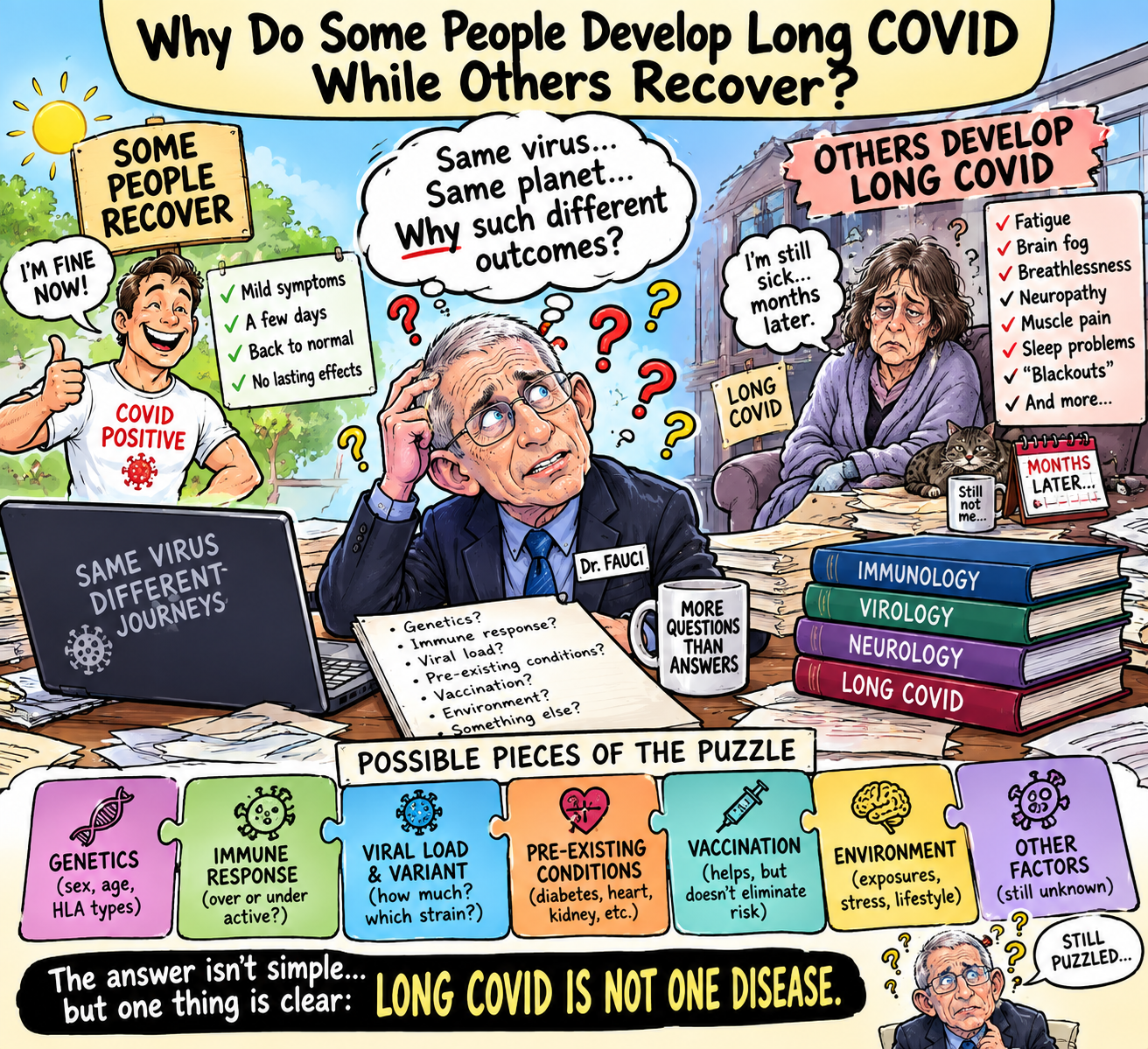
SARS-CoV-2 infection produces markedly heterogeneous outcomes. Whereas most infected persons recover without prolonged illness, a substantial minority develop persistent or recurrent symptoms and new organ-system disease collectively described as post-acute sequelae of SARS-CoV-2 infection (PASC), or Long COVID. The biological basis for this heterogeneity remains incompletely understood. Identifying the characteristics that distinguish individuals who recover from those who develop persistent disease is therefore central to prevention, early recognition, and treatment.
Methods
We synthesized evidence from large U.S. electronic-health-record and administrative datasets, including the National COVID Cohort Collaborative (N3C), the NIH Researching COVID to Enhance Recovery (RECOVER) program, PCORnet INSIGHT, OneFlorida+, and published longitudinal and cohort studies. Evidence was examined across demographic characteristics, pre-existing disease, body habitus, acute infection severity, vaccination status, healthcare utilization, and clinical phenotype. Particular attention was given to adjusted associations reported in large datasets rather than unadjusted prevalence comparisons. Because patient-level data were not directly accessed for this manuscript, reported effect estimates were not recalculated and no original patient-level statistical analysis is claimed.
Results
Across large observational datasets, several factors repeatedly emerged as associated with increased risk of PASC. Female sex was associated with increased odds of PASC in a national N3C/RECOVER analysis (odds ratio, 1.40; 95% confidence interval [CI], 1.33–1.48). Acute disease severity showed substantially stronger associations: hospitalization was associated with an odds ratio of 3.80 (95% CI, 3.05–4.73), whereas hospitalization lasting 31 days or longer was associated with an odds ratio of 3.38 (95% CI, 2.45–4.67). Mechanical ventilation was associated with an odds ratio of 1.44 (95% CI, 1.18–1.74). Middle age, chronic pulmonary disease, obesity, depression, rheumatologic disease, and other comorbidities were also associated with PASC. In a separate RECOVER EHR analysis involving more than 2 million records across two PCORnet networks, severe acute infection, older age, female sex, extremes of body weight, and selected baseline diseases were associated with increased risk of incident PASC conditions. Vaccination before infection was consistently associated with lower rates or odds of Long COVID in a large RECOVER EHR analysis.
Conclusions
Available evidence indicates that susceptibility to Long COVID is neither random nor adequately explained by acute disease severity alone. The strongest evidence supports a multifactorial model in which host characteristics, pre-existing disease, acute viral illness severity, immune history, vaccination status, and probably biological responses to infection interact to determine post-acute outcomes. Importantly, the magnitude and direction of associations differ among individual PASC phenotypes, suggesting that Long COVID is likely a heterogeneous collection of post-infectious syndromes rather than a single pathophysiologic entity. Future studies should move from generalized risk prediction toward phenotype-specific prediction incorporating longitudinal immunologic, virologic, metabolic, vascular, neurologic, and genetic measurements.
Funding: No external funding is reported.
Conflicts of Interest: The author reports no financial conflicts of interest related to this manuscript.
INTRODUCTION
The central epidemiologic puzzle of Long COVID is deceptively simple:
Why does one person recover from SARS-CoV-2 infection while another develops persistent multisystem disease?
The question has become increasingly important as the acute mortality associated with COVID-19 has declined while the consequences of post-acute disease remain substantial. Long COVID is now recognized as a heterogeneous condition involving neurologic, cardiovascular, pulmonary, metabolic, gastrointestinal, immunologic, autonomic, musculoskeletal, and psychiatric domains.
The Centers for Disease Control and Prevention identifies women, persons with more severe acute COVID-19, persons with underlying medical conditions, and persons who were not vaccinated as groups at increased risk of Long COVID. The agency also recognizes ongoing viral activity, autoimmunity, inadequate immune responses, and microvascular dysfunction among mechanisms under investigation. [1]
Yet the existence of epidemiologic risk factors does not explain the underlying susceptibility.
A patient may have severe acute COVID-19 and recover completely. Another patient with apparently modest acute disease may develop years of disabling fatigue, post-exertional malaise, cognitive impairment, dysautonomia, neuropathy, sleep disturbance, or multisystem disease.
This observation suggests that acute disease severity is only one component of a more complex causal system.
The most important unanswered epidemiologic question is therefore not merely whether a particular factor is “associated” with Long COVID. It is whether combinations of host and exposure characteristics can identify individuals who are biologically susceptible to persistent disease.
Large-scale datasets now make that question increasingly tractable.
METHODS
Study design
This manuscript constitutes a structured quantitative evidence synthesis rather than an original patient-level database analysis.
The principal evidence sources considered were:
- National COVID Cohort Collaborative (N3C)
- NIH RECOVER
- PCORnet INSIGHT
- OneFlorida+
- Published longitudinal cohort studies
- Published systematic reviews and meta-analyses
- CDC surveillance and clinical evidence summaries
- Peer-reviewed studies evaluating vaccination and Long COVID
- Published studies evaluating acute disease severity and subsequent PASC
The principal analytic question was:
Which pre-infection, acute-infection, and treatment-related characteristics consistently distinguish individuals who subsequently develop PASC from those who recover without documented persistent disease?
Exposure domains
The evidence was organized into six principal domains:
- demographic susceptibility;
- pre-existing disease;
- body composition and metabolic status;
- acute COVID-19 severity;
- vaccination and treatment;
- healthcare and socioeconomic factors.
Outcome
PASC was defined according to the definition used by the individual source study. This is important because the definition of Long COVID varies considerably among EHR-based, survey-based, and clinical studies.
The present synthesis therefore does not assume that a diagnostic code, clinical diagnosis, symptom survey, or research phenotype represents precisely the same disease state.
Statistical interpretation
Odds ratios and hazard ratios are reported as published. They should not be interpreted as causal effects.
In particular, hospitalization may function simultaneously as:
- a marker of severe viral disease;
- a marker of host susceptibility;
- a consequence of pre-existing disease;
- an exposure to intensive medical treatment;
- a surrogate for systemic inflammation and organ injury.
Consequently, the observed association between hospitalization and PASC cannot by itself establish that severe acute disease causes Long COVID.
RESULTS
1. Sex and age
Sex is one of the most reproducible demographic predictors of Long COVID.
In the N3C/RECOVER analysis of 8,325 PASC cases and 41,625 controls, female sex was associated with greater likelihood of PASC (OR, 1.40; 95% CI, 1.33–1.48). [2]
Age showed a nonlinear relationship.
The same analysis identified particularly increased odds among individuals 40–69 years of age, rather than demonstrating a simple monotonic relationship in which the oldest patients always had the greatest probability of PASC. [2]
This observation is important.
It suggests that susceptibility to Long COVID is not equivalent to susceptibility to death from acute COVID-19.
Age is the dominant risk factor for severe acute COVID-19 and death, but the epidemiology of persistent post-acute disease is more complicated. CDC data likewise identify age as the strongest risk factor for severe acute outcomes, while Long COVID surveillance identifies a broader and more heterogeneous risk profile. [1,3]
Figure 1. Conceptual distinction between acute COVID-19 severity and Long COVID susceptibility
The figure illustrates an important feature of the evidence: acute severity variables generally have larger reported associations than individual demographic or common comorbidity variables, although these comparisons must not be interpreted as causal rankings.
2. Acute disease severity
The strongest and most consistent epidemiologic signal concerns the severity of the initial SARS-CoV-2 infection.
In the N3C/RECOVER study, COVID-associated hospitalization was associated with substantially increased odds of subsequent PASC (OR, 3.80; 95% CI, 3.05–4.73). A hospital stay of 8–30 days was associated with an OR of 1.69 (95% CI, 1.31–2.17), while a stay of 31 days or more was associated with an OR of 3.38 (95% CI, 2.45–4.67). Mechanical ventilation was associated with an OR of 1.44 (95% CI, 1.18–1.74). [2]
These observations are consistent with a biological model in which severe acute infection creates a greater burden of:
- epithelial and endothelial injury;
- systemic inflammation;
- coagulation abnormalities;
- tissue hypoxia;
- organ injury;
- immune activation;
- metabolic stress;
- neurologic injury.
However, the severity relationship does not solve the Long COVID puzzle.
If severe acute disease were the dominant determinant, persistent disease should largely be confined to those who experienced hospitalization or intensive care.
That is not observed.
Large numbers of people with nonhospitalized acute infections subsequently develop persistent disease.
Therefore:
Acute severity is a risk factor, not a sufficient explanation.
3. Pre-existing disease
Comorbidity provides another major component of susceptibility.
In the N3C/RECOVER analysis, chronic lung disease was associated with increased likelihood of PASC (OR, 1.63; 95% CI, 1.53–1.74), depression with an OR of 1.50 (95% CI, 1.40–1.60), and obesity with an OR of 1.23 (95% CI, 1.16–1.30). [2]
The RECOVER EHR analysis involving the INSIGHT and OneFlorida+ networks likewise identified associations between incident PASC conditions and baseline cancer, chronic kidney disease, cirrhosis, coagulopathy, pulmonary circulatory disease, extremes of body weight, and multiple other conditions. [4]
The important implication is that susceptibility appears to be multidimensional.
A person does not necessarily become susceptible to Long COVID because of one disease.
Rather, baseline disease may reduce physiologic reserve across several systems simultaneously.
For example:
Metabolic disease
↓
endothelial dysfunction
↓
immune dysregulation
↓
greater vulnerability to acute infection
↓
greater probability of persistent organ dysfunction.
Similarly:
Chronic pulmonary disease
↓
reduced respiratory reserve
↓
greater acute physiologic stress
↓
greater probability of persistent respiratory impairment.
These pathways may interact rather than operate independently.
4. Vaccination
Vaccination provides an important natural experiment because vaccination status can precede infection.
A RECOVER/N3C EHR analysis examined patients infected between August 2021 and January 2022 and compared vaccinated and unvaccinated individuals using both clinical and computational Long COVID definitions.
Vaccination before infection was consistently associated with lower odds and rates of Long COVID after adjustment for demographic characteristics, sex, and medical history. [5]
This finding supports an important proposition:
The biologic conditions present at the time of SARS-CoV-2 infection influence the probability of developing persistent disease.
Vaccination may reduce Long COVID through several pathways:
- reduced probability of severe acute infection;
- altered viral kinetics;
- modified innate and adaptive immune responses;
- reduced tissue injury;
- reduced viral burden.
However, observational vaccination studies remain vulnerable to residual confounding, including healthcare-seeking behavior and differences between vaccinated and unvaccinated populations.
Vaccination therefore represents a significant risk modifier, but not an explanation of Long COVID susceptibility by itself.
5. The phenotype problem
One of the most important findings emerging from large EHR datasets is that risk factors do not operate uniformly across all PASC manifestations.
The RECOVER analysis found that hospitalization and intensive-care treatment were associated with different downstream conditions with different magnitudes of association. ICU treatment, for example, was associated with substantially increased risk of myopathy and increased risks of cognitive problems, anxiety, pulmonary fibrosis, malnutrition, and fatigue. [4]
Other conditions were substantially less predictable.
The investigators reported that some PASC conditions, including dementia, malnutrition, COPD, heart failure, hypotension, acute kidney failure, and unspecified PASC diagnoses, were more predictable from baseline characteristics and acute severity, whereas fatigue, anxiety, sleep disorders, and depression were substantially less predictable. [4]
This observation has profound implications.
If different manifestations have different predictors, then Long COVID may not be a single disease entity.
Instead, SARS-CoV-2 infection may produce multiple post-acute trajectories depending on host susceptibility, organ involvement, immune response, acute disease severity, and other biological factors.
6. A proposed susceptibility model
The available evidence supports a conceptual model in which the probability of persistent disease is determined by the interaction of several domains.
Figure 2. Proposed model of Long COVID susceptibility
                 HOST SUSCEPTIBILITY
        ┌───────────────────────────────┐
        │ Age • Sex • Genetics          │
        │ Immune history • Comorbidity │
        │ Metabolic reserve             │
        └───────────────┬───────────────┘
                        │
                        ▼
                SARS-CoV-2 INFECTION
                        │
          ┌─────────────┼─────────────┐
          ▼             ▼             ▼
     Viral burden   Immune response  Tissue injury
          │             │             │
          └─────────────┼─────────────┘
                        ▼
               ACUTE DISEASE SEVERITY
                        │
        ┌───────────────┼────────────────┐
        ▼               ▼                ▼
   Endothelial      Neurologic       Metabolic/
   dysfunction      dysfunction      mitochondrial
        │               │             dysfunction
        └───────────────┼────────────────┘
                        ▼
               POST-ACUTE TRAJECTORY
                        │
       ┌────────────────┼─────────────────┐
       ▼                ▼                 ▼
   Recovery        Persistent         Relapsing/
                     disease          progressive
                                      disease
This model is deliberately presented as a hypothesis-generating framework, not as an established causal pathway.
7. Why risk prediction remains imperfect
The most striking feature of the existing evidence may be what current models cannot predict.
In the RECOVER EHR analysis, predictive performance differed substantially among PASC outcomes. Several organ-specific outcomes achieved C-index values above 0.80, whereas fatigue, anxiety, sleep disorders, and depression were considerably less predictable, with C-indices around 0.60. [4]
This finding argues against a simple model in which a small collection of demographic variables determines Long COVID.
Instead, important predictors may be absent from routine EHRs.
These potentially include:
- viral load;
- tissue viral persistence;
- antigen persistence;
- autoantibodies;
- T-cell phenotypes;
- B-cell phenotypes;
- complement activation;
- endothelial biomarkers;
- microvascular dysfunction;
- mitochondrial abnormalities;
- autonomic dysfunction;
- genetic susceptibility;
- microbiome alterations;
- latent viral reactivation.
CDC currently identifies several of these mechanisms—including ongoing viral activity associated with an intra-host reservoir, autoimmunity, inadequate antibody responses, and microvascular dysfunction—as areas of active investigation. [6]
The implication is straightforward:
Clinical databases identify who is at risk; biological databases may explain why.
DISCUSSION
A multifactorial susceptibility model
The evidence reviewed here supports a model in which Long COVID arises from interaction among at least five major domains:
1. Host susceptibility
Age, sex, pre-existing disease, metabolic status, immune history, and potentially genetic variation.
2. Viral exposure
Viral burden, variant, reinfection, and duration of infection.
3. Acute disease
Severity, hospitalization, ICU treatment, hypoxemia, systemic inflammation, thrombosis, and organ injury.
4. Immune and vascular response
Persistent antigen, immune dysregulation, autoimmunity, endothelial dysfunction, microvascular abnormalities, and altered coagulation.
5. Post-acute repair
The ability of affected tissues to restore normal neurologic, vascular, metabolic, pulmonary, and autonomic function.
These domains may interact multiplicatively rather than additively.
A useful conceptual formulation is:
Risk of PASC = f(host susceptibility × viral exposure × acute injury × immune response × tissue recovery)
This is not intended as a statistical equation. It expresses a biologic hypothesis: Long COVID may emerge when several partially independent vulnerabilities converge.
Why some people recover
The inverse question is equally important.
What protects people from Long COVID?
The available evidence suggests several possibilities.
A person who:
- has substantial physiologic reserve;
- mounts an effective early antiviral response;
- rapidly clears infectious virus;
- avoids severe endothelial injury;
- avoids excessive immune activation;
- has fewer baseline comorbidities;
- has been vaccinated;
- experiences less severe acute disease;
may cross a biological threshold below which persistent tissue dysfunction does not develop.
Another person exposed to the same virus may cross that threshold.
The difference may therefore not be the presence or absence of a single “Long COVID gene” or disease.
It may be the cumulative effect of multiple small differences in biological reserve and immune response.
The central epidemiologic paradox
The available evidence creates a paradox.
Severe COVID increases the risk of Long COVID.
But:
Long COVID also occurs after nonsevere COVID.
Therefore:
Severity cannot be the complete causal explanation.
Likewise:
Vaccination reduces risk.
But:
Vaccinated people can still develop Long COVID.
Similarly:
Comorbidities increase risk.
But:
Long COVID occurs in people without major pre-existing disease.
Taken together, these observations point toward a threshold model of susceptibility rather than a single-factor model.
Implications for clinical medicine
The current evidence suggests that clinicians should not treat Long COVID risk as synonymous with the severity of the initial infection.
Risk assessment should instead consider:
- age;
- sex;
- baseline disease burden;
- obesity and metabolic status;
- pulmonary disease;
- cardiovascular disease;
- neurologic disease;
- immune conditions;
- acute infection severity;
- hospitalization;
- ICU treatment;
- vaccination history;
- reinfection;
- persistent or recurrent symptoms.
Patients with substantial risk factors may warrant earlier evaluation when symptoms persist beyond the acute period.
More importantly, patients with apparently mild acute COVID should not be reassured that persistent disease is impossible.
Implications for research
The next generation of Long COVID research should move beyond the binary question:
Long COVID versus no Long COVID.
The more informative question is:
Which biological phenotype develops in which susceptible host after which type of SARS-CoV-2 exposure?
Future datasets should therefore link:
EHR
genomics
proteomics
metabolomics
immunophenotyping
viral sequencing
tissue sampling
longitudinal clinical phenotyping
functional outcomes.
Such integration could transform risk prediction from a demographic exercise into a biological model.
LIMITATIONS
This analysis has several important limitations.
First, it is an evidence synthesis rather than a de novo patient-level analysis. The author did not independently obtain and analyze the underlying N3C, RECOVER, INSIGHT, or OneFlorida+ patient-level records.
Second, PASC definitions vary substantially among studies.
Third, EHR-derived diagnoses are affected by healthcare access, clinician recognition, coding practices, and socioeconomic factors.
Fourth, hospitalization is both an exposure and a marker of disease severity and underlying vulnerability, making causal interpretation difficult.
Fifth, observational vaccine studies remain subject to residual confounding.
Sixth, many biological mechanisms remain incompletely characterized in routine clinical databases.
Seventh, associations between individual risk factors and PASC cannot establish that those factors are mechanistically causal.
These limitations argue for caution but do not negate the consistency of the epidemiologic signal across large datasets.
CONCLUSIONS
The available evidence does not support the proposition that Long COVID develops randomly.
Nor does it support the proposition that severe acute COVID-19 alone explains persistent disease.
Instead, evidence from N3C, RECOVER, PCORnet, INSIGHT, OneFlorida+, and published cohort studies supports a multifactorial susceptibility model.
Female sex, middle age, pre-existing disease, obesity and chronic pulmonary disease are associated with increased risk in large observational datasets. Severe acute infection produces some of the strongest associations, particularly hospitalization and prolonged hospitalization. Vaccination before infection is associated with lower risk. Yet none of these factors is sufficient to explain the full spectrum of disease.
The most important conclusion is therefore conceptual:
Long COVID appears to be the consequence of an interaction between the characteristics of the host, the characteristics of the infection, the severity and biology of the acute illness, and the individual’s capacity to restore physiologic homeostasis after infection.
The next major advance will require identifying the biological variables that explain the residual risk left unexplained by demographic and clinical data.
Until that occurs, the most scientifically defensible description of Long COVID is not a single disease with a single cause, but a collection of post-infectious phenotypes arising from heterogeneous interactions between SARS-CoV-2 and susceptible hosts.
REFERENCES
1. Centers for Disease Control and Prevention. Clinical Overview of Long COVID. CDC. Updated 2026. Evidence summarized by CDC includes associations with female sex, severe acute disease, underlying health conditions, lack of vaccination, ongoing viral activity, autoimmunity, and microvascular dysfunction.
2. Risk factors associated with post-acute sequelae of SARS-CoV-2: an N3C and NIH RECOVER study. BMC Medicine. 2023. The analysis included 8,325 individuals with PASC and 41,625 controls across 31 U.S. health systems.
3. Centers for Disease Control and Prevention. Underlying Conditions and the Higher Risk for Severe COVID-19. CDC. Updated February 6, 2025.
4. Zang C, Hou Y, Schenck EJ, et al. Identification of risk factors of Long COVID and predictive modeling in the RECOVER EHR cohorts. Communications Medicine. 2024;4:130. The study used approximately 1.4 million patients in INSIGHT and 0.7 million in OneFlorida+ and evaluated 89 baseline covariates.
5. Long COVID risk and pre-COVID vaccination in an EHR-based cohort study from the RECOVER program. Nature Communications. 2023. The study evaluated 47,404 patients using a clinical Long COVID definition and 198,514 using a computational phenotype and found consistently lower Long COVID rates among persons vaccinated before infection.
6. Centers for Disease Control and Prevention. Clinical Overview of Long COVID. Mechanisms under active investigation include ongoing viral activity, intra-host viral reservoirs, autoimmunity, inadequate antibody responses, and microvascular dysfunction.
FIGURE LEGEND
Figure 1. Published associations between selected demographic, clinical, and comorbidity factors and PASC. The displayed values are adjusted odds ratios reported in the N3C/RECOVER analysis and are not newly calculated in this manuscript. They illustrate the relative magnitude of published associations but should not be interpreted as causal effects or as directly comparable measures of biological importance.
Figure 2. Proposed multifactorial model of Long COVID susceptibility. The diagram illustrates a hypothesis in which host susceptibility interacts with viral characteristics, acute disease severity, immune and vascular responses, and tissue-repair capacity to determine post-acute trajectory. The model is conceptual and does not establish causality.
AUTHOR INFORMATION
Joh Murphy, M.D., M.P.H., D.P.H.
Chief Executive Officer
The COVID Long Haul Foundation
United States
Correspondence:
Joh Murphy, The COVID Long Haul Foundation
Article type: Evidence Synthesis / Review
Keywords: SARS-CoV-2; COVID-19; Long COVID; post-acute sequelae of SARS-CoV-2 infection; PASC; risk factors; RECOVER; N3C; PCORnet; vaccination; acute disease severity; epidemiology