
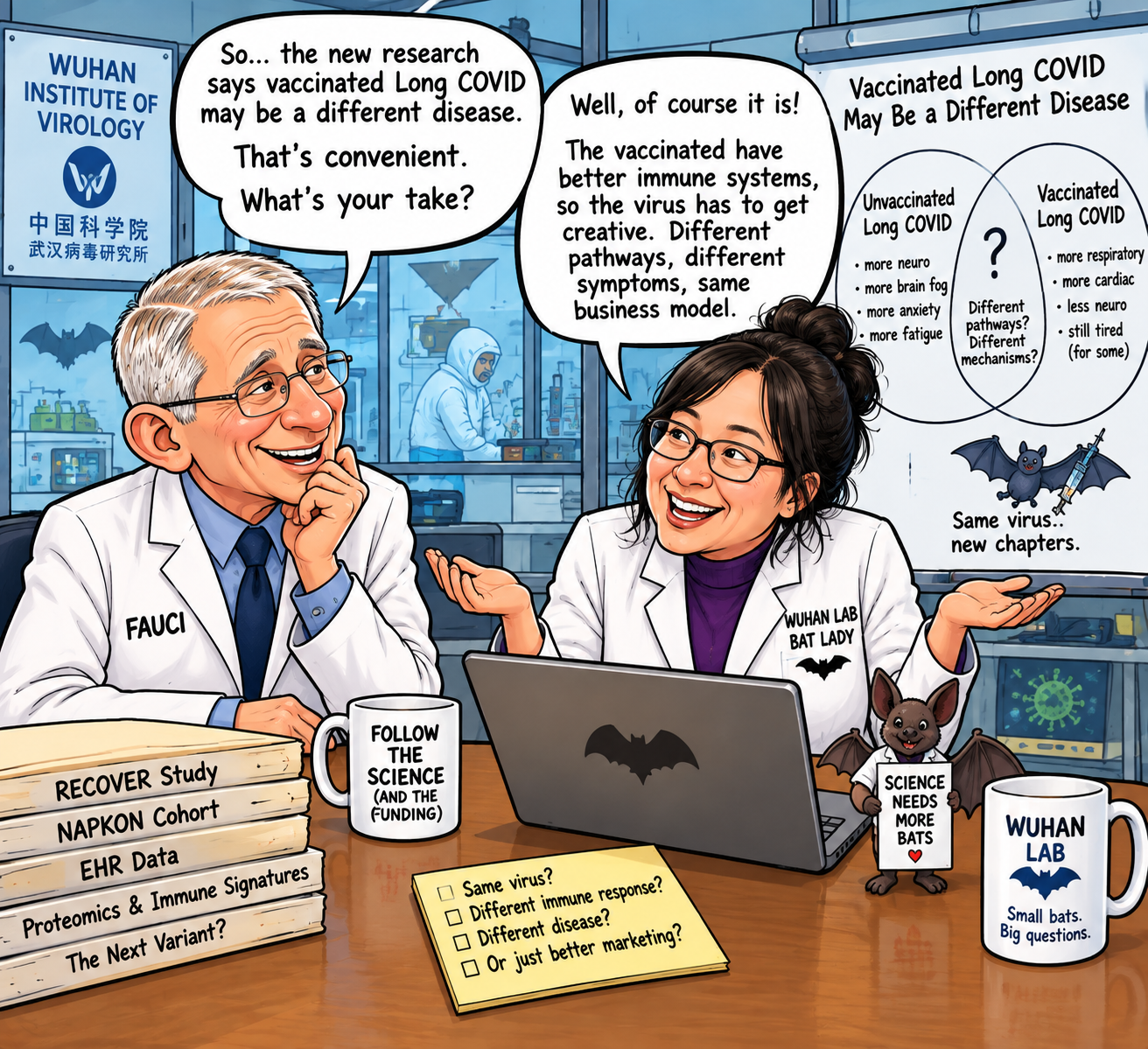
How vaccination may alter the biological architecture—not merely the probability—of post-COVID illness
John Murphy, M.D., M.P.H., D.P.H., CEO, The COVID-19 Long-haul Foundation
Abstract
The dominant question surrounding COVID-19 vaccination and Long COVID has been deceptively simple: Does vaccination reduce the risk of developing post-COVID condition? A substantial body of epidemiologic evidence now suggests that it does, although the magnitude of protection varies according to vaccination history, infection era, variant, outcome definition and study design. The more consequential question may now be a different one: When Long COVID develops despite vaccination, is it biologically the same disease as Long COVID following an unvaccinated infection?
Emerging evidence suggests that it may not be.
Large electronic-health-record analyses, prospective cohorts, population studies and mechanistic investigations increasingly indicate that vaccination can alter the severity, organ distribution and clinical composition of post-COVID illness. The German National Pandemic Cohort Network, for example, recently found that vaccination was associated with substantially lower odds of post-COVID syndrome and particularly lower odds of cognitive and respiratory phenotypes, while showing little evidence of protection against the fatigue phenotype. A separate clinical cohort found neuropsychiatric manifestations to be more frequent among unvaccinated patients, whereas cardiorespiratory manifestations were relatively more common among vaccinated patients. Population-based studies similarly suggest differential effects of vaccination on fatigue, memory impairment and brain fog.
These observations raise a testable hypothesis: vaccination may function not simply as a preventive intervention against Long COVID, but as a biological modifier that changes the phenotype of the disease when breakthrough infection nevertheless produces persistent illness.
The distinction matters. If vaccinated and unvaccinated Long COVID represent biologically different post-infectious states, combining them into a single outcome could obscure clinically important mechanisms and dilute biomarker discovery. The next generation of Long COVID research should therefore stratify patients according to vaccination status, vaccine dose and timing, infecting variant, prior infection, acute disease severity and subsequent phenotype, while integrating immunologic, proteomic, metabolic, vascular and neurologic measurements.
The evidence is not yet sufficient to declare “vaccinated Long COVID” a separate disease. It is, however, sufficient to justify treating that possibility as a major research hypothesis.
The question after the vaccine question
The first phase of COVID-19 vaccine research asked whether vaccination prevented hospitalization and death. The second asked whether it prevented Long COVID.
The third question should be more ambitious:
If a vaccinated person develops Long COVID, does vaccination change what that disease becomes?
This distinction is more than semantic.
Long COVID is not a single symptom or a single organ disorder. More than 200 symptoms have been reported, encompassing neurologic, cardiopulmonary, metabolic, gastrointestinal, musculoskeletal, autonomic and systemic manifestations. Symptoms can fluctuate, disappear and recur, and patients may exhibit markedly different combinations of abnormalities.
That heterogeneity creates a fundamental problem for epidemiology. If two biologically different illnesses are placed under one diagnostic label, an intervention may appear ineffective simply because it protects against some phenotypes while leaving others relatively untouched.
Vaccination may therefore have been judged partly by the wrong endpoint.
Instead of asking only whether vaccination changes the incidence of Long COVID, we should ask whether it changes its architecture.
A disease of phenotypes rather than a disease of averages
Several observations make this hypothesis plausible.
A large N3C/RECOVER electronic-health-record analysis examined 47,404 patients with clinically diagnosed Long COVID and a second computational cohort of 198,514 infected individuals. Complete pre-infection vaccination was consistently associated with lower odds and rates of Long COVID in both cohorts after adjustment for demographic and medical characteristics.
That establishes an important epidemiologic signal—but not the mechanism.
The more revealing evidence comes from studies that disaggregate Long COVID.
In the 2026 prospective German NAPKON cohort, 756 patients with known vaccination status were evaluated using multiple definitions of post-COVID syndrome. Fully vaccinated individuals had lower odds of the broad WHO-defined syndrome, with an odds ratio of 0.555. Vaccination was also associated with lower odds of a respiratory phenotype (OR 0.508) and cognitive phenotype (OR 0.443). But the association disappeared for fatigue: OR 0.917, with a confidence interval crossing unity. The protective association persisted at 12 months.
That pattern is difficult to dismiss as a simple reduction in disease severity.
If vaccination merely shifted every Long COVID manifestation downward proportionally, one would expect approximately parallel effects across phenotypes.
Instead, the data suggest selective protection.
The vaccine appears more effective against some components of post-COVID illness than others.
That is precisely what one might expect if different Long COVID phenotypes arise through partially independent biological pathways.
The first clue: the phenotype can change
Another prospective clinical study followed 582 patients and stratified Long COVID according to vaccination status. At least one persistent symptom was common in both groups, and the overall presence of Long COVID symptoms did not differ significantly between vaccinated and unvaccinated participants.
But the composition of those symptoms did.
Neuropsychiatric manifestations were more common in unvaccinated patients, whereas cardiorespiratory symptoms were more frequent among vaccinated patients. Vaccinated patients also showed substantially less persistent pulmonary damage, fewer spirometric abnormalities and less extensive CT abnormalities.
The observation is provocative because it illustrates a crucial epidemiologic paradox:
Two groups can have approximately the same prevalence of “Long COVID” while having different diseases underneath the label.
Consider two hypothetical populations:
- Population A develops cognitive dysfunction, neuropathy, autonomic disturbance and neuropsychiatric symptoms.
- Population B develops palpitations, exertional respiratory symptoms and residual cardiopulmonary abnormalities.
If both are counted simply as “Long COVID,” an analysis may conclude that vaccination had little effect.
But if vaccination preferentially suppresses Population A while leaving some of Population B, the aggregate endpoint conceals a biologically meaningful effect.
This is the statistical equivalent of averaging two different diseases until neither one is visible.
Figure 1. The central hypothesis
Vaccination may alter the pathway from infection to Long COVID rather than merely preventing Long COVID.
                         SARS-CoV-2 INFECTION
                                  │
                 ┌────────────────┴────────────────┐
                 │                                 │
          UNVACCINATED                        VACCINATED
                 │                                 │
        Greater acute viral                    altered immune
        burden in some                         priming/recall
        individuals                            response
                 │                                 │
       ┌─────────┼─────────┐               ┌───────┼─────────┐
       │         │         │               │       │         │
     CNS       vascular  immune         CNS?    vascular   immune
   pathways    injury   dysregulation  pathways  injury   dysregulation
       │         │         │               │       │         │
       └─────────┼─────────┘               └───────┼─────────┘
                 │                                 │
                 ▼                                 ▼
          LONG COVID A                       LONG COVID B
       neurocognitive/                       potentially
       autonomic-heavy                       cardiopulmonary/
                                              other phenotype
The figure represents a hypothesis, not an established causal pathway.
Vaccination changes the immune starting point
A vaccine does not simply produce antibodies. It establishes immunologic memory before infection.
This changes the biological circumstances under which SARS-CoV-2 encounters the host.
A vaccinated individual may mount a faster antibody and T-cell response, potentially reducing the duration or magnitude of viral replication. The resulting difference in viral burden could influence the downstream inflammatory response, tissue injury and probability of persistent viral material.
The vaccination/Long COVID literature has repeatedly identified this as one plausible mechanism. A 2025 systematic review and meta-analysis concluded that vaccination was associated with reduced Long COVID risk and discussed several potential mechanisms, including more rapid viral clearance, reduced acute inflammation, reduced organ damage and modulation of autoimmune processes.
But the implications extend further.
If early viral burden determines which tissues are exposed to viral antigen, inflammatory mediators and endothelial stress, then changing that early exposure could alter which organ systems subsequently become chronically symptomatic.
This provides a mechanistic bridge between vaccination and phenotype.
The proteomic evidence is especially revealing
Clinical symptoms are important, but symptoms alone cannot establish biological distinction.
Proteomics can.
A longitudinal plasma-proteomic investigation found that SARS-CoV-2 infection produced persistent alterations in proteins and pathways involved in cellular signaling, angiogenesis and inflammation. Vaccination attenuated aspects of the inflammatory response, yet proteomic abnormalities remained detectable months later in both vaccinated and unvaccinated groups.
This is a critical observation.
Vaccination does not appear to erase the post-infectious biological state.
Rather, it may reshape it.
The distinction resembles what is seen in many infectious diseases: early control of pathogen replication can alter the downstream immune landscape without necessarily preventing every consequence of infection.
The appropriate research question therefore becomes:
Which molecular abnormalities disappear after vaccination, which persist, and which are replaced by a different molecular signature?
That question remains largely unanswered.
Figure 2. From infection to phenotype
                    ACUTE SARS-CoV-2 INFECTION
                               │
                ┌──────────────┴──────────────┐
                │                             │
         Viral burden                    Host response
                │                             │
                └──────────────┬──────────────┘
                               │
                    EARLY IMMUNOLOGIC STATE
                               │
       ┌──────────────┬────────┼─────────┬─────────────┐
       ▼              ▼        ▼         ▼             ▼
   persistence     cytokines autoimmunity endothelium  metabolism
       │              │        │         │             │
       └──────────────┴────────┴─────────┴─────────────┘
                               │
                        ORGAN-SYSTEM INJURY
                               │
        ┌──────────┬───────────┼───────────┬──────────┐
        ▼          ▼           ▼           ▼          ▼
       CNS      autonomic   vascular    pulmonary   metabolic
        │          │           │           │          │
        └──────────┴───────────┴───────────┴──────────┘
                               │
                         LONG COVID
                               │
                    CLINICAL PHENOTYPE
Vaccination could modify the pathway at several points rather than at a single stage.
The neurocognitive phenotype
Among Long COVID manifestations, neurologic and cognitive symptoms are particularly important because they are common, disabling and difficult to measure using routine clinical laboratory tests.
Brain fog, impaired concentration, memory problems, dizziness, sleep disturbance and autonomic symptoms frequently occur together. CDC guidance recognizes cognitive impairment, dizziness and sleep problems among common manifestations of Long COVID.
Several datasets now suggest that vaccination may have a disproportionate effect on this domain.
A population-based Omicron study examining 22 post-COVID symptoms found the largest risk reductions associated with a recent booster for poor memory, fatigue and brain fog.
The NAPKON study independently found lower odds of the cognitive phenotype among vaccinated patients.
The convergence is noteworthy.
Two different designs—population-level symptom analysis and prospective multicenter clinical observation—point toward a similar possibility: vaccination may particularly modify the cognitive component of post-COVID illness.
But the biological mechanism remains unknown.
Potential explanations include:
- reduced acute viral burden;
- reduced systemic inflammatory signaling;
- reduced endothelial injury;
- altered blood-brain-barrier disruption;
- reduced microvascular dysfunction;
- altered immune-cell trafficking;
- lower probability of persistent viral antigen;
- reduced autoimmune activation.
None has yet been established as the dominant mechanism.
The fatigue paradox
The NAPKON results contain perhaps the most scientifically interesting finding of all.
Vaccination was associated with lower overall post-COVID syndrome and lower cognitive and respiratory phenotypes—but not fatigue.
This finding deserves considerably more attention.
Fatigue is one of the most common Long COVID symptoms, but fatigue is not necessarily one biological entity.
It may arise from:
- inflammatory signaling;
- autonomic dysfunction;
- impaired oxygen utilization;
- mitochondrial abnormalities;
- sleep disorders;
- neurologic dysfunction;
- post-exertional malaise;
- cardiovascular limitation;
- endocrine/metabolic abnormalities;
- deconditioning;
- combinations of these mechanisms.
If vaccination fails to reduce fatigue while reducing cognitive or respiratory phenotypes, that suggests at least some fatigue-producing mechanisms may become established downstream of the vaccine-sensitive stage of infection.
Alternatively, the apparent lack of effect could arise from measurement limitations or residual confounding.
Either explanation makes fatigue an unusually valuable experimental endpoint.
Vaccination and persistent viral material
One of the most consequential hypotheses in Long COVID research is that viral material—or viral reservoirs—may persist after acute infection.
This hypothesis does not require the continued presence of replication-competent whole virus in every patient. Persistent antigen, RNA or tissue-localized viral material could theoretically continue to stimulate immune responses or disturb tissue physiology.
If vaccination accelerates immune recognition and clearance during acute infection, the amount and distribution of persistent viral material could differ between vaccinated and unvaccinated infections.
This creates a testable prediction:
Vaccinated patients who develop Long COVID should, on average, have a different tissue or blood signature of viral persistence than unvaccinated patients with comparable symptoms.
The prediction should be tested directly rather than inferred from symptoms.
Future studies should compare:
- nucleocapsid antigen;
- spike antigen;
- viral RNA;
- tissue-specific viral signatures;
- T-cell responses;
- antibody profiles;
- inflammatory markers;
- complement;
- endothelial markers;
in carefully matched vaccinated and unvaccinated Long COVID cohorts.
Autoimmunity provides another possible dividing line
Autoimmune dysregulation is one of several proposed mechanisms of Long COVID.
A 2026 systematic review examined 44 studies involving 7,571 participants, including 3,372 individuals with Long COVID. Thirty-one studies—71 percent—reported associations between autoantibodies and Long COVID. Candidate autoantibody groups included antinuclear antibodies, antibodies against G-protein-coupled receptors and chemokine-directed antibodies. The review also emphasized substantial heterogeneity and the absence of a validated diagnostic autoantibody panel.
This creates another testable hypothesis:
Vaccination may alter the autoimmune signature of Long COVID without necessarily preventing autoimmune-associated symptoms altogether.
The appropriate experiment would compare autoantibody repertoires—not merely total antibody concentrations—between:
- vaccinated individuals without Long COVID;
- vaccinated individuals with Long COVID;
- unvaccinated individuals without Long COVID;
- unvaccinated individuals with Long COVID.
The critical endpoint would be differential specificity, not simply positivity.
The vaccination paradox: vaccination itself changes the immune phenotype
A small prospective study offers a useful warning against simplistic interpretations.
Sixteen previously unvaccinated people with established Long COVID were followed after vaccination. At 12 weeks, 10 reported improved health, three reported no change and three reported worsening; one participant experienced hospitalization for chest pain after each vaccine dose. Vaccination produced marked increases in spike-specific IgG and SARS-CoV-2-reactive T-cell responses. Baseline soluble immune markers, including sIL-6R, IFN-β and CNTF, were associated with different symptom trajectories.
This is not evidence that vaccination causes or cures Long COVID.
The sample is far too small for such conclusions.
Its importance lies elsewhere.
It demonstrates that vaccination can produce measurable immunologic and symptom changes within people who already have Long COVID, and that those changes may vary according to the individual’s pre-existing biological state.
That observation reinforces the central proposition of this article:
Long COVID should not be regarded as a fixed disease state. It is a dynamic interaction between pathogen history, host immunity and time.
Figure 3. The four populations required to solve the question
                         SARS-CoV-2 INFECTION
                                  │
                  ┌───────────────┴───────────────┐
                  │                               │
             VACCINATED                       UNVACCINATED
                  │                               │
            ┌─────┴─────┐                   ┌─────┴─────┐
            │           │                   │           │
          No PASC      PASC               No PASC      PASC
            │           │                   │           │
            ▼           ▼                   ▼           ▼
         GROUP A      GROUP B             GROUP C     GROUP D

Primary comparison:
        GROUP B  versus  GROUP D

But critical controls include:
        A versus C  → baseline vaccine effect
        A versus B  → vaccinated PASC biology
        C versus D  → unvaccinated PASC biology
Only the four-group design can distinguish vaccine effects from the biological characteristics associated with Long COVID itself.
Why previous studies cannot yet settle the question
The evidence is suggestive, but several limitations must be acknowledged.
1. Vaccination status is not randomly assigned
Vaccinated and unvaccinated populations differ in age, health behavior, socioeconomic status, healthcare access, occupational exposure, comorbidity and timing of infection.
Statistical adjustment reduces but does not eliminate this problem.
2. Vaccination is inseparable from calendar time
Unvaccinated infections disproportionately occurred earlier in the pandemic, whereas vaccinated breakthrough infections became increasingly common during Delta and Omicron waves.
Variant, immunity, treatment and vaccination are therefore deeply entangled.
3. Long COVID definitions differ
Some studies use a physician diagnosis.
Others use symptom questionnaires.
Others use computational EHR phenotypes.
Others use WHO criteria.
Others use individual symptoms such as fatigue or brain fog.
These are not interchangeable endpoints.
4. The acute illness itself is a mediator
Vaccination reduces severe acute COVID-19.
Severe acute disease itself increases the probability of some long-term complications.
Thus part of the apparent vaccine effect may operate through reduced acute severity rather than direct modification of Long COVID biology.
5. Breakthrough infections are biologically heterogeneous
A person vaccinated six months before infection is not immunologically equivalent to someone vaccinated two weeks before infection.
Neither is equivalent to a person with several previous infections.
The relevant exposure is therefore not merely:
vaccinated / unvaccinated
but rather:
immune history at the moment of infection.
The immune-history problem
Future studies should replace the binary vaccination variable with an immune-history vector.
For every participant, researchers should record:
- number of vaccine doses;
- vaccine platform;
- date of every dose;
- time from most recent vaccination to infection;
- previous SARS-CoV-2 infections;
- time since previous infection;
- infecting variant;
- antiviral treatment;
- acute disease severity;
- hospitalization;
- age;
- sex;
- comorbidities;
- immunocompromising conditions;
- reinfections after the index infection.
This would allow researchers to estimate something much closer to the biological state of the host at infection.
A person with three vaccine doses and two prior infections may have an entirely different immunologic history from a person experiencing a first infection after two vaccine doses.
Treating them as simply “vaccinated” is scientifically crude.
The molecular phenotype should become the next endpoint
The strongest test of the hypothesis will not come from questionnaires.
It will come from molecular phenotyping.
A definitive study should collect serial specimens from vaccinated and unvaccinated participants beginning during acute infection and continuing for at least 12 months.
The analytic platform should include:
Immunology
- cytokine and chemokine panels;
- T-cell receptor sequencing;
- B-cell repertoire analysis;
- neutralizing antibodies;
- autoantibody profiling.
Proteomics
- broad plasma proteomics;
- complement;
- coagulation;
- endothelial markers;
- neuronal proteins;
- inflammatory pathways.
Metabolomics
- mitochondrial pathways;
- lipid metabolism;
- amino-acid metabolism;
- redox pathways;
- energy metabolism.
Viral persistence
- circulating viral RNA;
- viral antigen;
- tissue-specific sampling where ethically justified.
Physiology
- heart-rate variability;
- orthostatic heart rate;
- sleep;
- activity;
- oxygen saturation;
- exercise tolerance.
Clinical phenotyping
- cognition;
- fatigue;
- post-exertional malaise;
- autonomic symptoms;
- cardiopulmonary symptoms;
- neuropathy;
- gastrointestinal symptoms.
The objective should be to discover whether the vaccinated and unvaccinated Long COVID groups occupy different regions of biological state space.
Figure 4. The proposed definitive study
                     ACUTE INFECTION
                           │
            ┌──────────────┴──────────────┐
            │                             │
       VACCINATED                    UNVACCINATED
            │                             │
            └──────────────┬──────────────┘
                           │
                    MATCH / ADJUST
                           │
          ┌────────────────┼────────────────┐
          ▼                ▼                ▼
       Clinical          Omics           Physiology
       phenotype         phenotype       phenotype
          │                │                │
          └────────────────┼────────────────┘
                           │
                    MACHINE LEARNING
                           │
          ┌────────────────┼────────────────┐
          ▼                ▼                ▼
       Shared           Vaccine-         Vaccine-
       biology          enriched         depleted
                         biology          biology
          │                │                │
          └────────────────┼────────────────┘
                           ▼
                 LONG COVID ENDOTYPES
The key outcome would not be whether vaccination changes the prevalence of Long COVID alone, but whether vaccination changes the multidimensional phenotype of persistent disease.
Public datasets already make much of this possible
The field does not need to begin from zero.
The N3C/RECOVER infrastructure already contains longitudinal EHR data from more than 15 million patients contributed by more than 75 sites, providing an enormous resource for studying vaccination, infection, comorbidity and post-acute outcomes.
RECOVER investigators have also developed computational phenotypes capable of identifying PASC from EHR data, allowing researchers to move beyond reliance on billing codes alone.
The UK Biobank has an ongoing research program specifically examining prevention and treatment of post-COVID conditions, including the effects of vaccination and antivirals, alongside genetic, laboratory and lifestyle information.
Population-level studies provide another layer of evidence, particularly for symptom-specific outcomes and vaccine timing.
The opportunity therefore exists to connect three levels of analysis:
population → clinical phenotype → molecular phenotype.
That integration is currently incomplete.
A new taxonomy of Long COVID
The emerging evidence argues for moving beyond the concept of Long COVID as one disease.
A more useful taxonomy might distinguish at least five broad biological domains:
Endotype I — Neuroimmune Long COVID
Dominated by cognitive dysfunction, sensory abnormalities, neuropathic symptoms, sleep disturbance and neuropsychiatric manifestations.
Endotype II — Cardiopulmonary Long COVID
Dominated by dyspnea, palpitations, chest discomfort, exercise intolerance and measurable cardiopulmonary abnormalities.
Endotype III — Autonomic Long COVID
Dominated by orthostatic intolerance, abnormal heart-rate responses, dizziness and dysautonomia.
Endotype IV — Fatigue/PEM Long COVID
Dominated by persistent fatigue and post-exertional deterioration.
Endotype V — Multisystem inflammatory/metabolic Long COVID
Characterized by broader systemic, metabolic, inflammatory and organ-specific abnormalities.
These are not proposed diagnostic categories.
They are a research framework.
The important question is whether vaccination shifts the probability of entering one endotype versus another.
Figure 5. The central research model
                    IMMUNE HISTORY
          ┌─────────────────────────────┐
          │ vaccination                 │
          │ prior infection             │
          │ booster timing              │
          │ age / comorbidity           │
          └──────────────┬──────────────┘
                         ▼
                 ACUTE INFECTION
                         │
          ┌──────────────┼──────────────┐
          ▼              ▼              ▼
       viral load     immune response  tissue injury
          │              │              │
          └──────────────┼──────────────┘
                         ▼
                 PERSISTENT BIOLOGY
                         │
       ┌─────────┬───────┼───────┬──────────┐
       ▼         ▼       ▼       ▼          ▼
      CNS      immune   vascular metabolic autonomic
       │         │       │       │          │
       └─────────┴───────┴───────┴──────────┘
                         │
                         ▼
                  CLINICAL ENDOTYPE
                         │
             ┌───────────┼───────────┐
             ▼           ▼           ▼
         vaccinated   unvaccinated  mixed
           PASC          PASC       phenotype
The hypothesis is that vaccination modifies the probability distribution across these biological endotypes.
What would prove the hypothesis?
The hypothesis should be considered supported only if several independent observations converge.
Criterion 1: Phenotypic divergence
Vaccinated and unvaccinated Long COVID populations should demonstrate reproducibly different symptom clusters after adjustment for variant, age, sex and acute severity.
Criterion 2: Molecular divergence
The groups should demonstrate reproducibly different proteomic, metabolomic or immunologic signatures.
Criterion 3: Mechanistic coherence
The molecular differences should map onto the clinical phenotypes.
For example, a reduced neuroimmune signature in vaccinated patients should correspond to fewer cognitive and neurologic manifestations.
Criterion 4: Replication
The signature should replicate in independent populations.
Criterion 5: Temporal consistency
The biological difference should emerge early enough to plausibly explain later clinical divergence.
Criterion 6: Predictive validity
The molecular signature should predict which vaccinated individuals will develop persistent disease and which phenotype will emerge.
Only then could the field reasonably claim that vaccination creates a biologically distinct form of Long COVID.
What would falsify it?
A serious scientific hypothesis must also make itself vulnerable to disproof.
The hypothesis would weaken substantially if large, well-controlled cohorts demonstrated that:
- vaccinated and unvaccinated Long COVID patients have identical phenotype distributions;
- molecular signatures are indistinguishable after adjustment for acute severity;
- differences disappear after accounting for infecting variant;
- apparent vaccine effects are explained entirely by reduced hospitalization;
- no vaccine-associated molecular signature predicts clinical phenotype.
This is important because the available evidence remains heterogeneous.
For example, one large clinical cohort found no significant difference in the overall presence of Long COVID symptoms by vaccination status, even though individual phenotypes differed.
That is not a failure of the hypothesis.
It is precisely the kind of finding that demonstrates why aggregate endpoints may be inadequate.
The most important experiment in Long COVID may now be stratification
For four years, Long COVID research has understandably concentrated on identifying what the disease is.
The next stage should determine which Long COVID is which.
Vaccination provides an unusually powerful natural experiment because it changes host immunity before infection.
The comparison between vaccinated and unvaccinated infections is therefore not merely a public-health comparison.
It is an experiment in host immune conditioning.
If vaccination reduces the probability of one phenotype while leaving another relatively unchanged, researchers have obtained a clue about disease causation.
If vaccination changes the proteomic signature associated with one phenotype but not another, researchers have obtained a second clue.
If those molecular differences predict recovery, persistence or disability, the clues become a mechanistic model.
And if that model can be replicated across independent datasets, it becomes a foundation for precision medicine.
Beyond “Does the vaccine work?”
The vocabulary of vaccine effectiveness is built around prevention:
infection → hospitalization → death.
Long COVID requires a different vocabulary.
The relevant chain may be:
immune history → acute viral burden → tissue exposure → immune response → persistent biological state → organ phenotype → chronic disease.
Vaccination could influence several links in that chain.
The scientific challenge is to determine which ones.
That distinction also explains why apparently contradictory findings can coexist.
One study can find a substantial reduction in Long COVID.
Another can find little difference in fatigue.
A third can find fewer neurologic manifestations.
A fourth can find more cardiorespiratory symptoms among vaccinated patients.
A fifth can find persistent molecular abnormalities in both groups.
These results do not necessarily contradict one another.
They may be different windows onto a heterogeneous disease.
The emerging hypothesis
The evidence now supports a hypothesis that deserves rigorous testing:
Vaccination may not simply reduce the probability of Long COVID. In individuals who nevertheless develop persistent disease, vaccination may alter the biological trajectory, organ-system distribution and clinical phenotype of that disease.
The hypothesis remains unproven.
But it is increasingly testable.
And the distinction matters enormously.
If vaccinated and unvaccinated Long COVID are biologically different, then future clinical trials should not automatically pool them. Biomarker studies should stratify them. Epidemiologic analyses should model immune history rather than vaccination as a binary variable. Longitudinal studies should capture vaccine timing and reinfection history. And treatment trials should consider whether therapeutic responses differ among vaccine-defined endotypes.
The ultimate goal should not be another average treatment effect.
It should be a map.
A map showing which immune histories lead to which biological states, which biological states lead to which clinical phenotypes, and which phenotypes are most amenable to intervention.
Conclusion
Long COVID has entered a new phase of scientific investigation.
The first phase established that persistent disease exists.
The second phase established its enormous heterogeneity.
The third should determine whether that heterogeneity is partly shaped by the immune state that existed before the virus arrived.
Vaccination gives researchers an extraordinary opportunity to answer that question.
The evidence already indicates that vaccination can reduce the probability of post-COVID disease. More intriguingly, several independent datasets suggest that its effects may not be distributed evenly across Long COVID phenotypes. Cognitive and respiratory manifestations appear particularly sensitive to vaccination in some cohorts, whereas fatigue may be less responsive. Population studies and prospective cohorts likewise suggest that vaccination can alter the composition of persistent symptoms rather than merely their aggregate frequency.
That pattern is scientifically consequential.
It suggests that the disease after COVID may depend not only on whether the host was vaccinated, but on what biological state vaccination created before infection.
The question for the next generation of Long COVID research is therefore no longer simply:
Does vaccination prevent Long COVID?
It is:
What kind of Long COVID remains after vaccination—and why?
Answering that question could transform Long COVID from a heterogeneous collection of unexplained symptoms into a set of biologically defined, experimentally testable diseases.
References and footnotes
1. Centers for Disease Control and Prevention. Long COVID Signs and Symptoms. Updated March 9, 2026. The CDC describes Long COVID as a condition that can persist for months or years and notes more than 200 reported symptoms.
2. Centers for Disease Control and Prevention. Clinical Symptoms of Long COVID. Updated March 9, 2026.
3. Xie J, et al. Long COVID risk and pre-COVID vaccination in an EHR-based cohort study from the RECOVER program. Nature Communications. The study used N3C/RECOVER electronic health records and evaluated both clinical and computational PASC phenotypes.
4. Kraus T, et al. Impact of COVID-19 Vaccination on Post-COVID Syndrome Across Clinical Definitions and Phenotypes: A Prospective Multicenter Cohort Study. Mayo Clinic Proceedings. 2026. NAPKON cohort.
5. SARS-CoV-2 vaccination influence in the development of long-COVID clinical phenotypes. The study followed 582 COVID-19 patients and compared clinical phenotypes according to vaccination status.
6. Post-COVID symptoms after SARS-CoV-2 Omicron infection and the effect of booster vaccination: A population-based cohort study. Vaccine. 2025. The study evaluated 22 post-COVID symptoms and reported particularly notable associations between booster vaccination and reductions in poor memory, fatigue and brain fog.
7. Effectiveness of BNT162b2 BA.4/5 Bivalent COVID-19 Vaccine against Long COVID Symptoms: A US Nationwide Study. The study found lower prevalence of several Long COVID symptom categories among recipients of the bivalent vaccine compared with unvaccinated participants.
8. Reduction in Long COVID Symptoms and Symptom Severity in Vaccinated Compared to Unvaccinated Adults. The study reported lower persistence and severity of symptoms among vaccinated participants in the evaluated cohort.
9. A systematic review and meta-analysis of the impact of vaccination on prevention of long COVID. Nature Communications. The review discusses potential mechanisms including reduced viral burden, faster clearance, reduced inflammation, reduced tissue injury and modulation of immune pathways.
10. Alterations in the plasma proteome persist ten months after recovery from mild to moderate SARS-CoV-2 infection. The study reported persistent plasma-proteomic alterations and attenuation of inflammatory responses associated with vaccination.
11. Impact of COVID-19 vaccination on symptoms and immune phenotypes in vaccine-naïve individuals with Long COVID. Communications Medicine. The prospective study followed 16 vaccine-naïve individuals with established Long COVID and evaluated symptoms, T-cell responses, antibodies and soluble immune markers following vaccination.
12. Wilhelm F, Cadamuro J, Mink S. Autoantibodies in long COVID: a systematic review. Lancet Infectious Diseases. 2026. The review included 44 studies and 7,571 participants and found substantial heterogeneity but associations between several autoantibody classes and Long COVID.
13. UK Biobank. Investigating the prevention and treatment of post-COVID conditions in UK Biobank cohort. Current research program examining long-term health effects, prevention factors, biomarkers, vaccination and antiviral treatment.
14. National Center for Advancing Translational Sciences/NIH. N3C/RECOVER infrastructure provides harmonized longitudinal electronic health records from more than 75 contributing sites and more than 15 million patients.
15. Powers JP, et al. Identifying commonalities and differences between EHR representations of PASC and ME/CFS in the RECOVER EHR cohort. Communications Medicine. 2025. The work illustrates the utility of computational phenotyping and data-driven subphenotyping for distinguishing heterogeneous post-infectious syndromes.
Author note
John Murphy, M.D., M.P.H., D.P.H. is CEO of The COVID-19 Long-haul Foundation. This article is an evidence synthesis and hypothesis-generating analysis based on publicly reported datasets and published research. It does not claim access to restricted individual-level datasets or perform a de novo individual-participant meta-analysis. The proposed biological distinctions between vaccinated and unvaccinated Long COVID should therefore be regarded as hypotheses requiring prospective validation.