Podcasts designed to “improve COVID-19 and flu vaccination rates.”
The Centers for Disease Control and Prevention quietly helped fund pro-vaccine podcasts that appeared under the names of outside nonprofit organizations.
These were not balanced programs debating vaccine policy. Their stated purpose was to increase vaccine confidence, promote COVID-19 and flu shots and teach community groups how to persuade hesitant Americans.
The funding was disclosed—but largely in grant notices, episode footers and nonprofit reports that few ordinary listeners would ever read. Two broader CDC-funded projects connected to the shows received $5.755 million.
The taxpayer-backed episode lineup read like a vaccine-persuasion playbook: “Building Vaccine Trust in the Rural South,” “Nurses Turn Skepticism Into Action,” “Identifying Trusted Messengers,” and “Leveraging Nurse Volunteers to Combat Vaccine Misinformation.”
A CDC-funded podcast hosted by former CDC staff
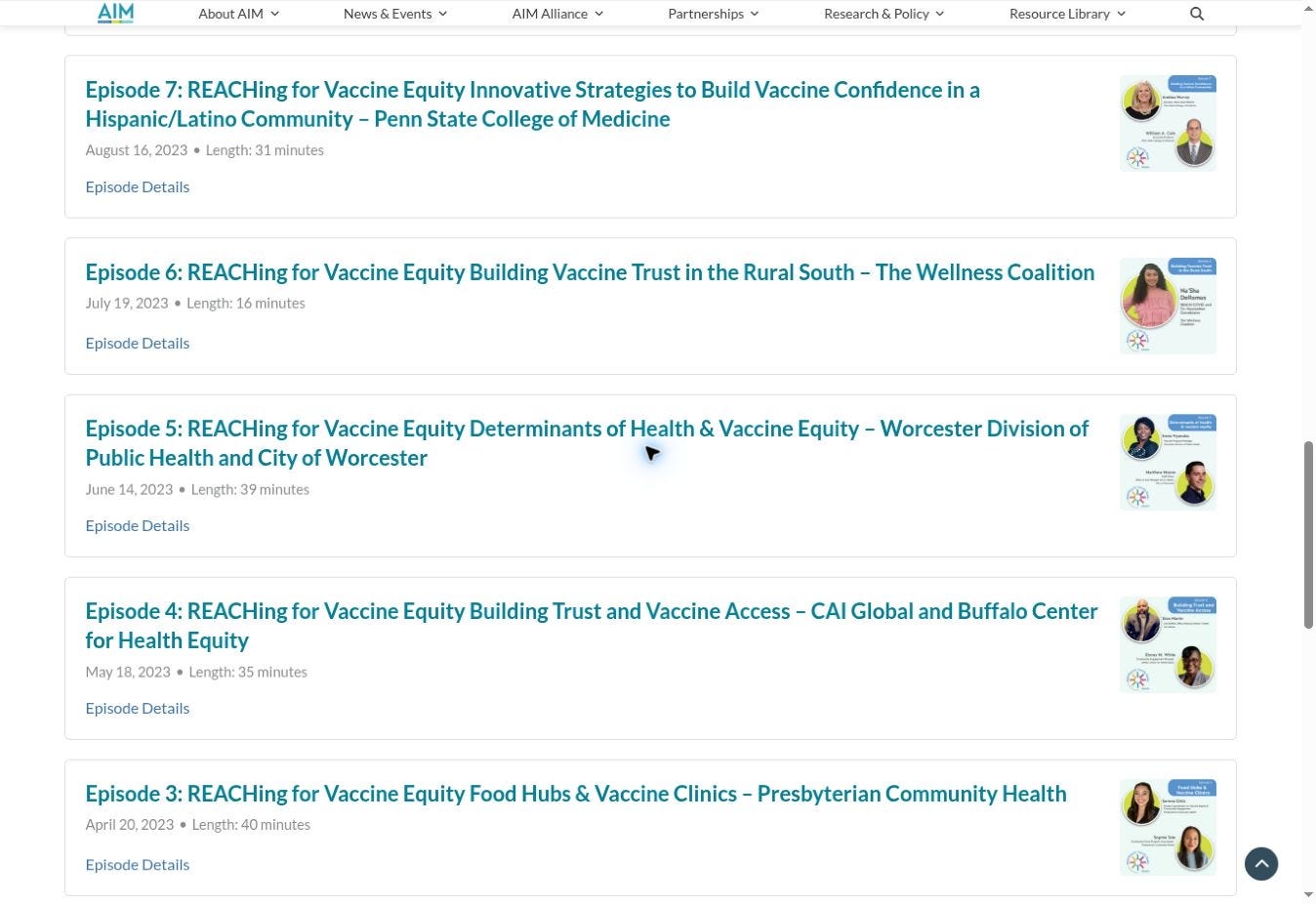
The first show was called REACHing for Vaccine Equity.
It was produced by the Association of Immunization Managers, or AIM, and hosted by Yabo Beysolow and Lisa Jacques-Carroll—two immunization consultants who previously worked at the CDC.
Beysolow worked in the CDC’s Immunization Services Division and led the U.S. Childhood Immunization Schedule Working Group as the agency’s representative to the Advisory Committee on Immunization Practices. Jacques-Carroll spent six years coordinating the CDC’s Perinatal Hepatitis B Prevention Program and later worked in its Global Immunization Division.
AIM says the podcast was supported as part of a $3.33 million financial-assistance award funded entirely by the CDC.
The series consisted of eight full episodes released in 2023. AIM’s own annual report recorded only 920 iREACH podcast listeners. Its Apple Podcasts page displayed one rating as of August 30, 2026.
The episode titles made the show’s objective clear:
● “Building Vaccine Trust in the Rural South”
● “Building Trust and Vaccine Access”
● “Innovative Strategies to Build Vaccine Confidence in a Hispanic/Latino Community”
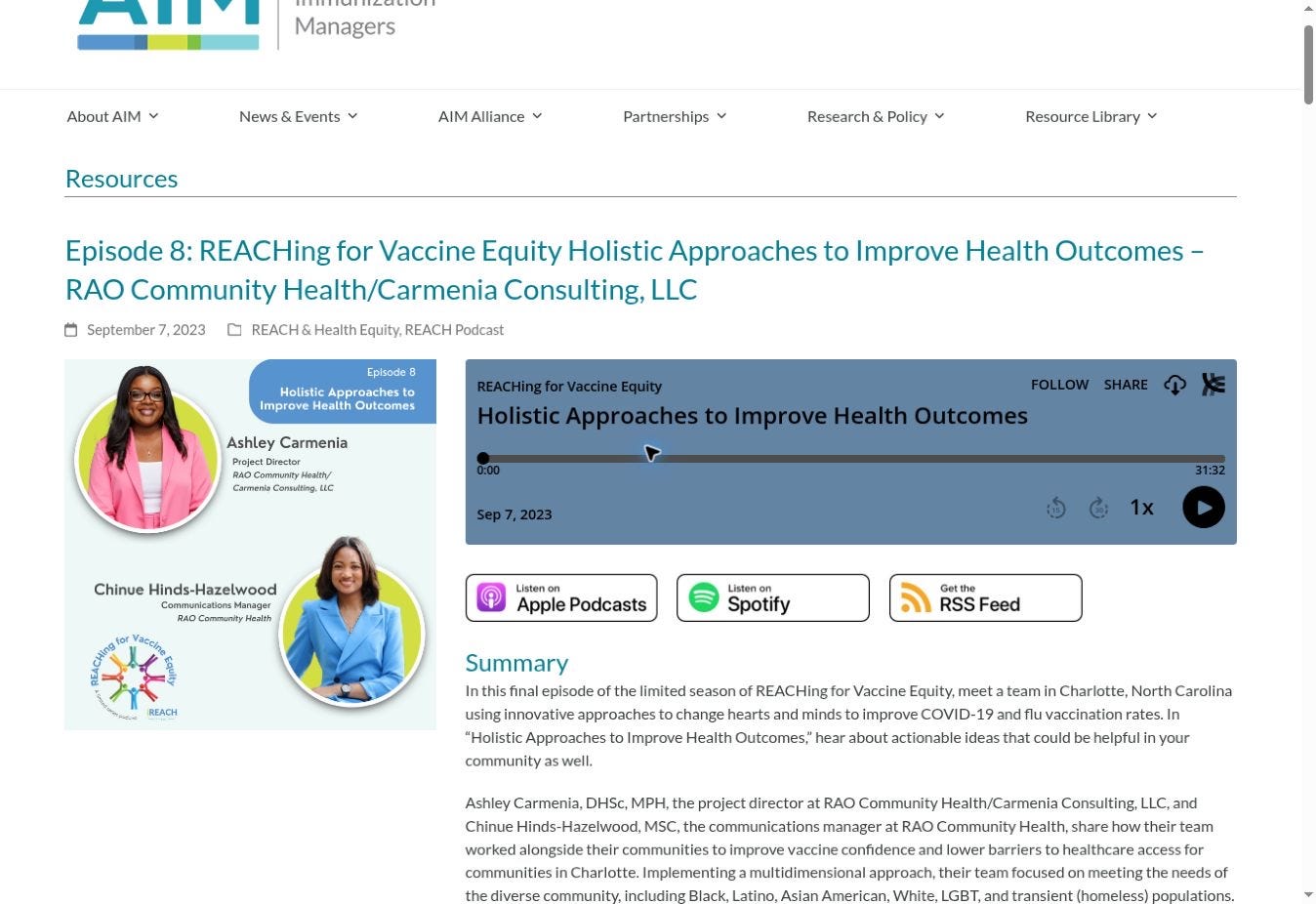
● “Holistic Approaches to Improve Health Outcomes”
The final episode promised strategies to “change hearts and minds to improve COVID-19 and flu vaccination rates.”
Guests described using barbershops, church leaders, radio personalities, fraternities and sororities, billboards, buses, Instagram influencers and even comedians to promote vaccination.
One guest, Ashley Carmenia, described wrestling with her team’s own hesitancy while “having to get out there and tell the public the benefits of being vaccinated.” Her full remarks explained that rapidly changing information created questions even among the outreach workers.
In the food-hub episode, a guest said church leaders were “promoting positive vaccination messages from their pulpit.”
In an episode featuring Multnomah County, a public-health nurse said she paired COVID messaging with flu-shot messaging to make vaccination “something that people should be doing.”
The official episode outro identifies CDC cooperative agreement 6NH23IP922569-05-03 and states: “AIM controls all content on this podcast.”
A second podcast used nurses as “trusted messengers”
The CDC also awarded the National Nurse-Led Care Consortium, or NNCC, $2.425 million under cooperative agreement NU50CK000580.
The money supported a much broader project, but one component was a 16-episode, three-season vaccine-confidence series on At the Core of Care.