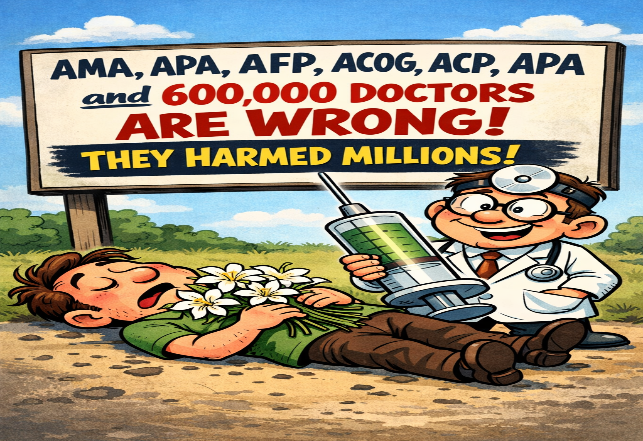
Abstract
Objectives: To examine the formal policy positions of major professional medical associations regarding COVID-19 vaccination and to analyze the mechanisms through which these organizations promoted or enforced compliance among healthcare professionals.
Design: Narrative policy analysis integrating primary organizational statements, peer-reviewed literature, and institutional case studies.
Setting: United States–based professional medical associations with international relevance.
Participants: Major physician organizations, including the American Medical Association (AMA), American Academy of Pediatrics (AAP), American College of Physicians (ACP), Infectious Diseases Society of America (IDSA), and allied public health bodies.
Main outcome measures: Policy positions on COVID-19 vaccination and mandates; mechanisms of compliance including institutional mandates, credentialing requirements, and normative professional pressures.
Results: Medical associations uniformly endorsed COVID-19 vaccination and widely supported employer-based mandates for healthcare personnel. Although lacking direct disciplinary authority, these organizations exerted substantial influence through indirect enforcement mechanisms embedded in healthcare institutions. These included employment requirements, hospital privileging standards, continuing medical education (CME), and reputational norms. Evidence suggests that such mechanisms significantly increased vaccination uptake among healthcare workers.
Conclusions: Professional medical associations functioned as powerful normative regulators during the COVID-19 pandemic, shaping behavior through institutional alignment rather than formal coercion. This model represents a hybrid form of governance with important implications for professional autonomy, legitimacy, and public trust.
Introduction
The COVID-19 pandemic marked a critical inflection point in the relationship between professional medical organizations and public health governance. Historically, medical associations have operated as advisory bodies, articulating standards of care and ethical norms without direct regulatory authority. During the pandemic, however, these organizations assumed a more assertive role, actively endorsing vaccination mandates and shaping institutional policies affecting millions of healthcare workers.
Vaccination of healthcare personnel was framed not merely as a clinical recommendation but as a professional obligation rooted in the ethical principle of nonmaleficence. As one widely endorsed position stated, healthcare workers have a duty to “put patients’ health and well-being first,” with vaccination described as integral to that obligation .
This article examines how major medical associations translated this ethical framing into policy and how they contributed—directly and indirectly—to enforcement.
Methods
This analysis synthesizes:
- Official policy statements from major medical associations
- Peer-reviewed literature on vaccine mandates and healthcare worker compliance
- Institutional case studies of mandate implementation
- Public health policy analyses
The approach is interpretive rather than quantitative, focusing on institutional mechanisms and governance structures.
Results
1. Convergence of Policy Positions Across Associations
A striking feature of the pandemic response was the high degree of consensus among major professional organizations.
American Medical Association (AMA)
The American Medical Association publicly endorsed mandatory vaccination policies for healthcare workers, stating that universal vaccination was essential to protect patients and reduce transmission. It explicitly called for employers to require vaccination as a condition of employment .
The AMA framed vaccination as:
- An ethical duty grounded in patient safety
- A continuation of longstanding occupational vaccine requirements (e.g., hepatitis B)
- A necessary step to prevent resurgence of restrictive public health measures
American College of Physicians (ACP)
The American College of Physicians co-signed multi-organizational statements supporting mandates covering millions of healthcare workers, emphasizing both ethical duty and epidemiological necessity .
Infectious Diseases Society of America (IDSA) and Epidemiological Societies
The Infectious Diseases Society of America and allied infection-control organizations strongly advocated vaccination as a condition of employment, citing evidence that mandates increase uptake and reduce transmission risk .
American Academy of Pediatrics (AAP)
The American Academy of Pediatrics emphasized vaccination both for healthcare workers and pediatric populations, framing immunization as essential to protect vulnerable children and maintain healthcare system integrity.
Coalition Statements
More than 50 professional organizations issued joint statements supporting healthcare worker mandates, arguing that such policies were “critical” for patient safety and workforce protection .
2. Ethical Framing: From Recommendation to Obligation
Across organizations, vaccination was framed as:
- A professional duty (nonmaleficence and beneficence)
- A collective responsibility to protect vulnerable populations
- A condition of trust between patients and providers
This ethical framing was crucial in transforming vaccination from a voluntary clinical choice into a normatively expected behavior.
3. Mechanisms of Enforcement
Although professional associations lack statutory regulatory authority, they contributed to enforcement through multiple interlocking mechanisms.
3.1 Institutional Mandates (Primary Mechanism)
Healthcare systems implemented vaccination requirements as employment conditions, often citing association guidance.
- Example: Large U.S. hospital systems required vaccination or termination, with deadlines and exemption processes .
- These mandates extended to physicians via clinical privileging requirements, effectively binding independent practitioners.
Associations did not enforce mandates directly but legitimized and accelerated their adoption.
3.2 Credentialing and Privileging ضغطures
Hospitals incorporated vaccination status into:
- Medical staff credentialing
- Renewal of privileges
- Access to clinical facilities
Because physicians depend on hospital privileges to practice, this mechanism functioned as a de facto enforcement tool.
3.3 Normative and Reputational Enforcement
Associations exerted strong soft power through:
- Policy statements defining vaccination as standard professional conduct
- CME programs reinforcing vaccine science
- Public messaging linking vaccination to ethical practice
This created a reputational environment in which noncompliance could be perceived as deviation from professional norms.
3.4 Alignment with Public Health Infrastructure
Medical associations worked closely with federal advisory bodies and public health agencies, reinforcing consensus and policy coherence.
Their integration into advisory ecosystems amplified their influence, even without formal regulatory authority.
3.5 Legal and Political Advocacy
Associations engaged in:
- Advocacy supporting federal and state vaccine mandates
- Defense of vaccine advisory institutions
- Public opposition to policies perceived as undermining vaccination efforts
This extended their influence into legal and political domains, reinforcing enforcement indirectly.
4. Effectiveness of Enforcement Mechanisms
Evidence suggests that these combined mechanisms were effective:
- Vaccine mandates in healthcare settings significantly increased uptake
- Some systems achieved vaccination rates approaching universal compliance
- Mandates functioned both as coercive and signaling mechanisms
Empirical studies indicate that institutional requirements were a major driver of compliance, even among initially hesitant workers .
5. Limits of Authority
Despite their influence, associations faced structural constraints:
- No direct power to revoke licenses
- Limited ability to sanction individual members
- Dependence on institutional intermediaries (hospitals, employers)
Thus, enforcement was distributed rather than centralized.
Discussion
1. A Hybrid Model of Governance
The pandemic response illustrates a hybrid governance model combining:
- Professional self-regulation
- Institutional enforcement
- Public health authority
Medical associations functioned as norm entrepreneurs, shaping expectations that were operationalized by employers.
2. Professional Autonomy vs Collective Obligation
The widespread endorsement of mandates marked a shift toward collective responsibility over individual autonomy.
While consistent with public health ethics, this shift generated tension within the profession, as reflected in divided attitudes toward mandates among healthcare workers .
3. Legitimacy and Trust
The strong consensus among associations:
Strengthened:
- Public messaging coherence
- Institutional decisiveness
But raised concerns about:
- Perceived lack of pluralism
- Conflation of scientific evidence with institutional authority
4. Precedent for Future Crises
The mechanisms developed during COVID-19 may serve as a template for future emergencies, including:
- Rapid norm formation
- Institutional enforcement via employment structures
- Coordinated advocacy across professional organizations
Limitations
This analysis is limited by:
- Reliance on publicly available policy statements
- Lack of granular data on internal organizational deliberations
- Focus on U.S. institutions, though findings may generalize to similar systems
Conclusion
Professional medical associations played a central role in shaping COVID-19 vaccination policy and compliance among healthcare workers. While lacking direct coercive authority, they exercised substantial influence through:
- Ethical framing
- Institutional alignment
- Normative pressure
- Policy advocacy
This model—characterized by indirect but effective enforcement—represents a significant evolution in the role of professional organizations in public health governance.
Future policy debates should critically examine the balance between professional authority, individual autonomy, and societal obligation in this emerging paradigm.
Adverse Consequences of COVID-19 Policies for Vulnerable Populations: Evidence, Institutional Dynamics, and Lessons for Reform
Documented Harms to Children and Vulnerable Adults
A substantial body of peer-reviewed literature now documents that several non-pharmaceutical interventions—particularly prolonged school closures and lockdowns—were associated with significant collateral harms, disproportionately affecting vulnerable populations.
1. Child Mental Health and Development
Systematic reviews consistently demonstrate that school closures and lockdowns were associated with worsening mental health among children and adolescents, including increased anxiety, loneliness, depression, and behavioral disturbances.
Disruption of daily routines, loss of peer interaction, and reduced access to supportive services contributed to these outcomes.
A broader synthesis in BMJ Paediatrics Open concluded that containment measures produced “a range of adverse effects,” including:
- Increased depressive symptoms
- Reduced life satisfaction
- Increased sedentary behavior and unhealthy lifestyles
These effects were not evenly distributed—children from lower socioeconomic backgrounds and those with disabilities experienced disproportionately greater harm.
2. Educational Loss and Long-Term Consequences
The scale of educational disruption was historically unprecedented, affecting over a billion children globally.
Evidence indicates:
- Significant learning deficits in reading and mathematics
- Loss of previously acquired knowledge
- Long-term educational trajectory disruption
More recent global analyses confirm measurable declines in academic performance correlated with duration of school closures.
Importantly, modeling studies suggest these losses may translate into long-term economic and health consequences, including reduced lifetime earnings and associated downstream health effects.
3. Child Protection and Social Safety-Net Failures
Schools function as critical detection systems for abuse and neglect. During closures, reporting of child abuse dropped sharply—not necessarily reflecting reduced incidence, but reduced detection.
Empirical data demonstrate substantial declines in reporting of:
- Physical abuse
- Sexual abuse
- Domestic violence against children
This represents a failure of protective infrastructure, with potentially serious unmeasured harm.
4. Physical Health and Healthcare Access
Lockdowns and disruptions to healthcare systems were associated with:
- Reduced routine immunization uptake
- Delayed medical care
- Increased sedentary behavior and childhood obesity risk
In some settings, reduced healthcare access was linked to increased non-COVID morbidity and mortality, particularly among vulnerable populations.
5. Inequality Amplification
Across domains, a consistent finding is that COVID-19 policies amplified existing inequalities:
- Lower-income children experienced greater learning loss
- Families with fewer resources struggled with remote education
- Vulnerable adults faced greater barriers to care
These disparities were not incidental—they were structurally predictable consequences of broad population-level interventions.
Institutional Alignment and Policy Convergence
Professional medical associations—including the American Medical Association, American Academy of Pediatrics, and Infectious Diseases Society of America—generally aligned closely with government public health authorities such as the Centers for Disease Control and Prevention.
This alignment produced:
- Rapid consensus formation
- Strong public messaging coherence
- Broad institutional adoption of similar policies
However, it also reduced visible heterogeneity of professional opinion, particularly in early stages of the pandemic when uncertainty was high.
On Claims of Harm, Causation, and Responsibility
It is important to distinguish between:
- Documented harms (well-supported in the literature)
- Causal attribution (often complex and multifactorial)
- Normative judgments (subject to ethical and political interpretation)
There is strong evidence that certain policies (e.g., prolonged school closures) were associated with harm. However, claims that these policies directly “caused deaths” require careful qualification:
- Some modeling studies suggest that alternative strategies might have reduced overall harm while maintaining infection control.
- Disruptions in healthcare access likely contributed to adverse outcomes, though attribution remains complex.
Thus, the evidence supports significant unintended harm, but causal pathways vary and remain an area of ongoing research.
Why Did the Medical Profession Show Limited Organized Dissent?
Several structural and sociological factors likely contributed:
1. Epistemic Uncertainty and Risk Aversion
Early in the pandemic, uncertainty regarding viral lethality and transmission favored precautionary decision-making. In such contexts, institutions tend toward risk minimization—even at the expense of broader trade-offs.
2. Institutional Incentives and Alignment
Medical associations are deeply integrated with:
- Public health agencies
- Academic institutions
- Healthcare systems
This creates incentive alignment, making divergence from governmental policy less likely.
3. Normative Pressure and Professional Identity
Once vaccination and mitigation measures were framed as ethical obligations, dissent could be perceived as:
- Unprofessional
- Anti-scientific
- Potentially harmful
This dynamic can suppress open debate within professional communities.
4. Centralization of Expertise
Reliance on a relatively small group of experts and advisory bodies (e.g., federal committees) contributed to epistemic centralization, limiting pluralistic input.
5. Crisis Governance Dynamics
In emergencies, decision-making often becomes:
- Rapid
- Centralized
- Less tolerant of dissent
This is a well-described phenomenon in disaster governance literature.
Preventing Recurrence: Policy and Professional Reforms
The COVID-19 experience suggests several reforms to mitigate future harms:
1. Formal Harm–Benefit Accounting
Policy decisions should explicitly evaluate collateral harms, including:
- Educational loss
- Mental health impact
- Inequality effects
This aligns with calls for integrating ethical frameworks into policy modeling.
2. Protection of Institutional Pluralism
Medical associations should:
- Encourage structured internal debate
- Publish minority or dissenting opinions
- Avoid premature consensus in conditions of uncertainty
3. Decentralized Decision-Making
Where feasible, policies should allow:
- Local adaptation
- Context-sensitive implementation
- Avoidance of one-size-fits-all mandates
4. Safeguards for Vulnerable Populations
Policies affecting children and marginalized groups should require:
- Higher evidentiary thresholds
- Explicit equity impact assessments
- Continuous outcome monitoring
5. Separation of Advisory and Advocacy Roles
Clearer distinctions between:
- Scientific advisory functions
- Policy advocacy
may reduce risks of institutional overreach and preserve trust.
6. Transparency and Accountability
Future responses should include:
- Public release of modeling assumptions
- Retrospective policy audits
- Independent review panels
Conclusion
The evidence indicates that certain COVID-19 policies—particularly prolonged school closures—were associated with substantial unintended harms, especially among vulnerable children and disadvantaged populations.
Professional medical associations played a central role in legitimizing and promoting these policies. While their actions were largely grounded in precautionary ethics under uncertainty, the resulting institutional convergence may have limited critical evaluation of trade-offs.
A key lesson for future public health crises is the need to balance urgency with pluralism, and precaution with proportionality, ensuring that efforts to mitigate one form of harm do not inadvertently amplify others.
References
- Joint statement supporting healthcare worker mandates
- AMA policy on vaccine mandates
- Institutional mandate case study (Houston Methodist)
- Epidemiological society consensus statements
- Systematic review of HCW attitudes toward mandates
- Public health mandate context in the U.S.
- American Academy of Pediatrics. COVID-19 vaccine recommendations. 2021–2023.
- Beauchamp TL, Childress JF. Principles of Biomedical Ethics. 8th ed. Oxford University Press; 2019.
- Malani PN, et al. Mandatory COVID-19 vaccination for healthcare personnel. Ann Intern Med. 2021;174(9):1305-7.
- Centers for Medicare & Medicaid Services. Omnibus COVID-19 Health Care Staff Vaccination Rule. 2021.
- Field RI. Vaccine mandates and healthcare employment law. Health Aff. 2021;40(9):1444-9.
- King WC, Rubinstein M, Reinhart A, Mejia R. COVID-19 vaccine hesitancy among healthcare workers. Am J Infect Control. 2021;49(12):1461-7.
- Dooling K, et al. The Advisory Committee on Immunization Practices’ updated recommendations. MMWR. 2021;70:1-5.
- Gostin LO, Wiley LF. Governmental public health powers during the COVID-19 pandemic. JAMA. 2020;324(13):1295-6.
- Karaivanov A, Kim D, Lu SE, Shigeoka H. COVID-19 vaccination mandates and vaccine uptake. Nat Commun. 2022;13:3373.
- Bradley SF, et al. Effects of mandatory vaccination policies in healthcare settings. Clin Infect Dis. 2022;75(1):e90-e96.
- Reses HE, et al. COVID-19 vaccination coverage among healthcare personnel. MMWR. 2021;70:753-8.
- Studdert DM, Hall MA. Disease control, civil liberties, and mass testing. N Engl J Med. 2020;383:102-4.
- Abbott A. The System of Professions. University of Chicago Press; 1988.
- Childress JF, Faden RR, Gaare RD, et al. Public health ethics: mapping the terrain. J Law Med Ethics. 2002;30(2):170-8.
- Salmon DA, Dudley MZ, Brewer J, et al. COVID-19 vaccination attitudes. Lancet. 2021;397:99-111.
- Schaffer DeRoo S, Pudalov NJ, Fu LY. Planning for a COVID-19 vaccination program. JAMA. 2020;323(24):2458-9.
- Bibbins-Domingo K, Petersen M, Havlir D. Taking vaccine to where the virus is. JAMA. 2021;325(13):1247-8.
- Volpp KG, Cannuscio CC. Incentives for immunity. JAMA. 2021;325(13):1251-2.
- Persad G, Emanuel EJ. Ethical considerations of mandates. Lancet. 2021;398:113-4.