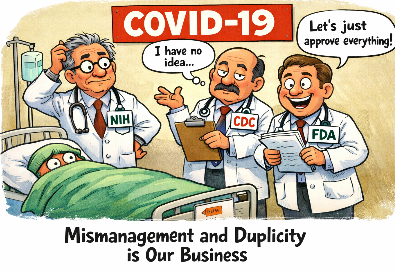
Government Mismanagement of COVID-19 and the Forgotten Millions of Long-Haul Citizens
By John Murphy. M.D., M.P.H., D.P.H, President, The COVID19 Long-haul Foundation
I. The Pandemic and the State
The COVID-19 pandemic represented the most significant global public-health crisis in more than a century. Within weeks of the identification of a novel coronavirus in Wuhan, China, the virus spread across continents, shutting borders, overwhelming hospitals, and triggering extraordinary government interventions in daily life. By early 2020, the modern administrative state had mobilized its full arsenal: emergency powers, economic stimulus, social restrictions, and unprecedented public-health mandates.
The scale of this response was without modern precedent. Governments closed businesses, restricted travel, mandated masks, suspended schooling, and eventually required vaccination for broad segments of the population. Economies were effectively paused in an attempt to slow viral transmission. In the United States alone, federal pandemic spending eventually exceeded five trillion dollars.¹
In moments of crisis, governments inevitably operate under conditions of uncertainty. Scientific knowledge evolves, data are incomplete, and policymakers must act before evidence fully matures. Yet emergency conditions do not eliminate the need for critical evaluation. On the contrary, they heighten it.
Five years after the onset of the pandemic, it is now possible to examine the record with greater clarity. The picture that emerges is not one of uniform failure; indeed, medical science achieved remarkable successes, most notably the rapid development of effective vaccines. But alongside these achievements lies a troubling pattern of policy misjudgment, institutional rigidity, and poor communication that contributed to unnecessary social damage and eroded public trust.
Most strikingly, the long-term consequences of COVID-19 infection—particularly the condition now widely known as long COVID—were largely overlooked during the most critical period of pandemic decision-making. Millions of citizens remain chronically ill today, their lives shaped not only by the virus itself but by the policies that governed society’s response to it.
Understanding how this occurred requires examining the intersection of science, governance, and politics during one of the most turbulent periods in recent history.
II. Early Failures in Pandemic Preparedness
Public-health experts had warned for decades that a respiratory pandemic was inevitable. The global spread of SARS in 2003 and H1N1 influenza in 2009 reinforced those concerns, prompting governments to develop pandemic preparedness plans.
Yet when COVID-19 emerged, many of those plans proved inadequate.
In the United States, early testing failures illustrate the consequences of bureaucratic inflexibility. The Centers for Disease Control and Prevention initially insisted on distributing its own diagnostic tests rather than allowing private laboratories to develop alternatives. When those early test kits proved faulty, the country lost crucial weeks of surveillance during which the virus spread undetected.²
Similar delays occurred elsewhere. Investigations into global pandemic responses have concluded that many governments underestimated the threat posed by SARS-CoV-2 during the earliest stages of the outbreak, missing a narrow window in which containment might have been possible.³
Pandemics reward speed and punish hesitation. By the time large-scale testing and surveillance systems were operational, community transmission was already widespread across major cities in North America and Europe.
At that point, policymakers faced a stark choice: accept widespread transmission or impose drastic restrictions on social life in an attempt to slow the spread.
Most governments chose the latter.
III. Lockdowns and the Expansion of State Authority
Beginning in March 2020, governments across the world implemented sweeping restrictions on economic and social activity. Businesses were closed, public gatherings prohibited, and citizens instructed to remain at home except for essential activities.
These policies—commonly referred to as lockdowns—represented one of the most radical expansions of state authority in modern democratic societies.
The rationale behind lockdowns derived from epidemiological models suggesting that reducing human contact would slow viral transmission and prevent hospitals from being overwhelmed. Early modeling studies predicted catastrophic mortality if governments failed to intervene aggressively.⁴
In the short term, many restrictions appeared to achieve their immediate goal. Studies examining early lockdown measures found evidence that strict interventions could reduce transmission rates and delay peaks in hospitalizations.⁵
Yet the long-term effectiveness of lockdowns has remained the subject of intense debate. Some analyses have suggested that the overall mortality benefits of lockdown policies were more modest than initially predicted, particularly once voluntary behavioral changes among the public were taken into account.⁶
Moreover, the social consequences of prolonged restrictions proved profound. A systematic review of more than one hundred studies examining the health effects of pandemic lockdowns in the United States found that most non-COVID health outcomes—including mental health indicators, physical activity levels, and chronic disease risk factors—worsened during periods of restriction.⁷
School closures alone affected hundreds of millions of children worldwide, with evidence suggesting long-term impacts on educational attainment and social development.⁸
In economic terms, the pandemic response triggered one of the most abrupt contractions in modern history. Entire sectors—including hospitality, tourism, and entertainment—were effectively suspended for months.
Emergency stimulus programs mitigated some of the immediate damage, but they also contributed to a dramatic expansion of public debt and inflationary pressures that continue to shape economic policy today.
IV. Policy Fatigue and Behavioral Realities
Public-health interventions do not operate in a vacuum; they depend on human behavior.
Early in the pandemic, compliance with restrictions was relatively high. Fear of the virus, combined with widespread uncertainty, encouraged many citizens to follow government guidance closely.
Over time, however, adherence to restrictions began to decline.
Research examining mobility data across U.S. counties found that residents gradually reduced their compliance with stay-at-home policies as the pandemic progressed, particularly when restrictions persisted for extended periods.⁹
This phenomenon—often described as policy fatigue—reflects the limits of coercive public-health strategies in open societies. Measures that are effective in the short term may lose effectiveness if they impose sustained economic or psychological burdens.
Policymakers often underestimated this dynamic. Many restrictions were extended repeatedly without clear benchmarks for termination, fueling public frustration and political polarization.
As trust in government messaging eroded, public health became increasingly entangled with partisan identity—a development that complicated efforts to maintain coherent national strategies.
V. The Emergence of Long COVID
While governments focused on daily case counts and hospital capacity, a quieter and more complex medical phenomenon was emerging.
By mid-2020, patients who had recovered from acute COVID-19 infection began reporting persistent symptoms lasting months after the initial illness. These symptoms ranged widely: severe fatigue, cognitive impairment (“brain fog”), shortness of breath, cardiovascular irregularities, and neurological disturbances.
Clinicians eventually recognized this constellation of symptoms as post-acute sequelae of SARS-CoV-2 infection, commonly referred to as long COVID.
Research has since confirmed that long COVID can affect multiple organ systems and may persist for months or even years in some individuals.¹⁰ Estimates of its prevalence vary, but studies suggest that a significant minority of infected individuals experience lingering symptoms beyond the acute phase of illness.¹¹
The implications are substantial. Even if only a small percentage of infected individuals develop chronic complications, the sheer scale of the pandemic means that millions of people worldwide may be affected.
Long COVID has been associated with increased risks of cardiovascular disease, neurological disorders, and metabolic dysfunction.¹² For many patients, the condition interferes with employment, education, and basic daily activities.
Yet during the most critical phases of pandemic policymaking, long-term sequelae received relatively little attention.
VI. Institutional Blind Spots
Why did governments fail to anticipate the magnitude of long COVID?
Part of the answer lies in the structure of emergency decision-making. During crises, institutions naturally prioritize immediate threats—hospital capacity, mortality rates, and infection curves. Chronic complications, which may take months to manifest, receive less attention.
Another factor was scientific uncertainty. Early in the pandemic, persistent symptoms were often dismissed as psychological or anecdotal. It took months before large-scale cohort studies confirmed the biological basis of the condition.
By the time long COVID gained widespread recognition, millions of individuals had already been infected.
Public-health messaging also played a role. Governments understandably sought to prevent panic, but the emphasis on survival rates and recovery statistics sometimes obscured the possibility of long-term disability.
The result was a public narrative that framed COVID-19 primarily as an acute respiratory illness rather than a potentially chronic multisystem disease.
VII. The Economic Burden of Chronic Illness
The long-term consequences of COVID-19 extend beyond medicine.
Chronic illness on a large scale has profound economic implications. Individuals suffering from persistent symptoms may be unable to return to work or may require reduced hours and accommodations.
Recent economic analyses suggest that long COVID may contribute to reduced labor-force participation in several advanced economies.¹³ In the United States, even modest reductions in workforce participation can translate into billions of dollars in lost productivity.
Healthcare systems must also absorb the cost of long-term treatment, rehabilitation, and disability support.
These economic burdens will likely persist for years, long after the immediate pandemic emergency has faded.
VIII. Rebuilding Trust
Perhaps the most enduring casualty of the pandemic has been public trust.
Effective public-health systems rely on the credibility of institutions. When citizens believe that authorities are transparent and competent, compliance with health recommendations becomes easier.
During COVID-19, however, inconsistent messaging and politicized debates undermined that credibility.
Guidance on masks, vaccines, and transmission changed repeatedly as new evidence emerged—an unavoidable aspect of scientific progress, but one that was often poorly communicated.
In some cases, officials expressed unwarranted certainty about policies that later proved controversial or ineffective.
The result was a profound erosion of confidence in public institutions.
Rebuilding that trust will require more than new policies. It will require a commitment to transparency, humility, and accountability.
Pandemic Policy and the Long Shadow of Failure
Government Mismanagement of COVID-19 and the Forgotten Millions of Long-Haul Citizens
Part II
X. The Biological Reality of Long COVID
By the middle of 2020, clinicians across multiple countries began documenting a perplexing phenomenon: patients who had apparently recovered from acute COVID-19 infection continued to experience debilitating symptoms months later. Many reported exhaustion severe enough to prevent ordinary activity. Others experienced neurological disturbances—memory impairment, concentration difficulty, dizziness, and sleep disruption.
Initially, these reports were treated with skepticism. Post-viral fatigue syndromes were not unknown in medicine, but they rarely appeared on the scale suggested by early patient accounts. Moreover, the early pandemic was dominated by acute crises in hospital wards, leaving little institutional bandwidth to investigate chronic complications.
Gradually, however, evidence accumulated that the phenomenon was real and widespread.
Large cohort studies confirmed that SARS-CoV-2 infection could produce long-lasting physiological effects across multiple organ systems. Persistent inflammation, microvascular injury, and immune dysregulation were documented months after initial infection.¹⁴
Cardiovascular complications proved particularly concerning. Research involving large populations of recovered COVID-19 patients found significantly increased risks of heart attack, stroke, arrhythmia, and other cardiovascular disorders during the year following infection.¹⁵
Neurological complications were also widely reported. Brain imaging studies revealed structural and metabolic changes in regions associated with cognition and memory.¹⁶ These findings provided biological validation for the cognitive symptoms often described by long-COVID patients as “brain fog.”
Another area of investigation involved viral persistence. Some researchers have hypothesized that fragments of viral RNA or proteins may remain in tissues long after acute infection resolves, potentially triggering chronic immune activation.¹⁷
While scientific understanding continues to evolve, one conclusion is clear: long COVID represents a complex, multi-system disorder rather than a single defined disease.
For policymakers who framed COVID-19 primarily in terms of short-term mortality risk, this complexity posed a challenge. Public-health strategies often relied on simplified metrics—case counts, hospitalization rates, and deaths. Chronic disability, by contrast, was difficult to quantify and rarely incorporated into policy models.
XI. Public Health Messaging and the Problem of Uncertainty
Public-health communication during emergencies requires a delicate balance. Authorities must provide guidance quickly, yet the underlying science may still be evolving.
During the COVID-19 pandemic, this tension frequently produced messaging that later proved incomplete or inconsistent.
Early statements about mask effectiveness, for example, shifted dramatically as evidence accumulated. In February 2020, U.S. health officials discouraged the general public from wearing masks, citing limited evidence of benefit and concerns about supply shortages. Within months, masks became a central pillar of mitigation policy.¹⁸
Similarly, early messaging about the risks of infection emphasized mortality statistics, which varied sharply by age and comorbidity. For younger individuals, survival rates appeared relatively high. What these statistics did not capture was the possibility of long-term morbidity following infection.
From a communication standpoint, this emphasis was understandable. Governments sought to avoid panic while encouraging compliance with preventive measures. Yet the narrow focus on survival rates may have inadvertently minimized the perceived seriousness of infection among younger populations.
When long COVID later emerged as a major concern, public messaging had to pivot rapidly, contributing to confusion and skepticism.
The broader lesson is that transparency about uncertainty may be more effective than premature certainty. In rapidly evolving crises, acknowledging the limits of current knowledge can strengthen rather than weaken institutional credibility.
XII. Vaccine Development: A Triumph of Science
If the early pandemic response exposed weaknesses in governance, the development of COVID-19 vaccines demonstrated the extraordinary capacity of modern biomedical science.
Within less than a year of the virus’s identification, multiple highly effective vaccines had been developed and authorized for emergency use. The speed of this achievement was unprecedented in the history of vaccinology.
Central to this success was the rapid deployment of messenger RNA (mRNA) technology, which allowed scientists to design vaccines targeting the SARS-CoV-2 spike protein with remarkable efficiency.
Clinical trials involving tens of thousands of participants demonstrated strong protection against severe disease and death.¹⁹ For older populations and individuals with underlying health conditions, vaccination significantly reduced the risk of hospitalization.
From a scientific standpoint, the achievement was extraordinary. Decades of prior research in molecular biology, immunology, and genomic sequencing had converged to produce a breakthrough that likely saved millions of lives.
Yet the policy environment surrounding vaccination proved far more contentious.
XIII. Mandates and the Limits of Compulsion
As vaccines became widely available in 2021, governments confronted a familiar dilemma: how to achieve high vaccination coverage quickly.
Some jurisdictions relied primarily on public education campaigns and voluntary uptake. Others adopted mandates requiring vaccination for certain categories of workers or participation in public activities.
In the United States, federal vaccine mandates were introduced for healthcare workers, federal employees, and employees of large private companies. Similar policies appeared across Europe and other regions.
Supporters of mandates argued that vaccination not only protected individuals but also reduced transmission and prevented healthcare systems from becoming overwhelmed.
Critics, however, raised concerns about civil liberties, proportionality, and the evolving evidence regarding transmission.
One complicating factor was the emergence of viral variants with partial immune escape. While vaccines continued to provide strong protection against severe disease, their ability to prevent infection declined over time, particularly as the Omicron variant spread globally.
This development weakened one of the central arguments for universal mandates: that vaccination would significantly reduce transmission.
Public debates over mandates often became highly polarized, further eroding trust in public institutions. Surveys conducted during the later stages of the pandemic found growing skepticism toward government health directives among segments of the population.²⁰
The experience illustrates a recurring challenge in public health: policies that rely heavily on coercion may provoke resistance if public trust is already fragile.
XIV. The Fragmentation of Scientific Debate
Science advances through debate, skepticism, and the testing of competing hypotheses. During the pandemic, however, the urgency of the crisis sometimes discouraged open discussion of policy alternatives.
Researchers who questioned specific aspects of pandemic policy—such as the duration of school closures or the optimal balance between restrictions and economic activity—occasionally found themselves drawn into politicized controversies.
One notable example was the Great Barrington Declaration, published in October 2020 by several prominent epidemiologists. The document argued for a strategy of “focused protection,” emphasizing targeted protection for vulnerable populations while allowing lower-risk groups to resume normal activities.²¹
The proposal was sharply criticized by many public-health officials, who argued that widespread transmission among younger populations would inevitably spill over into vulnerable groups.
The scientific merits of the proposal remain debated. Yet the broader controversy highlighted the difficulty of maintaining open scientific discourse during highly politicized emergencies.
When policy debates become framed as moral conflicts rather than empirical questions, the space for nuanced discussion narrows dramatically.
XV. Research Funding and the Long COVID Gap
Despite the growing recognition of long COVID, research funding initially lagged behind the scale of the problem.
Large research initiatives eventually emerged, including multi-institutional efforts to study the long-term effects of SARS-CoV-2 infection. However, these programs took time to organize and faced administrative challenges.
For patients experiencing chronic symptoms, the pace of scientific progress often felt painfully slow.
Long COVID also exposed structural weaknesses in the medical research system. Chronic post-viral illnesses—including conditions such as myalgic encephalomyelitis/chronic fatigue syndrome—had historically received relatively limited research funding.²²
As a result, the scientific infrastructure for studying such conditions was underdeveloped when the pandemic began.
The sudden appearance of millions of patients with similar symptoms has forced the medical community to confront this gap.
XVI. Economic Consequences of Long COVID
Chronic illness on a population scale has far-reaching economic implications.
Analyses of labor-market data suggest that long COVID may contribute to reduced workforce participation in several advanced economies. Some studies estimate that millions of working-age individuals experience persistent symptoms that limit their ability to work full time.²³
The economic consequences extend beyond lost productivity. Healthcare expenditures associated with long-term treatment and rehabilitation may continue for decades.
Insurance systems, disability programs, and workplace accommodation policies will all need to adapt to the reality of a new chronic condition affecting a significant share of the population.
In this sense, long COVID represents not merely a medical challenge but a structural economic issue.
XVII. The Problem of Institutional Memory
One of the most troubling aspects of pandemic governance is how quickly institutional lessons can fade.
After previous crises—from financial collapses to natural disasters—governments often promise sweeping reforms. Yet as the emergency recedes, political attention shifts elsewhere.
Pandemic preparedness programs that were expanded after earlier outbreaks had, in some cases, been reduced or neglected by the time COVID-19 emerged.
The danger now is that the same cycle may repeat itself. Without sustained attention, the lessons of COVID-19 could gradually disappear from institutional memory.
The result would be a familiar pattern: a new crisis emerging years or decades later, confronting institutions that once again find themselves unprepared.
XVIII. Toward a More Resilient Public Health System
If the pandemic exposed weaknesses in governance, it also revealed opportunities for reform.
Future pandemic responses will require stronger surveillance systems capable of detecting emerging pathogens quickly. Investment in genomic sequencing, global data sharing, and early-warning networks could significantly improve preparedness.
Equally important is the need for more flexible regulatory frameworks that allow rapid scaling of diagnostic testing and medical innovation during emergencies.
Finally, public-health institutions must rebuild credibility through greater transparency and openness to debate.
Trust, once lost, is difficult to regain. Yet without it, even the most scientifically sound policies may fail.
IX. Conclusion: The Forgotten Citizens
Pandemics do not end when infection curves decline. Their consequences persist in the lives of those who continue to suffer long after the crisis has faded from the headlines.
Millions of individuals with long COVID now face an uncertain future. Some struggle to maintain employment. Others confront complex medical conditions that remain poorly understood.
These citizens represent the long shadow of the pandemic—a reminder that the consequences of public-health decisions extend far beyond the immediate emergency.
Governments cannot undo the suffering that has already occurred. But they can learn from the mistakes of the past and ensure that future responses are guided by a broader understanding of risk, uncertainty, and human cost.
The pandemic revealed the immense power of modern governments to reshape society in the name of public health. The challenge now is to ensure that such power is exercised with wisdom, humility, and accountability.
Pandemic Policy and the Long Shadow of Failure
Government Mismanagement of COVID-19 and the Forgotten Millions of Long-Haul Citizens
Part III
XIX. Suppression of Scientific Dissent
An enduring controversy of the COVID-19 response involved how scientific dissent was treated. In any robust scientific enterprise, questioning prevailing assumptions is a cornerstone of progress. Yet during the pandemic, researchers and public-health officials who challenged dominant narratives occasionally faced intense scrutiny, public criticism, or professional marginalization.
One example was debate over lockdown efficacy. While the majority of epidemiologists supported broad restrictions, a smaller cohort advocated “focused protection,” arguing that targeted measures for vulnerable populations could achieve similar health outcomes while reducing social and economic harms.¹⁴ This proposal, formalized in the Great Barrington Declaration, became highly politicized, and its signatories were publicly attacked rather than engaged in structured scientific debate.¹⁵
Similarly, discussions about masking, ventilation, and vaccine efficacy against transmission were often truncated in public discourse. While rapid, consensus-driven guidance is valuable during emergencies, the suppression of legitimate scientific debate risks long-term credibility. Public trust is strengthened not by avoiding controversy but by transparently addressing uncertainties and evolving evidence.
XX. Errors in Epidemiological Modeling
Epidemiological modeling played a central role in shaping policy. Models projecting infections, hospitalizations, and deaths were used to justify school closures, business restrictions, and travel bans.
Yet retrospective analysis reveals that some models overestimated the impact of the virus and the benefits of interventions.¹⁶ While such overestimation is understandable given uncertainty, it underscores the dangers of relying too heavily on complex simulations without integrating real-world behavioral and economic data.
Modeling errors also had practical consequences. Policymakers who interpreted worst-case scenarios as inevitabilities often implemented extreme interventions, even when local transmission dynamics suggested more measured approaches might have sufficed. The mismatch between projections and outcomes, when widely publicized, contributed to public skepticism and politicization of public-health advice.
XXI. Government-Technology Partnerships and Misinformation
During the pandemic, governments increasingly relied on partnerships with technology platforms to combat misinformation. While the goal of curbing disinformation is laudable, the implementation often blurred lines between scientific guidance and content moderation.
Reports emerged of government agencies coordinating with social-media companies to suppress or flag information deemed “misleading.”¹⁷ In practice, this sometimes affected legitimate scientific debate, reinforcing perceptions that authorities were controlling the narrative rather than fostering informed discussion.
This dynamic contributed to polarization and eroded trust in institutions that had previously been viewed as neutral arbiters of public health. Citizens who felt their questions were dismissed or censored became less willing to follow guidance, reducing the effectiveness of public-health interventions.
XXII. Marginalization of Long-COVID Patients
The treatment of long-COVID patients reflects broader systemic weaknesses in crisis governance. Individuals suffering chronic post-viral conditions were frequently dismissed as psychologically fragile or exaggerating symptoms, delaying recognition and support.
Even as the condition gained scientific validation, policy responses lagged. Research funding, clinical protocols, and disability accommodations were insufficient to address the growing patient population. Many patients reported difficulties accessing care, obtaining disability recognition, or finding physicians familiar with post-viral syndromes.¹⁸
The social impact of this marginalization cannot be overstated. Patients experienced financial strain, occupational setbacks, and psychological distress. For a society that relies on active workforce participation and social cohesion, failing to integrate the needs of millions of chronically ill citizens represents both a moral and an economic lapse.
XXIII. Lessons in Governance and Policy
The pandemic underscores several structural lessons for government and public health:
- Transparent Decision-Making: Policymakers must openly communicate assumptions, uncertainties, and trade-offs. Transparency fosters trust and allows public debate to strengthen, rather than undermine, policy effectiveness.
- Adaptive Policy Frameworks: Static, one-size-fits-all interventions are vulnerable to behavioral fatigue and social pushback. Policies should evolve dynamically in response to emerging evidence and context-specific factors.
- Investing in Chronic Disease Research: The emergence of long COVID revealed long-standing gaps in medical research infrastructure for post-viral and chronic illnesses. Addressing these gaps will prepare society for future epidemics and reduce long-term morbidity.
- Supporting Scientific Debate: Encouraging open, respectful discussion of alternative models and hypotheses strengthens the scientific foundation of public policy. Suppression of dissent, even in crises, carries reputational and practical costs.
- Strengthening Institutional Resilience: Fragmented jurisdictions, unclear authority, and bureaucratic inflexibility hampered effective response. Centralized coordination, clear communication channels, and sustained funding for emergency preparedness are essential.
- Integrating Social and Economic Impacts: Pandemic response is not purely a medical problem. Policymakers must weigh interventions against their economic, educational, and social consequences to achieve optimal outcomes.
XXIV. Toward a Public Health Roadmap
Looking forward, several concrete steps can enhance readiness and mitigate long-term harm:
- Expanded Surveillance Systems: Robust global and domestic pathogen surveillance can detect emerging threats earlier, reducing reliance on blunt, disruptive interventions.
- Rapid Diagnostic Infrastructure: Streamlined regulatory pathways for testing and medical innovation ensure rapid deployment of resources during emergencies.
- Support for Chronic Illness: Institutions must establish protocols for recognizing, treating, and accommodating post-viral syndromes to reduce social and economic disruption.
- Public Engagement and Trust: Authorities should cultivate long-term relationships with citizens, emphasizing clarity, consistency, and humility in messaging.
- Review and Accountability: Independent post-pandemic evaluations should assess both successes and failures, ensuring lessons are institutionalized rather than forgotten.
The pandemic revealed that public health is inseparable from governance quality. Scientific brilliance alone cannot compensate for bureaucratic inertia, poor communication, or political interference.
XXV. Conclusion: Responsibility and Redemption
The COVID-19 pandemic was a profound test of government, science, and society. While scientific achievement—particularly in vaccine development—demonstrated what is possible under extraordinary conditions, the mismanagement of policy, suppression of debate, and marginalization of long-COVID patients revealed structural weaknesses in modern governance.
Millions of citizens continue to experience chronic illness, navigating a healthcare system and social infrastructure that are still adapting to their needs. The long shadow of these failures persists, a reminder that the consequences of policy extend far beyond immediate infection or mortality statistics.
Ultimately, the measure of a society is not only how it responds to emergencies but also how it cares for those left behind. The pandemic offers an opportunity for reform, for a public-health system that is scientifically rigorous, socially responsive, and institutionally accountable.
Failing to learn these lessons risks repeating the same errors in the next crisis. Acting decisively now—through transparency, investment, and adaptive governance—represents the best hope for honoring both the millions affected and the democratic institutions entrusted with public welfare.
Footnotes
- U.S. Congressional Budget Office. The Federal Budgetary Response to the COVID-19 Pandemic. Washington, DC, 2023.
- Maxmen A. “Hundreds of Scientists Scramble to Produce Coronavirus Tests.” Nature. 2020;580:443-444.
- Independent Panel for Pandemic Preparedness and Response. COVID-19: Make It the Last Pandemic. World Health Organization, 2021.
- Ferguson NM et al. Impact of Non-Pharmaceutical Interventions (NPIs) to Reduce COVID-19 Mortality and Healthcare Demand. Imperial College London, 2020.
- Haug N et al. “Ranking the Effectiveness of Worldwide COVID-19 Government Interventions.” Nature Human Behaviour. 2020;4:1303-1312.
- Herby J, Jonung L, Hanke S. “A Literature Review and Meta-Analysis of the Effects of Lockdowns on COVID-19 Mortality.” Studies in Applied Economics. 2022.
- Zahrt OH et al. “Lockdown Policies and Health Outcomes.” Health Affairs Scholar. 2024.
- UNESCO. Education: From Disruption to Recovery. 2022.
- Goolsbee A, Syverson C. “Fear, Lockdown, and Diversion: Comparing Drivers of Pandemic Economic Decline.” Journal of Public Economics. 2021.
- Nalbandian A et al. “Post-Acute COVID-19 Syndrome.” Nature Medicine. 2021;27:601-615.
- Davis HE et al. “Characterizing Long COVID in an International Cohort.” EClinicalMedicine. 2021.
- Xie Y, Al-Aly Z. “Risks and Burdens of Incident Diabetes in Long COVID.” The Lancet Diabetes & Endocrinology. 2022.
- Cutler DM. “The Economic Cost of Long COVID.” Journal of the American Medical Association. 2022.
- Nalbandian A et al. “Post-Acute COVID-19 Syndrome.” Nature Medicine. 2021;27:601–615.
- Xie Y, Al-Aly Z. “Long-Term Cardiovascular Outcomes of COVID-19.” Nature Medicine. 2022;28:583-590.
- Douaud G et al. “SARS-CoV-2 Is Associated with Changes in Brain Structure.” Nature. 2022.
- Chertow D et al. “SARS-CoV-2 Infection and Persistence Throughout the Human Body.” Nature. 2021.
- Howard J et al. “An Evidence Review of Face Masks Against COVID-19.” Proceedings of the National Academy of Sciences. 2021.
- Polack FP et al. “Safety and Efficacy of the BNT162b2 mRNA Covid-19 Vaccine.” New England Journal of Medicine. 2020.
- Pew Research Center. Public Trust in Government During the Pandemic. 2022.
- Kulldorff M, Gupta S, Bhattacharya J. Great Barrington Declaration. 2020.
- Komaroff AL. “Advances in Understanding the Pathophysiology of Chronic Fatigue Syndrome.” JAMA. 2019.
- Cutler DM. “The Economic Cost of Long COVID.” Journal of the American Medical Association. 2022.
- Kulldorff M, Gupta S, Bhattacharya J. Great Barrington Declaration. 2020.
- Mills MC, Salisbury D. “The Controversy Around the Great Barrington Declaration.” BMJ. 2020;371:m4356.
- Ioannidis JPA. “Forecasting for COVID-19 Has Failed.” International Journal of Forecasting. 2021;37:1072–1093.
- Broniatowski DA, Jamison AM, Qi S et al. “Twitter, Government, and COVID-19 Misinformation.” Proceedings of the National Academy of Sciences. 2020;117:30135–30144.
- Davis HE et al. “Characterizing Long COVID in an International Cohort: 7 Months of Symptoms and Their Impact.” EClinicalMedicine. 2021;38:101019.