John Murphy, CEO The COVID-19 Long haul Foundation
The mystery of COVID-19 may ultimately be less about the virus than about the person it encounters
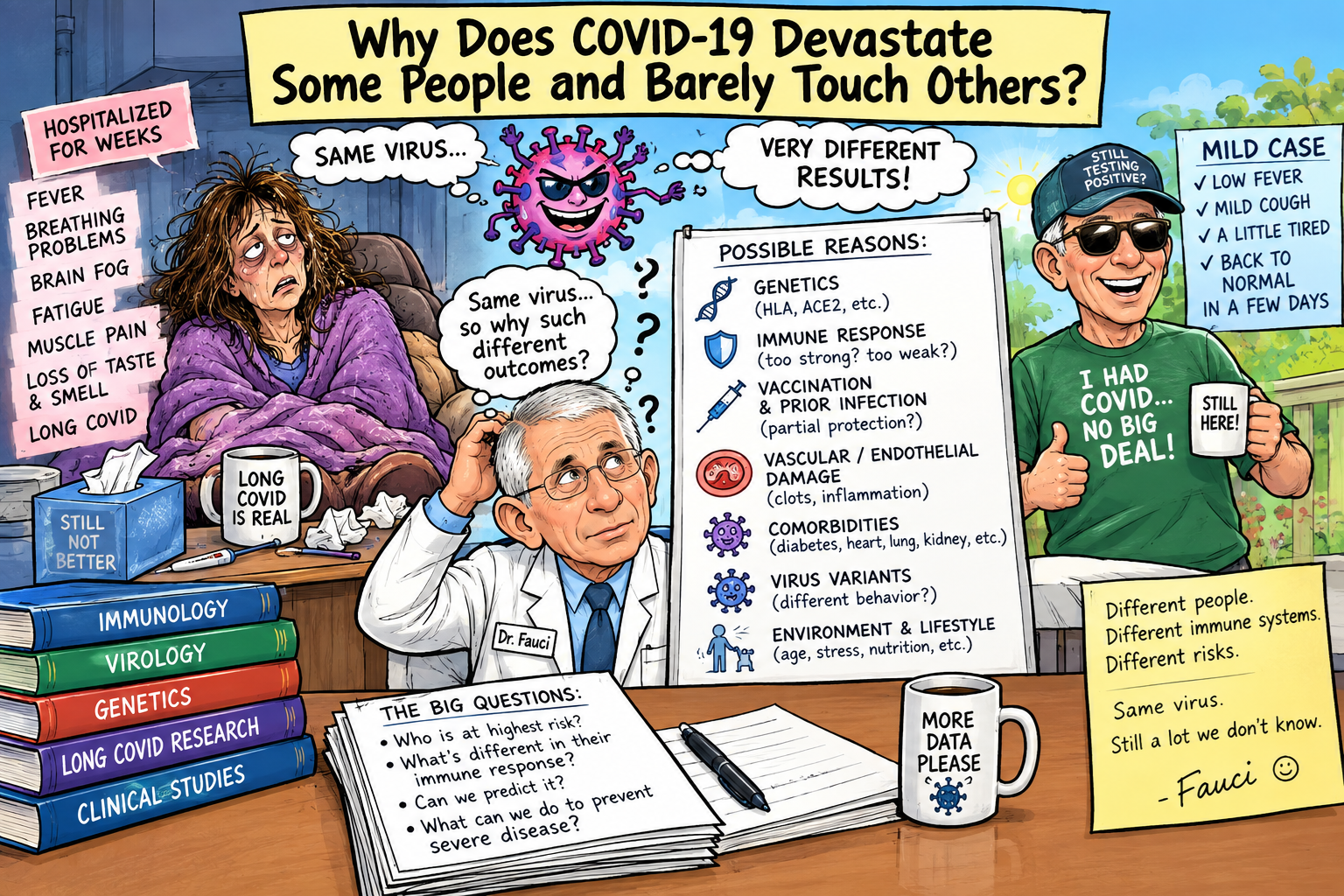
There is a peculiar cruelty to COVID-19 that became apparent almost immediately in the pandemic: two people could encounter essentially the same virus, perhaps at the same dinner table, and experience entirely different diseases.
One might never know they had been infected.
Another might spend a week in bed with fever and cough and then recover.
A third might develop pneumonia, thrombosis, kidney injury, cardiac damage or neurological complications and spend weeks in intensive care.
And a fourth, apparently recovered, might discover that the disease had not really ended at all.
Why?
For the first months of the pandemic, the obvious explanation was that the virus itself varied. That explanation was only partly correct. SARS-CoV-2 variants matter. The amount of virus to which someone is exposed may matter. Prior immunity matters. Vaccination matters. But the more scientists have investigated the extraordinary variability of COVID-19, the more another explanation has emerged:
COVID-19 is partly a disease of the host.
The virus supplies the challenge. The patient’s age, genes, immune system, metabolism, blood vessels, previous infections, biological sex, underlying diseases, medications, environment and perhaps even the state of the microbiome help determine what happens next.
The remarkable implication is that two people can experience biologically different diseases after encountering the same virus.
This is not merely an epidemiological curiosity. It may be the key to understanding why some patients develop devastating acute COVID-19, why others remain almost asymptomatic, and why a subset develop Long COVID months or years later.
The first clue: age is extraordinarily powerful
Of all the factors discovered during the pandemic, age remains among the strongest predictors of severe acute COVID-19.
The relationship is not simply linear.
Risk begins to increase substantially with advancing age and rises dramatically in the elderly. Immunological aging—immunosenescence—reduces the efficiency with which older immune systems recognize and control new pathogens. At the same time, aging can produce a condition sometimes called “inflammaging,” in which baseline inflammatory signaling is chronically elevated.
That creates a dangerous combination.
The older immune system may be slower to mount an effective antiviral response while being more prone to an excessive inflammatory response once the disease becomes established.[1]
COVID-19 therefore presents the elderly with a biological paradox: too little early defense followed by too much late inflammation.
But age cannot explain everything.
During the first pandemic waves, otherwise healthy young adults occasionally developed catastrophic pneumonia. Some died.
Those cases forced researchers to look beneath demographic statistics and into the genome.
The 30-year-old who should not have been critically ill
One of the most revealing clues came from young men with no obvious reason to become severely ill.
Researchers investigating young patients with critical COVID-19 discovered rare variants in TLR7, a gene located on the X chromosome.
TLR7 is part of the innate immune system’s early-warning machinery. It recognizes viral RNA and helps initiate production of type I interferons—molecules that tell surrounding cells to enter an antiviral state.
A defective TLR7 pathway can therefore leave a person partially blind to the virus during the critical early phase of infection.
In one published investigation of young men without predisposing medical conditions, researchers found potentially damaging TLR7 variants in two of fourteen severely affected patients. One was a 30-year-old man whose 27-year-old brother carried the same maternally inherited variant and also developed severe COVID-19.[2]
This was an extraordinary observation.
Two young brothers, carrying the same unusual genetic variant, developed severe disease from an infection that most people their age survived easily.
But genetics did not explain everything.
Another brother in the same investigation carried a different TLR7 variant and developed only mild disease.
The lesson was not that one gene determines destiny.
It was that small differences in the machinery of immunity can profoundly alter the consequences of infection.
The stranger discovery: some people make antibodies against their own antiviral defenses
An even more remarkable explanation emerged in 2020.
Interferons are among the body’s earliest defenses against viruses. They are supposed to warn cells that a viral invasion is underway.
But what if the patient’s immune system has already manufactured antibodies that neutralize interferons?
That is precisely what researchers discovered.
In a landmark Science study, Bastard and colleagues examined 987 patients with life-threatening COVID-19 pneumonia. At least 101 had neutralizing autoantibodies against type I interferons. These antibodies were essentially disabling an important component of the antiviral defense system.[3]
The contrast was striking.
The antibodies were not detected in 663 people with asymptomatic or mild infection and were found in only four of 1,227 healthy controls in that study.
Ninety-five of the 101 patients with the antibodies were men.
The investigators estimated that this autoimmune phenomenon could explain a meaningful fraction of life-threatening COVID-19 pneumonia—at least 2.6 percent of women and 12.5 percent of men in their cohorts.[3]
A later study extended the finding into old age. Neutralizing interferon autoantibodies were detected at physiological concentrations in 13.6 percent of 3,595 patients with critical COVID-19, including 21 percent of critically ill patients over 80.[4]
The implication was profound.
A patient could appear healthy, acquire SARS-CoV-2, and become critically ill not because the virus was unusually aggressive, but because an invisible immunological defect had neutralized one of the body’s most important antiviral weapons.
A natural experiment in autoimmune vulnerability
Perhaps the strongest evidence came from people who already had a known disorder involving interferon autoantibodies.
Patients with autoimmune polyendocrine syndrome type 1, or APS-1, frequently possess antibodies that neutralize type I interferons.
When investigators studied 22 APS-1 patients infected with SARS-CoV-2, 15—68 percent—developed life-threatening COVID-19.[5]
The finding functioned almost like a natural experiment.
The patients had entered the pandemic carrying a known biological vulnerability.
SARS-CoV-2 exposed it.
This illustrates an important principle: a person’s vulnerability to infection can exist for years without becoming apparent. The right pathogen can reveal it.
Why men have generally fared worse
From the beginning of the pandemic, men were more likely than women to develop severe COVID-19 and die from it.
This was not simply explained by men having more cardiovascular disease, smoking more, or being less likely to seek medical care.
Immunology offered another explanation.
In a Yale study published in Nature, researchers examined immune responses in men and women with COVID-19. Women generally mounted stronger T-cell responses, whereas men displayed greater levels of certain innate inflammatory mediators. A weaker T-cell response in men was associated with subsequent deterioration.[6]
The difference is biologically plausible.
Women possess two X chromosomes, and several immune-related genes reside on the X chromosome. TLR7—the same antiviral sensor implicated in severe disease in some young men—is one of them.
Sex hormones also affect immune function.
Women generally mount stronger immune responses to infections and vaccines, although that greater immune responsiveness comes with a price: women are also more susceptible to certain autoimmune diseases.[7]
COVID-19 therefore exposes an evolutionary trade-off.
The immune system that protects women more effectively from many infections may also be more capable of producing autoimmune pathology.
This may help explain one of the pandemic’s great paradoxes:
Men have generally been more vulnerable to severe acute COVID-19; women appear disproportionately represented among people with Long COVID.
The metabolic landscape matters
Genes and immune pathways are only part of the story.
The physiological condition of the body before infection matters enormously.
Obesity, diabetes, hypertension, cardiovascular disease, chronic kidney disease, chronic lung disease and other conditions consistently increase the risk of severe COVID-19.
But calling these merely “comorbidities” can obscure the biology.
Consider obesity.
Adipose tissue is not simply inert storage material. It is an endocrine and immunological organ. Obesity is associated with chronic low-grade inflammation, altered macrophage behavior, insulin resistance, impaired immune responses and abnormal endothelial function.
A virus entering such a physiological environment may encounter a host already operating close to an inflammatory threshold.
Diabetes presents a similar problem.
Hyperglycemia alters innate and adaptive immune function, damages vascular endothelium and creates a metabolic environment associated with inflammation and thrombosis.
Thus, when SARS-CoV-2 arrives, the patient may begin the race several meters behind the starting line.
Large genetic studies have confirmed the importance of age, male sex, obesity and cardiometabolic disease while also identifying genetic loci associated with susceptibility and severity.[8]
Blood type: a clue, but not an explanation
Early genetic studies repeatedly identified associations between ABO blood group and COVID-19 outcomes.
Blood group A was associated in some studies with greater risk of infection or severe disease, while blood group O appeared somewhat protective.
But the effect is modest compared with age, immune defects and major comorbidities.
This is an important lesson in interpreting COVID research.
Modern biology can find hundreds of statistical associations.
Not every association is clinically decisive.
Blood type may influence susceptibility through effects on coagulation, endothelial biology, or interactions involving viral attachment, but it does not explain why one person dies while another has a mild cold.
It is one piece of a much larger mosaic.
The virus itself still matters
Host biology cannot be allowed to become an all-purpose explanation.
SARS-CoV-2 is not a constant entity.
Variants differ in transmissibility, tissue tropism, immune escape and—in some circumstances—clinical severity.
The amount and route of exposure may also matter, although precisely quantifying the “infectious dose” in ordinary human encounters is difficult.
Prior immunity is equally important.
A vaccinated or previously infected individual may encounter the virus with memory B cells, T cells and antibodies already prepared to respond.
That does not necessarily prevent infection.
It can, however, change the trajectory of disease.
The same viral exposure can therefore meet two very different immune landscapes.
The immune system must get the timing right
Perhaps the most important discovery about severe COVID-19 is that the immune response is not simply “strong” or “weak.”
Timing matters.
A person may need a vigorous antiviral response during the first days of infection.
But if inflammatory signaling continues unchecked after viral replication has declined, that same response can become destructive.
Studies comparing mild and severe disease have found striking differences in interferon-stimulated gene expression. Mild disease was associated with a coordinated early antiviral program, whereas this protective state was substantially absent in severe disease.[9]
This provides a framework for understanding a seemingly contradictory phenomenon:
The patient who fails to control the virus early may later develop the strongest inflammatory response.
The problem is not simply too little immunity.
It can be immunity arriving late, in the wrong form, and at the wrong intensity.
The lung is not the only battlefield
Severe COVID-19 is often described as pneumonia.
That description is inadequate.
The disease can involve the vascular endothelium, heart, kidneys, brain, gastrointestinal tract, liver, coagulation system and nervous system.
The vascular system is particularly important.
SARS-CoV-2 can trigger endothelial activation, platelet activation, complement activity, coagulation abnormalities and inflammatory signaling. Microvascular thrombosis can impair oxygen delivery even when the large pulmonary arteries remain open.
This helps explain why two patients with apparently similar lung abnormalities can have very different degrees of physiological impairment.
One person’s microcirculation may remain relatively intact.
Another’s may become profoundly dysfunctional.
The hidden influence of previous viruses
Every human being carries a history of infections.
Epstein-Barr virus, cytomegalovirus and other persistent viruses remain in the body after the original infection.
SARS-CoV-2 can disturb this equilibrium.
A particularly important 2026 study used longitudinal multi-omic data from 1,154 hospitalized COVID-19 patients and found significant reactivation of Herpesviridae and Anelloviridae during acute disease, with different temporal patterns of viral reactivation associated with disease severity, immune effects and clinical outcomes.[10]
The authors appropriately emphasized that the findings demonstrate correlation rather than proof of causation.
That distinction matters.
But the study nevertheless suggests that severe COVID-19 can become a kind of ecological disturbance inside the body, affecting not only SARS-CoV-2 but the wider community of persistent viruses living within us.
In some patients, that disturbance may help determine the course of illness.
The microbiome: the invisible organ
The human intestine contains trillions of microorganisms.
The microbiome interacts with the immune system, metabolism, intestinal barrier and inflammatory signaling.
COVID-19 can alter this ecosystem, and researchers have investigated whether differences in gut microbial composition before or during infection influence disease severity.
The evidence is intriguing but incomplete.
A disturbed microbiome could conceivably alter immune regulation, intestinal permeability and systemic inflammation.
But the direction of causality remains difficult.
Does severe COVID cause the microbiome disturbance?
Does a pre-existing microbiome make severe COVID more likely?
Or do both occur?
The answer may ultimately be all three.
The environment enters the equation
Biology does not operate in a vacuum.
Air pollution, occupational exposure, housing density, socioeconomic conditions, access to medical care and the built environment have all been investigated as contributors to COVID-19 susceptibility and severity.[11]
Chronic exposure to particulate air pollution, for example, can damage respiratory epithelium and promote systemic inflammation.
That does not mean pollution “causes” severe COVID in a simple one-to-one fashion.
It means that a person whose lungs have already been chronically exposed to inflammatory insults may not respond to a new respiratory pathogen in precisely the same way as someone breathing cleaner air.
Social conditions operate similarly.
A person who cannot isolate, cannot take time off work, lacks reliable medical care, lives in crowded conditions, or delays treatment may experience a very different disease trajectory from someone with immediate access to testing, antivirals and intensive care.
These are biological effects mediated through social circumstances.
Smoking is another example
Smoking is consistently associated with worse COVID outcomes.
A meta-analysis encompassing 47 studies and 32,849 hospitalized patients found that current smokers had approximately an 80 percent greater risk of severe COVID-19 than nonsmokers in pooled analyses, while smoking history was also associated with increased risk of severe disease and mortality.[12]
The biological mechanisms are unsurprising.
Smoking alters airway epithelium, mucociliary clearance, pulmonary immunity, vascular function and inflammatory signaling.
The smoker does not encounter SARS-CoV-2 with the same respiratory system as a nonsmoker.
Why children were different
Perhaps the most striking natural experiment of the pandemic was the relative resilience of children.
Young children were infected but were generally much less likely than older adults to develop severe respiratory COVID-19.
Their immune systems are not simply “stronger.”
They are different.
Children possess highly active innate immune responses and different patterns of prior immune stimulation. Their airways, vascular systems and metabolic physiology also differ from those of adults.
Yet children provided their own exception.
Some developed multisystem inflammatory syndrome in children, or MIS-C, weeks after infection.
These children could present with fever, severe abdominal pain, cardiac dysfunction, hypotension and shock despite having apparently recovered from the original infection.[13]
Again, timing was critical.
The disease was not simply uncontrolled viral pneumonia.
It was a post-infectious inflammatory syndrome.
COVID-19 had once again demonstrated that the host response could become a disease mechanism in its own right.
And then there is Long COVID
The question of why some people develop Long COVID may ultimately be even more complicated than the question of why some develop severe acute disease.
Long COVID does not appear to have a single mechanism.
Researchers have investigated:
- persistent viral reservoirs;
- immune dysregulation;
- autoantibodies;
- endothelial dysfunction;
- microvascular abnormalities;
- autonomic nervous-system dysfunction;
- mitochondrial and metabolic abnormalities;
- gastrointestinal dysfunction;
- microbiome changes;
- reactivation of latent viruses;
- tissue injury from acute infection;
- and altered neurological signaling.
A major longitudinal multi-omic investigation published in Cell identified four factors present around the time of initial COVID-19 diagnosis that were associated with subsequent PASC: type 2 diabetes, SARS-CoV-2 RNAemia, Epstein-Barr virus viremia and specific autoantibodies.[14]
These were associations, not four proven causes.
But they offered an important clue.
The biological trajectory toward chronic illness may begin during the initial infection.
Persistent virus—or persistent damage?
This distinction could become one of the most consequential questions in medicine.
Researchers have found SARS-CoV-2 RNA or proteins in multiple tissues after acute infection, including the gastrointestinal tract and other organs.
In one study discussed in Nature Reviews Microbiology, circulating spike antigen was detected in 60 percent of 37 people with Long COVID up to twelve months after diagnosis, compared with none of 26 infected controls without Long COVID.[15]
That is provocative evidence.
But it does not prove that infectious virus is continuously replicating in all those individuals.
Viral RNA can persist after replication has ceased.
Viral proteins can persist as debris.
Conversely, a negative blood test cannot exclude tissue-restricted persistence.
This is why the field has not yet settled the question.
The answer may eventually be that both models are correct for different patients.
One person may have cleared the virus but suffered lasting endothelial or neurological injury.
Another may have persistent antigen or replication in a tissue reservoir.
A third may have an autoimmune process triggered by the original infection.
Why no single risk factor explains COVID
The temptation in medicine is always to search for the one answer.
Age.
Obesity.
Genetics.
Interferon.
Sex.
Blood type.
Diabetes.
Viral load.
Vaccination.
None is sufficient.
COVID-19 behaves more like a complicated equation:
Outcome = virus × host genetics × immune state × age × metabolic health × prior immunity × exposure × treatment timing × environment × chance.
And even that equation is incomplete.
Some of the most frightening cases have occurred in people who appeared healthy.
Some very old people recovered unexpectedly quickly.
Some patients with severe initial disease recovered completely.
Some people with mild initial disease developed years of disability.
Biology contains randomness as well as structure.
The emerging concept: immune phenotype
The most promising way forward may be to stop asking why “COVID” affects people differently and instead ask why this biological phenotype responds differently.
Imagine two patients arriving at a clinic on the first day of infection.
Patient A has a high viral burden, weak interferon activity and a genetic susceptibility affecting innate immunity.
Patient B has a vigorous antiviral response but develops excessive inflammatory activation.
Giving the same drug to both patients would be biologically irrational.
The first might benefit from immediate antiviral intervention.
The second might require a different strategy if inflammatory disease becomes dominant.
This is the direction in which precision medicine is moving.
Researchers are increasingly trying to identify immune endotypes—distinct biological patterns that predict disease trajectory.
The paradox of the healthy person
Perhaps the most important lesson is that “healthy” is not synonymous with “biologically invulnerable.”
A person can have normal blood pressure, normal cholesterol and no diagnosed disease while carrying a rare mutation affecting antiviral immunity.
Another can possess clinically silent interferon autoantibodies.
Another may have an unusual immune phenotype.
Another may have latent viral infections that become reactivated during severe illness.
Another may have subtle metabolic dysfunction.
The pandemic effectively performed a massive stress test of the human immune system.
It revealed weaknesses that ordinary life had never exposed.
What researchers still do not understand
Despite extraordinary progress, major questions remain.
We still do not know precisely why some people clear SARS-CoV-2 almost immediately while others develop prolonged viral persistence.
We do not know why certain people develop autoimmune responses.
We do not know why women are more likely to develop some post-acute syndromes despite generally better outcomes during acute infection.
We do not know why some patients with Long COVID recover spontaneously while others remain ill for years.
We do not know whether all persistent viral material is biologically active.
We do not know which immune abnormalities are causes and which are consequences.
And we do not yet possess a reliable clinical test that can tell an individual patient, at the beginning of infection, exactly which trajectory awaits them.
That last problem may be the most important.
The future may be predictive rather than reactive
Imagine a future emergency department in which a newly infected patient receives not merely a PCR test but a biological risk profile.
Within hours, physicians might know:
- the viral variant;
- the approximate viral burden;
- the patient’s interferon response;
- relevant genetic variants;
- autoantibody profile;
- metabolic state;
- inflammatory phenotype;
- coagulation activation;
- prior immunity;
- and markers suggesting viral persistence.
The patient would then receive treatment tailored to the biological trajectory rather than simply to the diagnosis “COVID-19.”
That is the logical endpoint of what scientists have learned.
The greatest advance may not be discovering one miraculous COVID drug.
It may be discovering that there are many COVID diseases hiding under one name.
The deeper lesson
The pandemic forced medicine to confront something that infectious-disease textbooks sometimes obscure.
A pathogen does not cause disease by itself.
Disease emerges from the encounter between pathogen and host.
The virus has its genome.
The patient has one, too.
The virus evolves.
So does the immune system.
The virus enters a particular tissue.
That tissue may already be inflamed, scarred, metabolically abnormal or immunologically primed.
The virus encounters antibodies from vaccination or previous infection.
It encounters T cells shaped by decades of previous infections.
It encounters interferons, complement, platelets, endothelial cells, macrophages and the microbiome.
And it encounters an individual whose biological history is unique.
That is why the same virus can produce a cough in one person and respiratory failure in another.
It is why a child can recover rapidly while an elderly patient dies.
It is why a healthy young man with a rare immune defect can become critically ill.
It is why a person with no obvious risk factors can develop Long COVID.
And it is why the search for a single explanation has repeatedly failed.
The real mystery is not why COVID is so variable
It is why we expected it to be otherwise.
Human beings are extraordinarily heterogeneous biological organisms.
Our genomes differ.
Our immune repertoires differ.
Our previous infections differ.
Our vaccinations differ.
Our microbiomes differ.
Our metabolic states differ.
Our environments differ.
Our ages and biological sexes differ.
Our vascular systems age at different rates.
Our immune systems remember different pathogens.
And hidden within some of us are rare genetic or autoimmune vulnerabilities that become visible only when a particular pathogen arrives.
SARS-CoV-2 happened to be a particularly powerful instrument for revealing those differences.
The pandemic therefore taught medicine a lesson extending far beyond coronavirus biology:
A diagnosis describes the invading organism. It does not necessarily describe the disease happening inside the patient.
The future of COVID medicine will depend upon recognizing that distinction.
The ultimate objective will not be to discover why COVID is severe.
It will be to determine, for each patient and early enough to matter, which biological pathway is turning an infection into disease—and then stop that pathway before it becomes irreversible.
That is a much harder problem than developing another antiviral.
It is also a far more promising one.
Because once medicine can identify the difference between the person who will recover tomorrow and the person who will deteriorate next week, COVID-19 will cease to be an unpredictable roll of the dice.
It will become a disease whose trajectory can be read, anticipated, and—perhaps eventually—changed.
Footnotes
1. Brodin P. Immune determinants of COVID-19 disease presentation and severity. Nature Medicine. 2021;27:28–33. Age is the strongest broad demographic determinant of severe disease, with immunosenescence and altered innate immune regulation among proposed mechanisms.
2. Research on TLR7 variants in young men with severe COVID-19 found potentially damaging variants in two of fourteen previously healthy men; one variant was found in a 30-year-old man and his 27-year-old brother, both of whom developed severe disease. The study also illustrates the limits of single-gene explanations because another brother carrying a different variant developed only mild disease.
3. Bastard P, et al. Autoantibodies against type I IFNs in patients with life-threatening COVID-19. Science. 2020;370. The investigators found neutralizing type I interferon autoantibodies in 101 of 987 patients with life-threatening pneumonia but not in 663 individuals with asymptomatic or mild infection.
4. Bastard P, et al. Autoantibodies neutralizing type I IFNs are present in ~4% of uninfected individuals over 70 years old and account for ~20% of COVID-19 deaths. Science Immunology. 2021;6.
5. Bastard P, et al. Preexisting autoantibodies to type I IFNs underlie critical COVID-19 pneumonia in patients with APS-1. Journal of Experimental Medicine. 2021;218. Among 22 patients with APS-1 who acquired SARS-CoV-2 infection, 15 developed life-threatening COVID-19.
6. Takahashi T, et al. Sex differences in immune responses that underlie COVID-19 disease outcomes. Nature. 2020;588:315–320. The Yale investigators studied 45 men and 48 women and found sex-dependent differences in T-cell and innate inflammatory responses associated with clinical trajectories.
7. Scully EP, et al. Considering how biological sex impacts immune responses and COVID-19 outcomes. Nature Reviews Immunology. 2020;20:442–447. The authors discuss genetic, hormonal and immunological mechanisms that may contribute to sex differences in infectious disease outcomes.
8. The 23andMe trans-ancestry analysis included more than one million research participants and identified genetic and nongenetic associations involving COVID-19 susceptibility and severity. Advancing age, male sex, obesity and cardiometabolic conditions were among major hospitalization-associated factors.
9. Combes AJ, et al. Global absence and targeting of protective immune states in severe COVID-19. Nature. 2021;601:321–327. Severe disease was associated with systemic absence of coordinated interferon-stimulated gene expression seen in milder infection.
10. A 2026 Nature study using longitudinal multi-omic data from 1,154 hospitalized COVID-19 patients found substantial reactivation of Herpesviridae and Anelloviridae during acute disease. The investigators found associations with disease severity, immune effects and clinical outcomes but explicitly did not establish causality.
11. Environmental reviews have identified associations between COVID-19 outcomes and air pollution, climate, chemical exposures and characteristics of the built environment. These associations are biologically plausible but heterogeneous and susceptible to socioeconomic and geographic confounding.
12. Smoking meta-analysis: 47 studies encompassing 32,849 hospitalized patients found increased risks of severe disease, severe/critical disease, mortality, progression and mechanical ventilation among patients with smoking histories; current smoking was associated with particularly elevated risk of severe disease.
13. MIS-C emerged as a post-infectious inflammatory syndrome predominantly affecting children and adolescents, characterized in severe cases by fever, gastrointestinal symptoms, cardiac dysfunction, hypotension and shock. Early case series from the United Kingdom, Italy, Spain, France, Switzerland and the United States established the syndrome’s distinctive clinical phenotype.
14. Su Y, et al. Multiple early factors anticipate post-acute COVID-19 sequelae. Cell. 2022;185:881–895.e20. A longitudinal multi-omic study identified type 2 diabetes, SARS-CoV-2 RNAemia, EBV viremia and specific autoantibodies as factors associated with subsequent PASC. These findings are predictive associations rather than proof that each factor independently causes Long COVID.
15. Davis HE, McCorkell L, Vogel JM, Topol EJ. Long COVID: major findings, mechanisms and recommendations. Nature Reviews Microbiology. 2023;21:133–146. The review summarizes evidence for several overlapping mechanisms, including viral persistence, immune dysregulation, autoimmunity, endothelial dysfunction, microvascular abnormalities, microbiome changes and autonomic dysfunction.
Selected References
Bastard P, et al. Science. 2020;370.
Bastard P, et al. Science Immunology. 2021;6.
Bastard P, et al. Journal of Experimental Medicine. 2021;218.
Brodin P. Nature Medicine. 2021;27:28–33.
Davis HE, McCorkell L, Vogel JM, Topol EJ. Nature Reviews Microbiology. 2023;21:133–146.
Scully EP, et al. Nature Reviews Immunology. 2020;20:442–447.
Su Y, et al. Cell. 2022;185:881–895.e20.
Takahashi T, et al. Nature. 2020;588:315–320.