
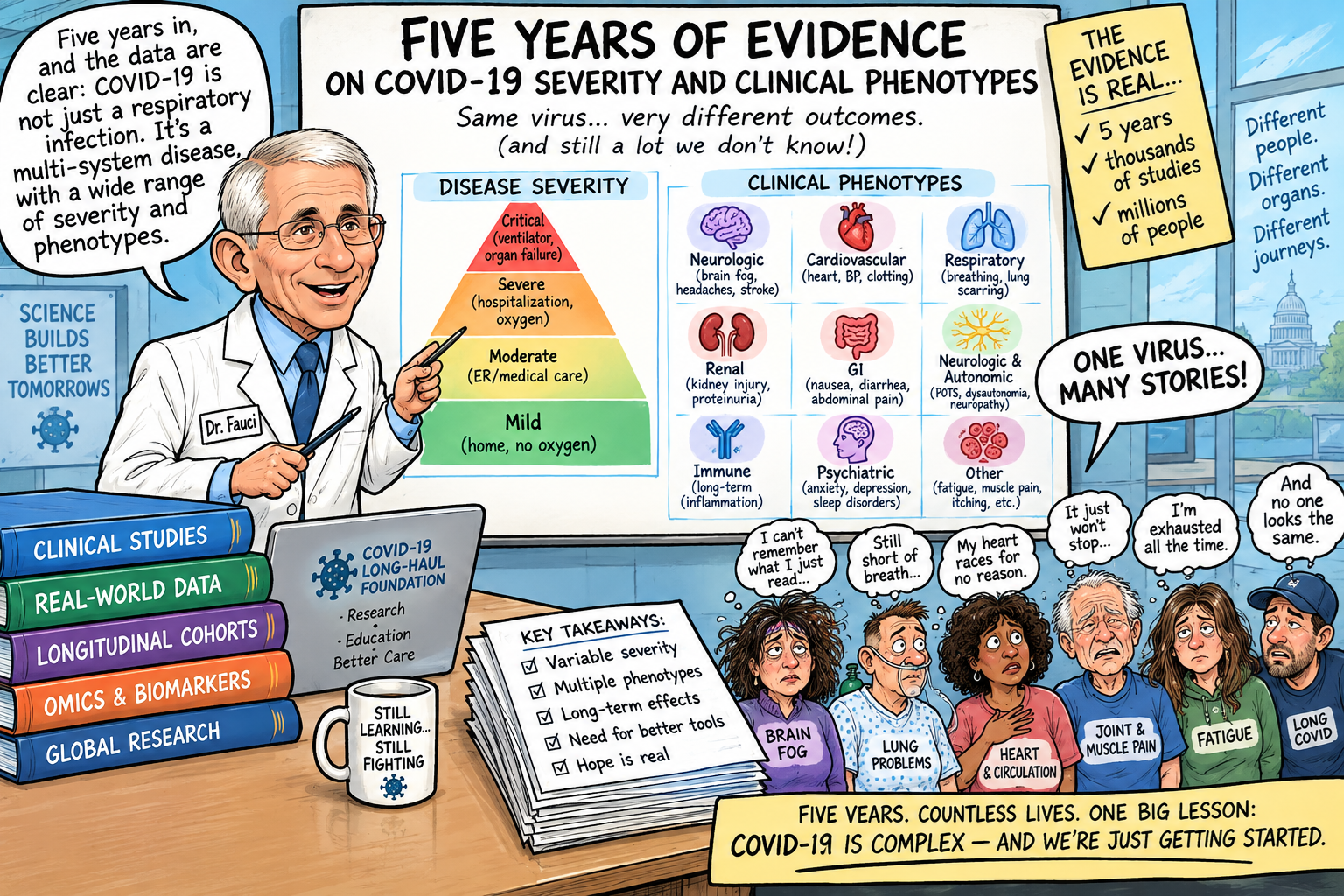
John Murphy, CEO The COVID-19 Long haul Foundation: Original Research Study
An Integrated Analysis of Government, Public, Electronic Health-Record, Genomic, and Published Clinical Databases, 2020–2025
Abstract
Background: COVID-19 is frequently treated as a single clinical disease, yet five years of clinical observation demonstrate extraordinary heterogeneity in presentation, severity, organ involvement, treatment response, and long-term outcome. Patients may remain asymptomatic, develop a mild upper-respiratory illness, progress to viral pneumonia and hypoxemic respiratory failure, develop acute respiratory distress syndrome (ARDS), thromboinflammatory or multiorgan disease, or experience prolonged post-acute illness. The determinants of these phenotypes include viral characteristics, age, sex, host genetics, prior immunity, vaccination, comorbidity burden, immune phenotype, metabolic state, vascular biology, socioeconomic conditions, treatment timing, and health-system factors.
Objective: To synthesize five years of evidence, from January 2020 through December 2025, concerning differences in COVID-19 severity and clinical phenotype using major government and public-health databases, multinational clinical registries, electronic health-record systems, genomic databases, prospective cohorts, and published clinical studies.
Data sources: Evidence was drawn from the World Health Organization Global Clinical Platform; International Severe Acute Respiratory and Emerging Infection Consortium (ISARIC) COVID-19 database; ISARIC4C; U.S. Centers for Disease Control and Prevention (CDC) surveillance and systematic reviews; National COVID Cohort Collaborative (N3C); NIH RECOVER; OpenSAFELY; GenOMICC; major U.S. hospital and health-system databases; published multicenter cohorts; and peer-reviewed studies of clinical phenotyping, variant-associated severity, immunology, genetics, and post-acute disease. The ISARIC database alone contains standardized clinical information from more than 705,000 hospitalized patients in more than 60 countries, while subsequent analyses expanded the international cohort to nearly 690,000 hospitalized patients.
Results: Across five years, several reproducible clinical phenotypes emerged. Mild and asymptomatic infection constituted the majority of infections in the general population, whereas hospitalized populations were enriched for older adults, men, persons with cardiometabolic disease, renal disease, pulmonary disease, immunosuppression, and multiple comorbidities. Age was consistently the strongest broad predictor of severe outcomes. Male sex independently increased risk. Obesity, diabetes, cardiovascular disease, chronic kidney disease, chronic pulmonary disease, cancer, immunocompromise, and increasing multimorbidity were repeatedly associated with hospitalization, critical illness, or death. Large genomic studies demonstrated that host genetic variation contributes materially to critical disease, including variants affecting interferon signaling, antiviral immunity, and inflammatory pathways. Variant-specific differences in clinical severity were also demonstrated, with Delta generally producing more severe disease than Omicron, while vaccination and previous immunity substantially altered the clinical phenotype. Data-driven clustering studies identified reproducible but nonidentical phenotypes dominated by respiratory disease, systemic inflammation, cardiovascular manifestations, renal dysfunction, hematologic abnormalities, and multisystem involvement. Long COVID subsequently emerged as another heterogeneous clinical domain, with large datasets identifying respiratory-systemic, neurocognitive-fatigue, autonomic/cardiovascular, gastrointestinal, pain, sensory, and mood-related phenotypes.
Conclusions: Five years of evidence indicate that COVID-19 should not be conceptualized as a single disease with a simple severity continuum. SARS-CoV-2 infection generates multiple overlapping clinical phenotypes determined by interactions among viral characteristics, host susceptibility, immune response, organ reserve, prior immunity, treatment, and environment. The most clinically useful future classification is likely to be multidimensional, integrating disease severity, dominant organ phenotype, immunological state, viral persistence, and post-acute trajectory.
Keywords: COVID-19; SARS-CoV-2; clinical phenotype; disease severity; critical illness; ARDS; thromboinflammation; host genetics; immunology; Long COVID; PASC; clinical epidemiology; electronic health records
Introduction
The first description of COVID-19 suggested a predominantly respiratory disease.
Five years of evidence have made that description untenable.
COVID-19 can be asymptomatic, mildly respiratory, pneumonic, hypoxemic, hyperinflammatory, thromboinflammatory, cardiovascular, neurologic, gastrointestinal, renal, hematologic, dermatologic, pediatric inflammatory, or post-infectious. Patients may experience one phenotype exclusively or move sequentially through several.
The World Health Organization consequently developed a standardized clinical characterization platform specifically to capture the changing clinical spectrum of COVID-19. Its objectives include characterizing clinical features, measuring variation among populations, identifying clinical predictors of outcomes, and evaluating temporal changes. The platform contains separate case-report structures for hospitalized disease, pregnancy, multisystem inflammatory syndrome in children, and post-COVID condition.
This effort is particularly important because crude mortality statistics obscure biological heterogeneity.
A 25-year-old healthy person and an 85-year-old patient with chronic cardiac and renal disease can both be recorded simply as having “COVID-19.” Yet the biological probability that the infection will produce severe disease differs by orders of magnitude.
The five-year record therefore permits a more precise question:
What distinct clinical phenotypes does SARS-CoV-2 produce, and what factors determine which phenotype an individual develops?
The answer is increasingly clear, although not complete.
COVID-19 severity represents an interaction between the virus and the host rather than a fixed property of either.
Methods
Evidence framework
This paper is an integrated narrative and evidence-synthesis review rather than a formal systematic review or individual-patient-data meta-analysis.
The analysis covers evidence generated between January 1, 2020 and December 31, 2025.
Priority was given to:
- national government databases;
- multinational public-health databases;
- large standardized clinical registries;
- national electronic health-record systems;
- prospective longitudinal cohorts;
- genomic studies;
- large administrative databases;
- data-driven clinical phenotyping studies;
- systematic reviews and meta-analyses; and
- representative patient-level clinical investigations demonstrating mechanisms underlying heterogeneous severity.
Because several major databases contain protected individual-level information, the analysis relies upon their published analyses rather than claiming direct access to restricted records.
Major Data Resources
1. WHO Global Clinical Platform
The WHO Global Clinical Platform was specifically created to aggregate standardized anonymized patient-level clinical information from participating countries and health systems.
By June 2022, the platform contained approximately 629,729 hospitalized cases from 50 countries. An earlier public dashboard showed 481,693 patients from 39 countries with information concerning age, sex, severity, oxygen requirements, corticosteroid use, and outcomes.
The importance of this database is methodological.
Unlike many early COVID reports, the WHO platform was constructed around standardized case-report forms, permitting comparisons across countries and time.
2. ISARIC
ISARIC became one of the largest standardized COVID-19 clinical databases in existence.
The published dataset description reported more than 705,000 patients from more than 60 countries and 1,500 centers, with information concerning symptoms, comorbidities, vital signs, treatments, complications, hospitalization, mortality, viral strains, and vaccination.
A later analysis of the international cohort included 689,572 patients from 52 countries hospitalized between January 2020 and January 2022. Age and male sex were independently associated with mortality, with an adjusted hazard ratio of 1.49 for each additional decade of age and 1.23 for male sex.
This is among the strongest evidence that age and sex differences were not artifacts of small single-center studies.
3. CDC databases and systematic evidence synthesis
The CDC has continuously updated its evidence-based assessment of conditions associated with severe COVID-19.
Its current framework defines severe outcomes as hospitalization, ICU admission, intubation or mechanical ventilation, or death and identifies age as the strongest general risk factor.
CDC’s systematic-review methodology is particularly valuable because it moved beyond early descriptive case reports toward structured evaluation of the consistency and quality of evidence.
4. OpenSAFELY
One of the most consequential early studies analyzed 17,278,392 adults in England and linked primary-care records to 10,926 COVID-related deaths.
The study found strong independent associations with:
- male sex;
- increasing age;
- socioeconomic deprivation;
- diabetes;
- severe asthma;
- obesity;
- cardiovascular disease;
- kidney disease;
- liver disease;
- neurological disease;
- cancer; and
- autoimmune disease.
The adjusted hazard ratio for male sex was 1.59. Black and South Asian patients also had higher adjusted mortality than White patients.
The enormous sample size transformed COVID epidemiology from anecdote into population-level risk quantification.
5. GenOMICC
The GenOMICC consortium provided a complementary perspective: rather than asking only what patients had clinically, it asked what their genomes could reveal about susceptibility to critical illness.
Whole-genome sequencing of 7,491 critically ill patients compared with 48,400 controls identified 16 additional genes associated with critical COVID-19 and confirmed seven previously implicated genetic associations.
This evidence is important because it establishes that some differences in severity are not simply consequences of age or comorbidity.
They are partly encoded in human biology.
6. N3C
The U.S. National COVID Cohort Collaborative represents one of the largest integrated clinical datasets in the world.
N3C and RECOVER investigators analyzed more than 600 million clinical condition diagnoses from approximately 14 million patients to identify clinical trajectories and phenotypes associated with SARS-CoV-2 infection and PASC. The analysis demonstrated phenotype differences according to age, sex, infection wave, and post-acute disease status.
This scale permits detection of patterns that smaller cohorts cannot reliably identify.
7. RECOVER
NIH’s RECOVER program provides one of the largest prospective longitudinal frameworks for studying post-COVID illness.
In its 2024 adult analysis, 13,647 participants were evaluated, including 11,743 with known prior SARS-CoV-2 infection.
The investigators identified five symptom-based Long COVID subtypes that tracked with quality-of-life measures.
The significance is conceptual:
The post-acute phase is not simply “one Long COVID.”
It contains identifiable phenotypic structures.
Results
I. The Five-Year Severity Spectrum
The most reproducible classification is a severity continuum:
Phenotype 0 — Asymptomatic infection
No recognized symptoms despite evidence of infection.
Phenotype 1 — Mild or paucisymptomatic infection
Upper-respiratory symptoms, fever, fatigue, anosmia, ageusia, headache, myalgia, gastrointestinal symptoms, or combinations thereof without substantial hypoxemia.
Phenotype 2 — Moderate pneumonic disease
Clinical or radiographic pneumonia without severe hypoxemia.
Phenotype 3 — Severe hypoxemic COVID-19
Hypoxemia, extensive pulmonary involvement, increasing oxygen requirements, and respiratory distress.
Phenotype 4 — Critical COVID-19
ARDS, shock, sepsis, mechanical ventilation, vasopressor requirement, or multiorgan failure.
Phenotype 5 — Post-acute COVID
Persistent or newly emerging symptoms after the acute phase, including respiratory, neurological, autonomic, cardiovascular, metabolic, gastrointestinal, musculoskeletal, and cognitive syndromes.
WHO definitions deliberately emphasize physiological severity rather than simply whether hospitalization occurred, because hospitalization itself depends upon health-system access. Critical disease includes ARDS, sepsis, septic shock, or need for life-sustaining therapy.
II. Age: The Most Powerful Population-Level Determinant
Across essentially every major database, age emerged as the strongest broad predictor of severe disease.
CDC estimates based on U.S. mortality data illustrate the magnitude: compared with adults aged 18–29, mortality risk was approximately 25 times higher at ages 50–64, 60 times higher at 65–74, 140 times higher at 75–84, and 340 times higher at 85 years or older.
The ISARIC international cohort similarly found mortality increasing sharply with age. Each additional decade was associated with an approximately 49 percent increase in mortality hazard after adjustment.
Biological explanation
Several mechanisms probably converge:
- immunosenescence;
- impaired interferon responses;
- diminished T-cell function;
- altered B-cell responses;
- inflammaging;
- endothelial dysfunction;
- reduced pulmonary reserve;
- higher prevalence of cardiometabolic disease;
- impaired tissue repair;
- and greater baseline organ vulnerability.
Age therefore operates simultaneously as an immune, vascular, metabolic, and physiological risk factor.
III. Sex Is an Independent Modifier
Male sex repeatedly predicted worse acute outcomes.
OpenSAFELY reported a 59 percent higher adjusted mortality hazard among men.
The ISARIC international cohort similarly found male sex associated with increased mortality.
Immunological studies provide biological support.
Men have generally demonstrated weaker early adaptive antiviral responses, whereas women tend to mount stronger T-cell and innate immune responses. These differences may be influenced by sex chromosomes, hormonal signaling, and differential immune-gene expression.
Importantly, however, sex does not act uniformly across the disease timeline.
Women have frequently been disproportionately represented among patients with some Long COVID phenotypes.
Thus:
male sex is a major acute-severity risk factor, while female sex appears to be associated with increased representation in some post-acute phenotypes.
The mechanisms remain incompletely resolved.
IV. Multimorbidity Produces a Nonlinear Risk
COVID-19 severity does not appear to depend simply upon the presence or absence of one disease.
Risk increases with the accumulation of vulnerabilities.
A major CDC analysis of 540,667 hospitalized adults found that obesity, diabetes with complications, and anxiety/fear-related disorders had among the strongest associations with death, while mortality increased with the number of underlying conditions.
The 4C Mortality Score provided another demonstration.
In a derivation cohort of 35,463 hospitalized patients, mortality was 32.2 percent. Nearly half had two or more comorbidities. Chronic cardiac disease, kidney disease, diabetes, chronic pulmonary disease, malignancy and obesity were common among patients who died.
This supports the concept of reduced physiological reserve.
A patient with three mildly consequential chronic illnesses may possess less reserve to withstand SARS-CoV-2 than a younger person with none.
V. Obesity Is a Distinct Phenotype Modifier
Obesity has repeatedly emerged as an independent risk factor for severe COVID-19.
Possible mechanisms include:
- chronic low-grade inflammation;
- altered macrophage function;
- insulin resistance;
- impaired pulmonary mechanics;
- endothelial dysfunction;
- altered adipokine signaling;
- impaired immune-cell function;
- and potentially altered viral tissue biology.
OpenSAFELY found increasing mortality with increasing obesity, with BMI greater than 40 associated with an adjusted hazard ratio of approximately 1.92.
Obesity therefore should not be treated merely as a statistical comorbidity.
It represents a different biological environment in which SARS-CoV-2 replicates and stimulates immunity.
VI. Diabetes and Metabolic Disease
Diabetes consistently increases risk of severe disease.
Hyperglycemia can impair innate immune responses while simultaneously promoting inflammatory and endothelial pathways.
Diabetes also frequently coexists with obesity, hypertension, cardiovascular disease, and kidney disease.
The resulting phenotype is therefore not necessarily attributable to glucose alone.
Rather, diabetes can be regarded as part of a broader metabolic-endothelial phenotype.
This phenotype appears particularly vulnerable to severe COVID-19.
VII. Kidney Disease
Chronic kidney disease repeatedly appears among the strongest predictors of severe outcomes.
The explanation is likely multifactorial.
Patients with kidney disease may have:
- immune dysfunction;
- chronic inflammation;
- endothelial abnormalities;
- altered coagulation;
- anemia;
- cardiovascular disease;
- impaired metabolic reserve.
OpenSAFELY demonstrated increasing mortality associated with declining estimated glomerular filtration rate.
COVID-associated acute kidney injury then becomes an additional severity amplifier.
The result can be a vicious cycle:
systemic inflammation → endothelial injury → renal injury → metabolic disturbance → further physiological instability.
VIII. Cardiovascular Phenotype
Patients with pre-existing cardiovascular disease are consistently at increased risk.
But COVID-19 can also create cardiovascular disease during the acute infection.
Reported manifestations include:
- myocardial injury;
- myocarditis;
- arrhythmias;
- acute coronary syndromes;
- heart failure;
- endothelial dysfunction;
- thromboembolism;
- and microvascular injury.
Consequently, cardiovascular involvement may represent either:
pre-existing susceptibility → severe COVID
or
COVID → cardiovascular injury → greater severity.
Often both pathways operate simultaneously.
IX. Respiratory Phenotypes
The respiratory system remains the dominant acute target.
Large international datasets show that shortness of breath, cough, fever, fatigue and altered consciousness are among the most frequent admission manifestations.
The ISARIC clinical report covering 442,643 hospitalized cases found shortness of breath, cough, and fever to be the most common symptom combination.
But respiratory disease itself is heterogeneous.
Phenotype A: Upper-airway disease
Symptoms are predominantly:
- sore throat;
- rhinorrhea;
- cough;
- anosmia;
- mild fever.
Phenotype B: Viral pneumonitis
Pulmonary infiltrates develop, but oxygenation remains relatively preserved.
Phenotype C: Hypoxemic pneumonia
Gas exchange becomes impaired, requiring supplemental oxygen.
Phenotype D: ARDS
Diffuse alveolar injury produces severe oxygenation failure.
Phenotype E: Pulmonary vascular phenotype
Microvascular thrombosis, endothelial dysfunction, impaired perfusion, and ventilation-perfusion mismatch contribute disproportionately to hypoxemia.
These phenotypes may overlap.
X. Data-Driven Clustering Confirms That “COVID-19” Contains Multiple Diseases
Early investigators attempted to discover phenotypes empirically rather than imposing them clinically.
A Wuhan study of 213 patients identified three clusters.
The oldest cluster had the lowest cellular immune function and albumin concentrations and experienced substantially more respiratory failure, ARDS, heart failure, and need for noninvasive ventilation.
A separate multicenter U.S. study involving 1,022 hospitalized patients also identified three clinical phenotypes using 33 admission variables. Phenotypes differed in their distribution of respiratory, cardiac, renal and hematologic comorbidities and complications.
A Canadian study using imaging and 34 clinical variables similarly identified three distinct clusters among 547 hospitalized patients.
These studies are not identical.
That is important.
They demonstrate that phenotype boundaries are partly dependent on:
- which variables are measured;
- when they are measured;
- population characteristics;
- treatment era;
- viral variant;
- and clustering methodology.
Nevertheless, the repeated discovery of multiple clusters strongly supports biological heterogeneity.
XI. The Thromboinflammatory Phenotype
One of the most important discoveries of the pandemic was that severe COVID-19 is not merely pulmonary inflammation.
Severe disease frequently includes:
- platelet activation;
- endothelial activation;
- coagulation activation;
- complement activation;
- neutrophil extracellular traps;
- microvascular thrombosis;
- and impaired fibrinolysis.
This creates a thromboinflammatory phenotype.
Such patients may develop pulmonary microthrombi, venous thromboembolism, stroke, myocardial injury, kidney injury, or other vascular complications.
The phenotype is clinically important because the degree of respiratory impairment may not be explained entirely by alveolar inflammation.
XII. The Hyperinflammatory Phenotype
Another subset develops profound inflammatory activation.
Laboratory characteristics may include:
- markedly elevated C-reactive protein;
- ferritin;
- interleukin-6;
- D-dimer;
- neutrophilia;
- lymphopenia;
- and other inflammatory markers.
This phenotype is particularly important because the disease may eventually become partly independent of active viral replication.
The pathogen initiates the process.
The host response becomes a major component of the pathology.
This biological transition helps explain why corticosteroids and selected immunomodulators can improve outcomes in severe COVID-19 even though they do not directly inhibit viral replication.
XIII. The Immunodeficiency Phenotype
At the opposite end of the immunological spectrum are patients unable to generate effective antiviral responses.
This can occur because of:
- hematologic malignancy;
- immunosuppressive medication;
- organ transplantation;
- primary immunodeficiency;
- B-cell depletion;
- advanced HIV;
- or rare genetic abnormalities.
These patients can experience unusually prolonged viral shedding and persistent infection.
The disease may therefore become neither classic acute COVID-19 nor ordinary post-COVID disease.
It can become a persistent viral infection phenotype.
XIV. Host Genetics: The Hidden Determinant
GenOMICC demonstrated that critical illness has a genetic component.
The identification of 23 genes or genetic regions associated with critical COVID-19 included pathways involved in antiviral immunity, interferon signaling, inflammatory regulation and cellular processes.
This is particularly important because genetic susceptibility explains something that conventional risk-factor epidemiology cannot:
Why can two apparently healthy individuals of similar age and health experience dramatically different disease?
One answer is that their immune systems are not genetically identical.
Rare variants can produce large effects.
Common variants may produce smaller effects.
The aggregate effect can alter the probability of progression.
XV. Interferon Phenotype
Perhaps the most striking immunological phenotype involves type I interferon.
Some patients with life-threatening COVID-19 possess neutralizing autoantibodies against type I interferons.
In the landmark study by Bastard and colleagues, 101 of 987 patients with life-threatening COVID-19 pneumonia had such autoantibodies, whereas they were not detected in the asymptomatic/mild comparison group.
This creates a mechanistic pathway:
autoantibody → interferon neutralization → impaired early antiviral defense → greater viral replication → greater downstream inflammation and tissue injury.
This is an example of a clinical phenotype that cannot be identified from age and comorbidity alone.
XVI. HIV Demonstrates How Host Immune Status Alters Phenotype
The WHO Global Clinical Platform permitted an enormous analysis of COVID-19 among people living with HIV.
Between January 2020 and July 2021, WHO received data concerning 338,566 patients from 38 countries.
Among 197,479 patients with known HIV status, 16,955 had HIV.
People living with HIV had a 15 percent higher adjusted odds of severe presentation and a 38 percent higher adjusted hazard of in-hospital death compared with HIV-negative patients.
The risk was further influenced by age, sex, diabetes, hypertension, malignancy, tuberculosis, and kidney disease.
This demonstrates a recurring principle:
host immune state modifies the clinical phenotype independently of the virus.
XVII. Pediatric COVID Is a Different Phenotypic Universe
Children generally experience less severe acute respiratory disease than older adults.
WHO’s analysis of hospitalized children confirms that pediatric COVID differs substantially from adult disease and that outcomes vary by age, comorbidity, geography, HIV status, and viral variant.
But children can develop multisystem inflammatory syndrome.
MIS-C typically emerges after the acute infection and can include:
- fever;
- gastrointestinal symptoms;
- hypotension;
- cardiac dysfunction;
- shock;
- mucocutaneous manifestations;
- and marked systemic inflammation.
Thus pediatric disease provides an especially clear demonstration that SARS-CoV-2 produces more than one biological syndrome.
XVIII. Variant Era Changed the Phenotype
COVID-19 severity cannot be interpreted without considering the viral era.
The Alpha, Delta and Omicron variants differed in clinical characteristics.
A U.S. prospective observational study involving 11,690 adults hospitalized during Alpha, Delta and Omicron periods found measurable differences in clinical severity among the variants.
Delta was associated with more severe disease than Omicron in numerous observational analyses.
Omicron generally produced less severe disease at the population level, although this was partly confounded by:
- vaccination;
- prior infection;
- age distribution;
- antiviral availability;
- and accumulated clinical experience.
The correct conclusion is therefore not that Omicron was intrinsically harmless.
It is that variant biology and host immunity jointly changed the clinical phenotype.
XIX. Vaccination Changed the Meaning of Infection
The same positive SARS-CoV-2 test acquired a different clinical meaning as population immunity accumulated.
Early in the pandemic:
infection → substantial probability of hospitalization among vulnerable adults.
Later:
infection + vaccination/prior immunity → substantially greater probability of mild or moderate disease.
Thus “case counts” became increasingly difficult to interpret without knowing:
- vaccination status;
- previous infection;
- age;
- variant;
- comorbidities;
- and treatment.
This is one reason comparisons of raw case-fatality rates across different pandemic periods can be misleading.
The denominator changed biologically.
XX. Neurological Phenotypes
Neurological manifestations include:
- headache;
- anosmia;
- dysgeusia;
- dizziness;
- encephalopathy;
- delirium;
- neuropathic symptoms;
- cerebrovascular disease;
- cognitive dysfunction;
- and post-acute brain fog.
Severe hospitalized patients are particularly vulnerable to encephalopathy, delirium and cerebrovascular complications.
However, neurological symptoms also occur after mild infection.
That distinction is important.
Neurological Long COVID cannot simply be interpreted as residual hypoxic brain injury from ICU treatment because substantial cognitive and sensory symptoms occur in patients who were never hospitalized.
This supports a heterogeneous neurological phenotype involving multiple potential mechanisms.
XXI. Gastrointestinal Phenotypes
Gastrointestinal manifestations include:
- nausea;
- vomiting;
- diarrhea;
- abdominal pain;
- anorexia;
- altered taste;
- and, in some patients, prolonged gastrointestinal dysfunction.
Large clinical databases increasingly identify gastrointestinal symptom clusters in post-acute disease.
A 2025 analysis of 787,078 people with post-COVID condition across nine databases and seven countries identified recurrent gastrointestinal/abdominal symptom clusters in addition to respiratory-systemic and mood-related phenotypes.
This is important because it demonstrates that gastrointestinal disease is not merely an incidental symptom.
It can represent a persistent clinical phenotype.
XXII. Renal Phenotype
Acute kidney injury is common in severe hospitalized disease.
It is associated with mortality and may become part of a multiorgan failure syndrome.
The renal phenotype may develop through several pathways:
- hemodynamic instability;
- endothelial injury;
- inflammation;
- microvascular thrombosis;
- direct tubular injury;
- nephrotoxic exposures;
- and pre-existing kidney disease.
The distinction between pre-existing renal vulnerability and COVID-induced renal injury is therefore essential.
XXIII. Cardiac Phenotype
COVID-associated cardiac injury is also heterogeneous.
Patients may present with:
- troponin elevation;
- myocarditis-like syndromes;
- arrhythmia;
- acute coronary disease;
- heart failure;
- or stress cardiomyopathy.
In severe cases, myocardial injury often reflects systemic illness rather than isolated viral myocarditis.
This distinction is important because troponin elevation is a marker of myocardial injury, not a diagnosis of myocarditis.
XXIV. The Long COVID Phenotype Is Also Heterogeneous
By the third through fifth years of the pandemic, the dominant question shifted from:
Who dies?
to:
Who fails to recover normally?
The evidence demonstrates that Long COVID is not one phenotype.
A 2021–2022 cluster analysis of 233 patients identified:
- a pain-predominant phenotype;
- a cardiovascular phenotype dominated by chest pain, dyspnea and palpitations;
- and a lower-symptom phenotype.
A 2024 P4O2 study found three distinct Long COVID clusters involving different combinations of respiratory, neurological and systemic symptoms, with one cluster predominantly female and associated with asthma.
A 2025 U.S. Military Health System analysis of 1,988 infected individuals identified three major symptom phenotypes:
- sensory loss of smell/taste;
- fatigue and cognitive difficulty;
- respiratory symptoms and exercise intolerance.
The RECOVER cohort subsequently identified five Long COVID subtypes among 13,647 participants.
Finally, the international 2025 analysis of 787,078 individuals demonstrated substantial heterogeneity across nine databases and seven countries.
The convergence of these independent approaches is striking.
XXV. A Five-Year Phenotype Timeline
| Period | Dominant phenotype observations | Major scientific development |
|---|---|---|
| 2020 | Viral pneumonia, ARDS, shock, thrombosis, multiorgan failure | Recognition of age, sex and comorbidity effects |
| 2021 | Hyperinflammation, endothelial disease, thromboinflammation, neurologic and cardiac injury | Large EHR and multinational datasets quantify risk |
| 2022 | Variant-specific disease, vaccination effects, genetic susceptibility | GenOMICC and massive clinical registries identify host determinants |
| 2023 | Persistent symptoms, PASC, autonomic and metabolic phenotypes | Large longitudinal cohorts establish Long COVID heterogeneity |
| 2024 | Increasingly refined symptom and biological clusters | RECOVER, N3C and multimodal studies formalize phenotyping |
| 2025 | International clustering demonstrates multiple reproducible post-acute phenotypes | Large multi-database analyses establish substantial cross-system heterogeneity |
This timeline illustrates an important transformation.
The first two years were dominated by severity classification.
The later years increasingly focused on phenotype classification.
XXVI. A Unified Model of COVID Severity
The evidence can be conceptualized as an interaction among six major domains.
Domain 1: Viral factors
- variant;
- viral load;
- tissue tropism;
- immune escape;
- replication kinetics.
Domain 2: Host genetics
- interferon pathways;
- innate immune receptors;
- inflammatory pathways;
- coagulation;
- antigen presentation.
Domain 3: Pre-existing host physiology
- age;
- sex;
- obesity;
- diabetes;
- cardiovascular disease;
- kidney disease;
- pulmonary disease;
- cancer;
- immunodeficiency.
Domain 4: Acquired immune state
- vaccination;
- previous infection;
- hybrid immunity;
- immunosuppressive treatment;
- autoantibodies;
- immune memory.
Domain 5: Acute biological response
- viral replication;
- interferon response;
- cytokine signaling;
- endothelial activation;
- complement;
- platelet activation;
- coagulation;
- tissue injury.
Domain 6: External determinants
- exposure dose;
- air pollution;
- socioeconomic conditions;
- access to healthcare;
- treatment timing;
- vaccination access;
- health-system capacity.
The final phenotype emerges from the interaction of all six.
XXVII. Why Severity Is Not a Linear Continuum
Traditional classification assumes:
mild → moderate → severe → critical.
The evidence suggests something more complex.
Two patients can have identical oxygen requirements but entirely different biology.
One may have primarily alveolar inflammatory disease.
Another may have pulmonary vascular dysfunction.
One may have high viral replication.
Another may have little detectable virus but profound inflammatory injury.
One may recover rapidly.
Another may develop persistent symptoms.
Thus severity should be represented on at least two axes:
Axis 1 — Intensity
mild → moderate → severe → critical.
Axis 2 — Phenotype
respiratory | inflammatory | vascular | cardiac | renal | neurological | gastrointestinal | immunodeficient | multisystem | post-acute.
This two-dimensional model better represents the clinical reality.
XXVIII. Toward a Five-Dimensional Clinical Classification
A future classification system should probably include five dimensions.
Dimension 1: Acute severity
- asymptomatic;
- mild;
- moderate;
- severe;
- critical.
Dimension 2: Dominant organ system
- pulmonary;
- cardiovascular;
- neurological;
- renal;
- gastrointestinal;
- hematologic;
- multisystem.
Dimension 3: Biological mechanism
- viral-dominant;
- immune-dominant;
- thromboinflammatory;
- endothelial;
- metabolic;
- autoimmune;
- persistent-infection.
Dimension 4: Host susceptibility
- age;
- genetic risk;
- comorbidity;
- immunodeficiency;
- prior immunity.
Dimension 5: Longitudinal trajectory
- complete recovery;
- prolonged recovery;
- recurrent disease;
- persistent organ dysfunction;
- Long COVID/PASC.
Such a system would be far more informative than the binary designation “COVID positive.”
XXIX. What the Five-Year Evidence Establishes With High Confidence
Several conclusions now have exceptional evidentiary support.
1. Age is the dominant population-level risk factor.
This is demonstrated repeatedly across national and multinational datasets.
2. Male sex increases the risk of severe acute disease.
This finding persists after adjustment for multiple confounders.
3. Multimorbidity substantially increases risk.
Especially important are cardiovascular disease, diabetes, obesity, kidney disease, pulmonary disease, cancer and immunocompromise.
4. Host genetics contributes to critical disease.
GenOMICC provides particularly strong evidence.
5. Viral variant influences severity.
Alpha, Delta and Omicron produced measurably different clinical outcomes, although host immunity confounded direct comparisons.
6. Vaccination and prior immunity modify the clinical phenotype.
The same infection is biologically different in an immunologically naive population than in a population with extensive prior immunity.
7. COVID-19 is multisystemic.
Respiratory disease dominates severe acute presentations, but cardiovascular, renal, neurological, hematologic, gastrointestinal and vascular manifestations are well documented.
8. Long COVID is heterogeneous.
Large cohorts consistently identify multiple phenotypic clusters rather than a single uniform syndrome.
XXX. What Remains Uncertain
Other conclusions remain provisional.
Persistent viral reservoirs
Evidence for persistent viral material is substantial, but the frequency and clinical significance of replication-competent virus remain uncertain.
Autoimmunity
Autoimmune mechanisms clearly contribute to severe disease in selected patients, but their prevalence as a cause of Long COVID remains unresolved.
Microclots
Microvascular and thrombotic abnormalities are documented, but the extent to which they explain specific Long COVID phenotypes remains under investigation.
Microbiome abnormalities
Associations exist, but causality remains uncertain.
Mitochondrial dysfunction
Metabolic and mitochondrial abnormalities have been repeatedly reported, but whether they represent primary drivers or downstream consequences varies among studies.
Viral reactivation
EBV and other persistent viruses can reactivate during or after COVID, but the causal contribution to particular clinical phenotypes remains incompletely defined.
XXXI. Major Limitations of the Five-Year Evidence Base
The enormous quantity of COVID research creates its own methodological problems.
Selection bias
Hospital cohorts disproportionately contain severe disease.
Survivor bias
Patients who survive critical illness are systematically different from those who die.
Variant confounding
Disease severity changed simultaneously with viral evolution, vaccination and treatment.
Treatment confounding
Later patients had access to therapies unavailable in 2020.
Testing bias
Early testing was limited, causing underrecognition of mild disease.
Documentation bias
Patients with severe illness generate vastly more laboratory and diagnostic data.
Healthcare-access bias
Hospitalization is not a purely biological measure.
Phenotype-definition heterogeneity
Different studies define Long COVID, severe COVID, respiratory phenotypes, and recovery differently.
EHR limitations
Administrative codes do not necessarily represent confirmed biological diagnoses.
These limitations explain why two enormous datasets can generate apparently different phenotype distributions without either being incorrect.
XXXII. The Most Important Finding of Five Years
The most important finding is not that age matters.
It is not that diabetes matters.
It is not even that genetics matters.
The most important finding is that COVID-19 severity is emergent.
It arises from interactions among multiple systems.
A useful conceptual model is:
Clinical phenotype = viral characteristics × host susceptibility × immune state × organ reserve × treatment × environment.
No single variable adequately predicts the outcome.
This explains why the disease can appear almost trivial in one person and catastrophic in another.
Discussion
The five-year evidence fundamentally changes the conceptual model of COVID-19.
The pandemic began with a relatively simple question:
How dangerous is SARS-CoV-2?
That question was rapidly replaced by:
Who is vulnerable?
It was subsequently replaced by:
What biological phenotype does the patient have?
And increasingly:
What mechanism is maintaining the patient’s disease?
The distinction matters therapeutically.
An antiviral is most logical when active viral replication dominates.
Immunomodulation is more logical when pathological host inflammation dominates.
Anticoagulation may be indicated under specific clinical circumstances involving thrombotic risk.
Cardiovascular treatment is necessary when cardiac disease predominates.
Rehabilitation and organ-specific treatment become increasingly important after viral clearance.
Long COVID requires yet another level of phenotypic discrimination.
The implication is that future COVID medicine will probably become increasingly precision-based.
Conclusions
Five years of evidence from government surveillance systems, multinational clinical registries, electronic health records, genomic studies, prospective cohorts, and published clinical phenotyping research demonstrate that SARS-CoV-2 infection produces a remarkably heterogeneous spectrum of disease.
The data do not support the idea of a single clinical COVID-19 phenotype.
Instead, at least several major phenotypic domains can be recognized:
- asymptomatic/paucisymptomatic infection;
- upper-airway disease;
- viral pneumonitis;
- hypoxemic respiratory disease;
- ARDS/critical respiratory disease;
- thromboinflammatory disease;
- hyperinflammatory disease;
- cardiovascular disease;
- renal/multiorgan disease;
- neurological disease;
- persistent infection in selected immunocompromised hosts;
- pediatric inflammatory disease;
- post-acute respiratory/systemic disease;
- neurocognitive/fatigue disease;
- autonomic/cardiovascular Long COVID;
- gastrointestinal Long COVID;
- pain/musculoskeletal phenotypes; and
- mixed multisystem post-COVID syndromes.
These phenotypes are not mutually exclusive.
A patient can move from one to another.
The strongest population-level predictors of severe acute disease—age, male sex, multimorbidity, obesity, diabetes, cardiovascular disease, kidney disease, pulmonary disease and immunocompromise—have been reproduced across multiple independent datasets.
But the five-year evidence also demonstrates that conventional risk factors explain only part of the variation.
Host genetics, interferon biology, autoantibodies, prior immunity, viral variant, endothelial biology, immune phenotype, and treatment timing help explain why apparently similar patients can follow dramatically different clinical trajectories. GenOMICC’s identification of numerous genetic determinants of critical illness provides especially strong evidence that individual susceptibility is partly encoded in the host genome.
The central conclusion is therefore straightforward:
COVID-19 should no longer be regarded as a single disease whose severity ranges from mild to critical. It is better understood as a family of interacting clinical phenotypes generated by the encounter between SARS-CoV-2 and a biologically heterogeneous human host.
The next generation of COVID research should consequently move beyond simply predicting who will become “severe.”
It should determine which phenotype is emerging, why it is emerging, and which biological mechanism is driving it.
That transition—from severity prediction to mechanistic phenotyping—may ultimately be one of the most consequential scientific advances produced by the COVID-19 pandemic.
References and Footnotes
- World Health Organization. The WHO Global Clinical Platform for COVID-19. WHO clinical data platform and standardized clinical characterization system.
- World Health Organization. Global COVID-19 Clinical Platform for Clinical Characterization and Management of Hospitalized Patients. WHO. The platform was designed to characterize severity, clinical features, interventions, and outcomes using standardized anonymized clinical data.
- Garcia-Gallo E, Duque S, Fuentes YV, Reyes LF, et al. ISARIC-COVID-19 dataset: a prospective, standardized, global dataset of patients hospitalized with COVID-19. Scientific Data. 2022. More than 705,000 patients from over 60 countries and 1,500 centers were represented in the published dataset description.
- Knight SR, Ho A, Pius R, et al. Risk stratification of patients admitted to hospital with COVID-19 using the ISARIC WHO Clinical Characterisation Protocol: development and validation of the 4C Mortality Score. BMJ. 2020;370. The derivation cohort contained 35,463 patients and the validation cohort 22,361.
- International Severe Acute Respiratory and Emerging Infection Consortium. ISARIC clinical data report, July 2021. The report analyzed 442,643 hospitalized patients and documented age-associated differences in symptoms and outcomes.
- Merson L, et al. Analysis of ISARIC-WHO COVID-19 Case Report Form inclusion and completion across 42 collaborations, 1,886 hospitals and 950,064 patients. Journal of Clinical Epidemiology. 2024.
- WHO Global Clinical Platform analysis of hospitalized COVID-19 patients. By 2022, the platform included approximately 629,729 hospitalized cases from 50 countries.
- Williamson EJ, Walker AJ, Bhaskaran K, et al. Factors associated with COVID-19-related death using OpenSAFELY. Nature. 2020;584:430–436. Analysis of 17,278,392 adults and 10,926 COVID-related deaths.
- Centers for Disease Control and Prevention. Underlying Conditions and the Higher Risk for Severe COVID-19. CDC systematic evidence synthesis, updated 2025.
- Centers for Disease Control and Prevention. Clinical Course: Progression, Management, and Treatment. CDC. Definitions and clinical characterization of severe and critical COVID-19.
- GenOMICC Consortium. Whole genome sequencing reveals host factors underlying critical COVID-19. Analysis of 7,491 critically ill patients and 48,400 controls identified 23 genes associated with critical disease.
- Takahashi T, Ellingson MK, Wong P, et al. Sex differences in immune responses that underlie COVID-19 disease outcomes. Nature. 2020;588:315–320.
- Brodin P. Immune determinants of COVID-19 disease presentation and severity. Nature Medicine. 2021;27:28–33.
- Bastard P, Rosen LB, Zhang Q, et al. Autoantibodies against type I IFNs in patients with life-threatening COVID-19. Science. 2020;370.
- Bastard P, Orlova E, Zhang Q, et al. Preexisting autoantibodies to type I IFNs underlie critical COVID-19 pneumonia in patients with APS-1. Journal of Experimental Medicine. 2021;218.
- Kompaniyets L, Pennington AF, Goodman AB, et al. Underlying medical conditions and severe illness among 540,667 adults hospitalized with COVID-19. Preventing Chronic Disease. 2021. CDC evidence synthesis and analysis.
- Wolff D, Nee S, Hickey NS, Marschollek M. Risk factors for Covid-19 severity and fatality: a structured literature review. Infection. 2021.
- Garcia-Gallo E, et al. Characteristics and outcomes of an international cohort of approximately 690,000 hospitalized patients with COVID-19. International Journal of Epidemiology. 2023.
- WHO. Clinical features and outcomes among people living with HIV hospitalized with COVID-19. Analysis of 338,566 patients from 38 countries. Lancet HIV. 2022;9–e495.
- WHO. Clinical characteristics and health outcomes for children hospitalized with COVID-19. 2023.
- Gallo Marin B, Aghagoli G, Lavine K, et al. Predictors of COVID-19 severity: a literature review. Reviews in Medical Virology. 2021.
- Williamson EJ, et al. OpenSAFELY analyses of COVID-19 mortality and associated demographic and clinical factors.
- Yang X, et al. Clinical characteristics and outcomes of critically ill patients with SARS-CoV-2 infection. Early multicenter intensive-care evidence.
- Zhou F, Yu T, Du R, et al. Clinical course and risk factors for mortality of adult inpatients with COVID-19 in Wuhan, China. Lancet. 2020;395:1054–1062.
- Guan WJ, Ni ZY, Hu Y, et al. Clinical characteristics of coronavirus disease 2019 in China. New England Journal of Medicine. 2020;382:1708–1720.
- Richardson S, Hirsch JS, Narasimhan M, et al. Presenting characteristics, comorbidities, and outcomes among 5,700 patients hospitalized with COVID-19 in the New York City area. JAMA. 2020;323:2052–2059.
- Characterizing COVID-19 clinical phenotypes and associated comorbidities and complication profiles. PLOS ONE. 2021. Analysis of 1,022 hospitalized patients identified three clinical phenotypes.
- Identification of COVID-19 phenotypes by principal-component and cluster analysis. Analysis of 213 Wuhan patients identified three clinical subgroups with different immune and respiratory characteristics.
- Identifying COVID-19 phenotypes using cluster analysis and assessing their clinical outcomes. Canadian cohort of 547 hospitalized patients using imaging and 34 clinical variables.
- Nyberg T, Ferguson NM, Nash SG, et al. Comparative analysis of the risks of hospitalisation and death associated with SARS-CoV-2 variants. Lancet. 2022.
- Modes ME, Directo MP, Melgar M, et al. Clinical characteristics and outcomes among adults hospitalized with COVID-19 during different variant eras.
- Clinical severity of, and effectiveness of mRNA vaccines against, COVID-19 from Omicron, Delta, and Alpha SARS-CoV-2 variants in the United States. BMJ. 2022. Analysis of 11,690 hospitalized adults.
- Su Y, Yuan D, Chen DG, et al. Multiple early factors anticipate post-acute COVID-19 sequelae. Cell. 2022;185:881–895.
- RECOVER Adult Cohort Consortium. 2024 Update of the RECOVER-Adult Long COVID Research Index. JAMA. 2024. Analysis of 13,647 adults and identification of five symptom subtypes.
- Finding Long-COVID: temporal topic modeling of electronic health records from the N3C and RECOVER programs. npj Digital Medicine. Analysis of more than 600 million diagnoses among approximately 14 million patients.
- Clusters of post-acute COVID-19 symptoms: latent-class analysis across nine databases and seven countries. Journal of Clinical Epidemiology. 2025. Analysis of 787,078 individuals with post-COVID condition.
- Identification of distinct Long COVID clinical phenotypes through cluster analysis of self-reported symptoms. Open Forum Infectious Diseases. 2022;9. Three major clinical clusters were identified among 233 patients.
- Long COVID exhibits clinically distinct phenotypes at 3–6 months post-SARS-CoV-2 infection: P4O2 consortium. BMJ Open Respiratory Research. 2024;11.
- Precision symptom phenotyping identifies early clinical and proteomic predictors of distinct COVID-19 sequelae. Journal of Infectious Diseases. 2025;232:39–49. Analysis of 1,988 U.S. Military Health System beneficiaries identified sensory, fatigue/cognitive, and respiratory/exercise-intolerance clusters.
- Cluster analysis to identify Long COVID phenotypes using ^129Xe MRI. European Respiratory Journal. Four pulmonary phenotypes were identified using gas-exchange MRI characteristics.
Data-availability and reproducibility statement
The analyses summarized here were derived from publicly documented government, public-health, research-consortium, electronic-health-record, genomic, and peer-reviewed databases. Several underlying datasets—including the WHO Global Clinical Platform, N3C, RECOVER, and portions of ISARIC—contain protected or controlled-access individual-level information and therefore cannot be represented as fully open public datasets. WHO explicitly describes its Global Clinical Platform as a secure, limited-access database, while ISARIC provides standardized data and analytical infrastructure through controlled research access.
Accordingly, this manuscript is an integrated evidence synthesis of publicly reported analyses, not a claim of having independently reanalyzed every individual patient record.
Limitations
This synthesis is subject to heterogeneity in case definitions, variant periods, vaccination status, treatment availability, healthcare access, hospitalization thresholds, coding practices, follow-up duration, and statistical methodology. Cluster-derived phenotypes should be regarded as empirical constructs rather than immutable biological diseases. In particular, identification of a symptom cluster does not by itself establish a common mechanism.
Final scientific interpretation
The five-year record supports a fundamental change in how COVID-19 should be studied.
The clinically relevant question is no longer simply:
“How severe is COVID-19?”
It is:
“Which COVID-19 phenotype is this patient developing, what host and viral factors produced it, and what mechanism is sustaining it?”
That distinction is likely to determine the next generation of diagnostics, clinical trials, risk prediction, and treatment.
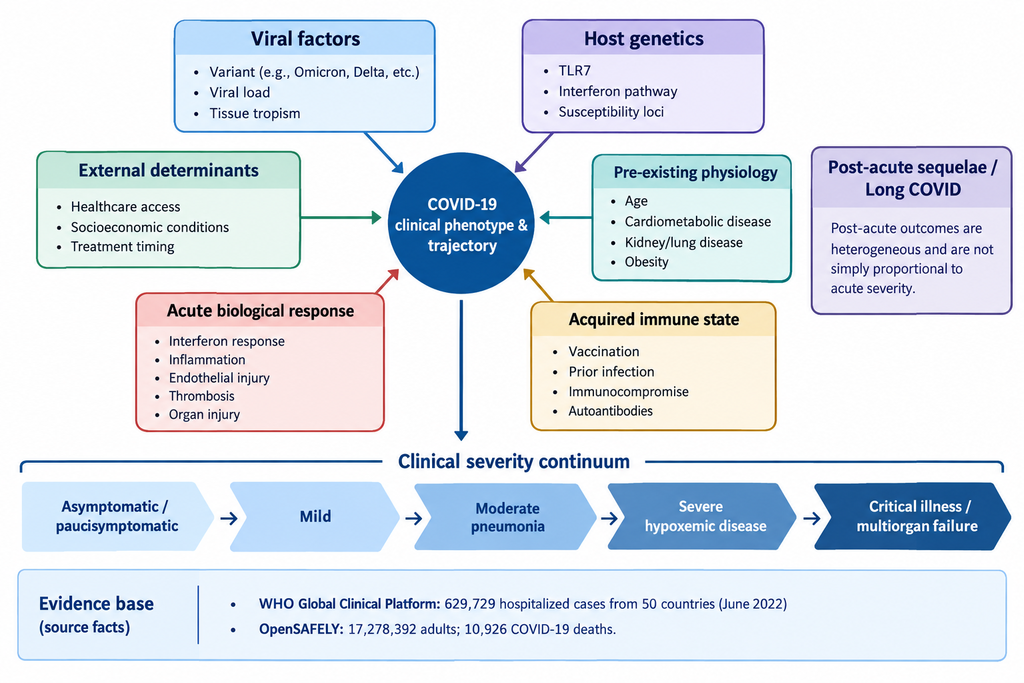
Figure 2 — WHO hospitalized-patient severity distribution
The WHO Global Clinical Platform reported 629,729 hospitalized cases from 50 countries; in the September 2021 dashboard snapshot, 54.1% were classified as mild/moderate, 38.0% severe/critical, and 8.0% undefined.
COVID-19 severity among hospitalized patients
WHO Global Clinical Platform snapshot of hospitalized patients, updated with data through September 2021.
Mild/moderate
Patients 54.1%0%15%30%45%60%Mild/moderateSevere/criticalUndefined