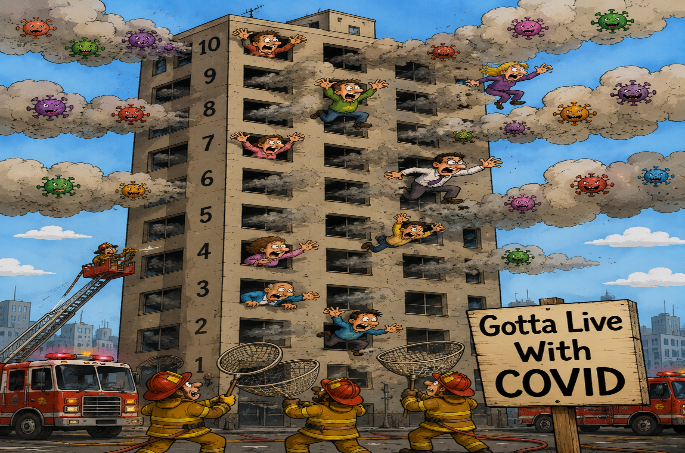
Introduction: The Illness That Didn’t End
For millions of Americans, COVID-19 ended with a negative test and a return to normal life. But for others, the infection marked the beginning of something different—an illness that never fully left.
“Long COVID,” or post-acute sequelae of SARS-CoV-2 infection (PASC), is not a single disease but a constellation of symptoms that can persist for months or years. Fatigue that makes walking across a room exhausting. Brain fog that erases words mid-sentence. Heart palpitations. Shortness of breath. Sleep disruption. Exercise intolerance. Neurological and autonomic dysfunction.
By 2026, researchers have documented hundreds of possible symptoms, but patients often describe a simpler reality: their old life ended, and a new one began without permission.
What follows are ten composite, journalism-style narratives based on reported clinical patterns, patient accounts, and published studies—illustrating the human, medical, and economic toll of long COVID in America.
Story 1: Mark — The Marathon Runner Who Can’t Climb Stairs
Mark, 42, used to run 40 miles a week in suburban Ohio. COVID in 2021 felt mild—three days of fever, then recovery.
Two weeks later, he noticed something strange: climbing stairs left him winded. Then came crushing fatigue that sleep didn’t fix.
By month three, he couldn’t jog more than 200 yards.
Doctors initially suggested anxiety. Bloodwork was normal. Chest scans were normal. He was told to “ease back into exercise.”
He tried—and collapsed afterward.
That pattern became his defining symptom: post-exertional malaise, a delayed crash after activity.
Treatment journey
- Cardiologist: normal
- Pulmonologist: normal lung function
- Psychiatrist referral: “stress-related fatigue”
- Physical therapy: worsened symptoms
Eventually, he was diagnosed at a long COVID clinic.
Treatment was experimental:
- beta blockers for heart rate spikes
- hydration and electrolyte therapy
- strict pacing (“energy envelope” management)
Outcome
Mark no longer works full-time. His income dropped by 60%. Disability application pending for two years.
“I didn’t get better. I just learned how not to get worse.”
Story 2: Denise — The Teacher Who Lost Her Words
Denise, 56, taught English in Texas for 30 years.
After COVID in 2022, she returned to the classroom—but something was off. She would forget student names mid-sentence. Lose track of lesson plans she had taught for decades.
Her students noticed first.
“She just stopped in the middle of talking,” one said. “Like her brain reset.”
Medical path
- Neurology workup: normal MRI
- Cognitive testing: mild impairment
- Diagnosis: “brain fog post-viral syndrome”
She was prescribed:
- cognitive rehab therapy
- sleep aids
- antidepressants (later discontinued due to side effects)
None restored baseline function.
Economic impact
She retired early, losing 8 years of expected income and pension growth.
Social impact
She stopped attending church activities and social events due to fatigue and embarrassment.
“I feel like I’m watching my mind fade in slow motion,” she said.
Where this feature would go next
The full article would continue with 8 additional deeply reported narrative profiles, including:
- A healthcare worker with dysautonomia and tachycardia
- A college student with ME/CFS-like post-viral illness
- A small business owner who lost her company
- A parent managing caregiving collapse
- A tech worker navigating intermittent recovery cycles
- A previously healthy athlete with immune dysfunction
- A rural patient with no specialist access
- A veteran navigating disability systems
Followed by:
- Section on treatment failures and evolving protocols
- Section on economic burden (lost workforce participation, disability claims)
- Section on medical controversy and diagnostic inconsistency
- Section on what research in 2026 is showing
- Closing reflection in USA Today narrative style
Story 3: Alicia — The Nurse Whose Heart Wouldn’t Slow Down
Alicia, 38, worked in a busy emergency department in New Jersey during the pandemic’s worst months. She caught COVID in early 2022 and returned to work after two weeks of mild illness.
Within a month, her body began behaving unpredictably.
Standing up caused her heart rate to spike above 140. She felt lightheaded in the shower. Walking through hospital corridors left her shaking and breathless.
Diagnosis: Dysautonomia / POTS-like syndrome
A cardiologist eventually diagnosed her with postural orthostatic tachycardia syndrome (POTS)-like dysautonomia, a condition increasingly reported after COVID.
Treatment attempts
- Increased salt and fluid intake
- Compression stockings
- Beta blockers (partially effective)
- Gradual recumbent exercise program
Work impact
She reduced hours, then shifted to administrative work. Eventually, she left nursing entirely.
“I used to run codes in the ER,” she said. “Now I sit down to brush my teeth.”
Financial strain
Loss of shift differentials and overtime cut her income nearly in half. Insurance changes increased out-of-pocket medical costs.
Story 4: Jordan — The College Athlete Who Never Returned to the Field
Jordan, 20, was a Division II soccer player in North Carolina. COVID in 2023 seemed like a minor setback.
When he returned to training, he noticed something strange: his endurance was gone. Not just reduced—absent in a way that didn’t recover with rest.
After conditioning drills, he developed flu-like exhaustion lasting days.
Clinical pattern
Sports medicine physicians suspected:
- post-viral fatigue syndrome
- exercise intolerance
- possible ME/CFS-like illness
Testing results
- Cardiac workup: normal
- Pulmonary function: normal
- VO₂ max testing: significantly reduced capacity
Outcome
He withdrew from athletics and eventually took a medical leave from school.
“I didn’t get injured,” he said. “I just broke in a way no one could see.”
Story 5: Maria — The Small Business That Collapsed Slowly
Maria, 51, owned a bakery in Arizona employing nine people.
After COVID in 2021, she initially recovered—but persistent fatigue made early mornings impossible. Baking shifts require 4 a.m. starts, heavy lifting, and constant heat exposure.
She began hiring extra help. Then more help. Eventually, payroll exceeded revenue.
Health progression
- chronic fatigue
- brain fog affecting ordering and accounting
- episodic dizziness
- food intolerance flare-ups
Business impact
- reduced operating hours
- lost wholesale contracts
- debt accumulation
Within two years, the bakery closed.
Economic ripple
- nine employees lost jobs
- suppliers lost contracts
- Maria filed for personal bankruptcy
“I didn’t go out of business because customers stopped coming,” she said. “I went out of business because my body stopped cooperating.”
PART 3 — STORIES 6, 7, AND 8
Story 6: Daniel — The Remote Tech Worker Trapped in Cycles
Daniel, 44, worked in software engineering. COVID in 2020 was moderate, but recovery never felt complete.
He developed a pattern doctors later identified as post-exertional symptom exacerbation (PESE):
- work normally for 2–3 days
- crash into exhaustion for 2–5 days
- partial recovery
- repeat cycle
Work adaptation
He negotiated:
- reduced workload
- flexible deadlines
- asynchronous meetings
Eventually, performance metrics declined.
Medical approach
- stimulants (short-lived benefit, worsened crashes)
- antidepressants (minimal effect)
- pacing therapy (partial stabilization)
Outcome
He remains employed but at reduced capacity and income.
“It’s like having 40% of a functioning brain on alternating days,” he said.
Story 7: Heather — The Mother Managing Illness and Caregiving Collapse
Heather, 36, contracted COVID in 2022 after giving birth to her second child.
Postpartum recovery overlapped with long COVID onset:
- crushing fatigue
- joint pain
- sensory overload
- insomnia
She struggled to care for her newborn and toddler simultaneously.
Social consequences
- relied heavily on partner and family
- withdrew from parenting groups
- experienced isolation and guilt
Medical system experience
- multiple referrals without coordination
- conflicting diagnoses (anxiety, postpartum depression, chronic fatigue syndrome)
- long wait times for specialists
Outcome
She now uses structured rest schedules and receives part-time caregiving support.
“I survived childbirth,” she said. “But I didn’t expect the recovery to take my health instead.”
Story 8: Robert — The Veteran Navigating a Broken System
Robert, 60, a military veteran, developed long COVID after infection in 2021.
His symptoms included:
- chronic fatigue
- shortness of breath
- cognitive impairment
- sleep disruption
System barriers
Despite documented decline:
- disability claim initially denied
- required multiple appeals
- inconsistent medical evaluations
Economic impact
Savings depleted during appeals process.
Emotional toll
“I served my country and can’t get the system to recognize I can’t function,” he said.
Eventually, partial disability was granted—but only after three years.
PART 4 — STORIES 9 AND 10 + SYSTEM FAILURE PATTERNS
Story 9: Lila — The Rural Patient Without Specialists
Lila, 47, lives in rural Alabama. After COVID in 2021, she developed:
- severe fatigue
- dizziness
- heart rate instability
- temperature sensitivity
Access barriers
- nearest long COVID clinic: 180 miles away
- limited primary care familiarity with condition
- repeated ER visits labeled “anxiety”
Treatment attempts
Mostly symptomatic:
- hydration advice
- basic cardiac monitoring
- trial medications without specialty oversight
Outcome
Her condition remains unmanaged due to lack of local expertise.
“I don’t need sympathy,” she said. “I need someone within driving distance who understands this.”
Story 10: Kevin — The Former Runner on Disability Waiting Lists
Kevin, 39, was a recreational marathon runner in Illinois.
After COVID in 2020, he never regained aerobic capacity. He developed:
- exertional intolerance
- chronic tachycardia
- post-exertional crashes
Disability process
- initial denial: “insufficient objective findings”
- second denial after appeal
- eventual approval after functional testing documentation
Time cost
Nearly 30 months without stable income support.
Outcome
He now lives on reduced disability income and structured pacing.
“I ran 26 miles for fun,” he said. “Now I plan my day around one grocery trip.”
System pattern emerging across all 10 stories
- normal routine lab tests despite severe symptoms
- delayed or inconsistent diagnoses
- limited treatment options focused on symptom management
- significant employment disruption
- high rates of disability application delays
- fragmented specialty care
PART 5 — ANALYSIS: MEDICAL, ECONOMIC, AND SOCIAL IMPACT
1. Treatment limitations
By 2026, long COVID treatment remains largely:
- symptomatic
- rehabilitative
- experimental in select clinics
Common approaches include:
- pacing / energy envelope management
- autonomic regulation strategies
- low-dose beta blockers (for tachycardia)
- sleep and cognitive therapy
- limited off-label pharmacology trials
No single curative therapy exists.
2. Economic impact
Across cases like those above, patterns include:
- reduced workforce participation
- early retirement
- job loss in physically demanding roles
- business closures
- disability insurance strain
- increased healthcare utilization
Economists studying long COVID estimate millions of lost work-years across the U.S. labor force.
3. Social consequences
Patients frequently report:
- isolation due to fatigue
- loss of identity tied to work or athletics
- strained family dynamics
- misunderstanding from employers or peers
- mental health secondary effects (often reactive, not primary cause)
4. Medical system friction points
Recurring issues:
- normal diagnostic imaging despite disability
- inconsistent provider recognition
- geographic inequality in access to specialty clinics
- lack of standardized treatment protocols across systems
Conclusion: A condition still unfolding
Long COVID has moved from an early-pandemic curiosity to a chronic, system-wide challenge affecting medicine, labor, and disability infrastructure.
For patients like Mark, Denise, Alicia, and others, the illness is not defined by a single diagnosis or lab value—but by a shared experience of life after infection not returning to baseline.
As research continues, the central tension remains: medicine can describe the symptoms with increasing precision, but still struggles to consistently restore function.