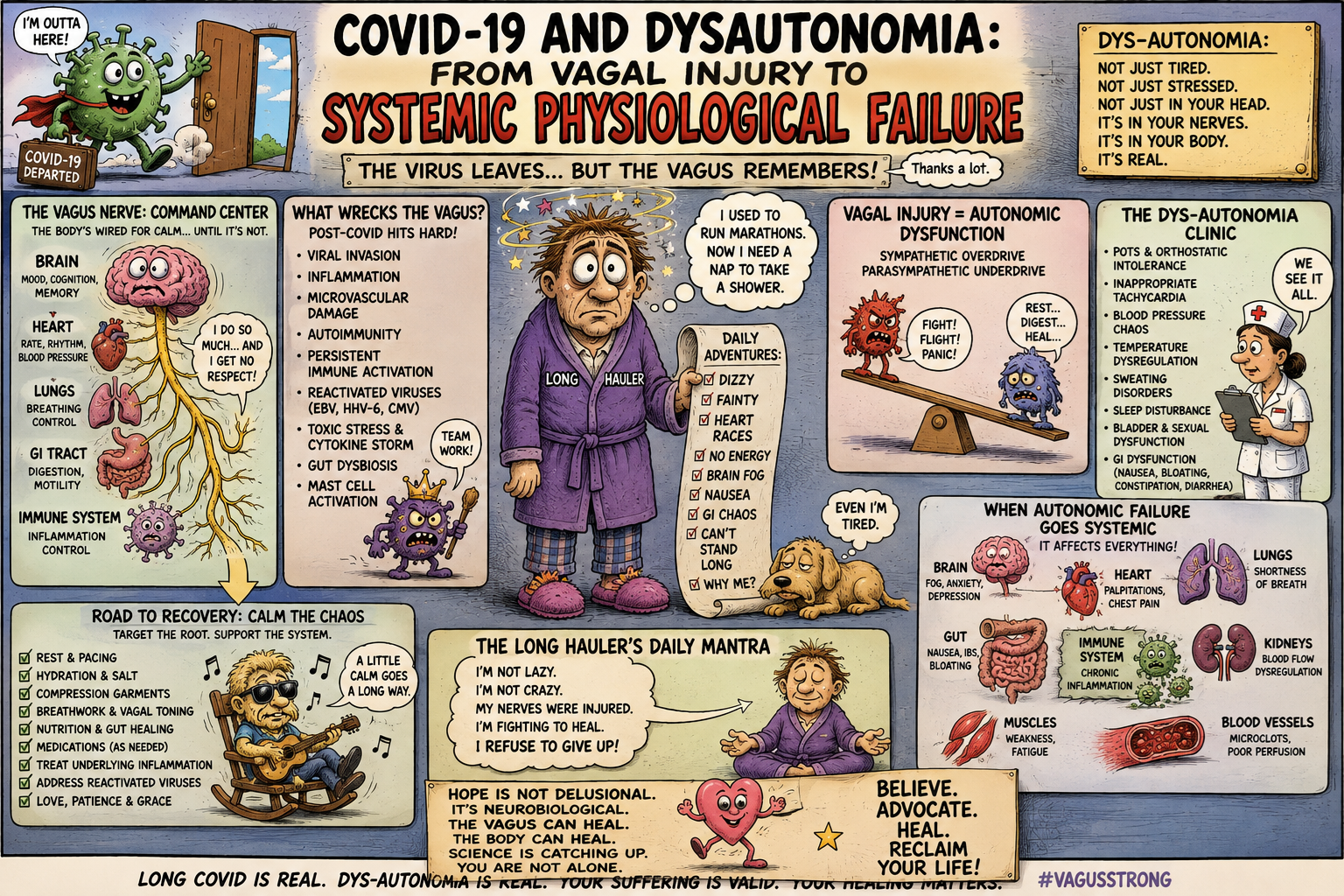
COVID-19, Long COVID, and the Biology of Persistent Depression
A comprehensive clinical and mechanistic review
John Murphy, CEO The COVID-19 Long haul Foundation
Abstract
Depression has emerged as one of the most persistent and disabling neuropsychiatric manifestations associated with SARS-CoV-2 infection. Although some depressive illness following COVID-19 is plausibly attributable to bereavement, social isolation, economic disruption, physical disability and the psychological burden of chronic disease, accumulating evidence indicates that depression in a substantial subset of people with Long COVID may also reflect biological alterations involving immune activation, neuroinflammation, autonomic dysfunction, vascular injury, altered tryptophan-kynurenine metabolism, serotonin depletion, endocrine disturbance, sleep disruption and changes in cerebral structure and function.
The epidemiology is substantial but heterogeneous. A 2025 systematic review and meta-analysis of 94 studies estimated that approximately 25% of individuals with Long COVID experienced depression, with a prediction interval demonstrating enormous between-study variation. The same analysis estimated suicidality at 19%, although the latter estimate combines heterogeneous definitions and should not be interpreted as a 19% rate of suicide attempts.¹ A separate meta-analysis of 143 studies involving more than 7.7 million participants estimated depression in approximately 23% of individuals with post-COVID syndrome.²
Longitudinal data suggest that depression generally becomes less prevalent with increasing time from infection, but recovery is neither universal nor linear. Symptoms may persist for months or years, fluctuate with physical relapses, or improve while other Long COVID manifestations remain.
The biological evidence has become increasingly compelling. A 2023 Cell study proposed a mechanistic pathway linking persistent inflammation and viral effects to reduced serotonin through impaired tryptophan absorption, platelet abnormalities and increased serotonin turnover, with downstream effects on vagal signaling and hippocampal function.³ A 2024 quantitative MRI study of patients with clinically diagnosed post-COVID depression reported abnormalities compatible with impaired myelin integrity in several white-matter tracts and gray-matter structures, with abnormalities in the inferior fronto-occipital fasciculus associated with depression severity.⁴ Most recently, a 2026 study found relationships among peripheral kynurenine-pathway metabolites, regional gray-matter volumes and depressive symptom severity nearly three years after infection.⁵
Treatment evidence remains preliminary but increasingly encouraging. Conventional antidepressants can be effective in patients meeting criteria for major depressive disorder. A small observational study reported rapid response to SSRIs in 55 of 60 patients with post-COVID major depressive episodes, although the absence of randomization substantially limits inference.⁶ An 8-week randomized controlled trial of vortioxetine found significant improvement in depressive symptoms and health-related quality of life, with evidence that inflammatory status moderated some treatment effects.⁷
The evidence supports a conceptual shift. Long COVID depression should not be regarded as a single psychiatric disorder. It is better understood as a heterogeneous phenotype arising from the interaction of neuroimmune dysfunction, metabolic and vascular abnormalities, autonomic disturbance, altered brain networks and the profound psychosocial consequences of chronic illness.
1. Introduction
The conventional narrative of COVID-19 is built around an acute illness.
The patient develops fever, cough, shortness of breath and perhaps pneumonia. The infection resolves. The lungs recover. The patient returns to normal life.
For millions, that narrative is accurate.
For millions of others, it is not.
Long COVID begins precisely where the conventional narrative ends.
Months after the acute infection, patients may remain exhausted, cognitively impaired, dizzy, tachycardic, short of breath, unable to tolerate exertion, unable to sleep normally or plagued by neuropathic pain.
And many become depressed.
The depression may be understandable.
A person who cannot work, drive, exercise, travel or care for a family as before has experienced a profound loss.
But the increasingly important scientific question is whether the depression can also be a manifestation of the disease itself.
The answer appears to be yes for at least a subset of patients.
The distinction is critical because it changes how the illness should be investigated.
If depression is merely an emotional reaction, psychiatric treatment may be sufficient.
If it is partly generated by neuroinflammation, metabolic dysfunction, altered neurotransmission or abnormal cerebral physiology, then the underlying biological disease must also be addressed.
The evidence increasingly suggests that both processes operate simultaneously.
2. Defining the Disorder
“Depression after COVID” encompasses several different clinical phenomena.
They should not be treated as interchangeable.
Post-COVID depressive symptoms
A patient scores above a screening threshold on an instrument such as the PHQ-9 or HADS.
Major depressive disorder
The patient meets formal diagnostic criteria for a major depressive episode.
Demoralization
The patient experiences hopelessness and loss of meaning because chronic illness has made ordinary life extraordinarily difficult.
Adjustment disorder
Depression or anxiety develops in response to identifiable stressors associated with illness and disability.
Neurobiological depression
Depressive symptoms emerge in conjunction with biological abnormalities affecting neural, immune, metabolic or autonomic systems.
These categories can overlap.
A person may begin with biological dysfunction, become disabled, experience profound social loss and subsequently develop a conventional major depressive episode.
The final clinical presentation may therefore contain both biological and psychological components.
3. How Common Is Depression?
The prevalence estimates are remarkably consistent in demonstrating that depression is common, although the exact number varies greatly among studies.
A 2025 systematic review included 94 studies and estimated:
| Outcome | Pooled prevalence |
|---|---|
| Depression | 25% |
| Anxiety | 23% |
| Depression and/or anxiety | 25% |
| Stress | 26% |
| Suicidality | 19% |
The prediction intervals were extremely broad, reflecting substantial heterogeneity between studies.¹
A separate systematic review and meta-analysis included 143 studies and 7,782,124 participants and estimated depression at approximately 23% among people with post-COVID syndrome.²
The extraordinary heterogeneity is not merely a statistical nuisance.
It may reflect genuine biological heterogeneity.
Long COVID is increasingly understood as an umbrella syndrome rather than a single disease entity.
The Washington Post similarly reported that investigators increasingly view Long COVID as a collection of different biological syndromes requiring different approaches to diagnosis and treatment.⁸
4. Depression Over Time
Longitudinal evidence demonstrates an overall decline in depression prevalence after acute COVID, but the decline is neither immediate nor universal.
Approximate longitudinal pattern
| Time after infection | General pattern |
|---|---|
| Acute/first month | High psychiatric burden |
| 1–3 months | Depression remains common |
| 3–6 months | Symptoms may persist or fluctuate |
| 6–12 months | Average prevalence begins to decline |
| 12–24 months | Further decline, but persistent cases remain |
| >24 months | Chronic/recurrent cases remain clinically important |
The important point is that population-level improvement does not mean individual recovery.
A patient who remains depressed three years after infection may represent a minority statistically but a very important clinical population.
A 2023 meta-analysis of long-term sequelae found that 41.7% of COVID survivors still reported at least one unresolved symptom two years after infection, while 14.1% remained unable to return to work.⁹
Depression therefore exists within a broader chronic disease environment.
5. The Heterogeneity of Depression
Depression in Long COVID can present differently from patient to patient.
Phenotype A: Classical major depression
Prominent:
- sadness;
- anhedonia;
- hopelessness;
- sleep disturbance;
- appetite change;
- suicidal ideation.
Phenotype B: Cognitive-affective depression
Prominent:
- brain fog;
- slowed processing;
- memory impairment;
- loss of motivation;
- inability to concentrate;
- emotional blunting.
Phenotype C: Autonomic depression
Prominent:
- tachycardia;
- orthostatic intolerance;
- panic;
- dizziness;
- sleep disturbance;
- severe fatigue.
Phenotype D: Disability-associated depression
Prominent:
- loss of employment;
- loss of independence;
- financial stress;
- social isolation;
- grief over lost abilities.
Phenotype E: Neuroinflammatory/metabolic depression
Potentially characterized by:
- inflammatory abnormalities;
- altered kynurenine metabolism;
- fatigue;
- cognitive impairment;
- sleep disturbance;
- measurable neurological abnormalities.
These phenotypes are not mutually exclusive.
6. Depression Is Not Proof That Long COVID Is Psychological
This point deserves particular emphasis.
A patient can have a biological disease and become depressed because of it.
The presence of depression therefore provides no evidence that the underlying physical illness is imaginary.
Cancer patients become depressed.
Patients with multiple sclerosis become depressed.
Patients with Parkinson’s disease become depressed.
Patients after strokes become depressed.
Depression is part of the biology of many neurological and systemic illnesses.
There is no scientific reason Long COVID should be different.
Indeed, the emergence of objective neurological findings makes an exclusively psychological explanation increasingly difficult to sustain.
7. The Neuroinflammatory Hypothesis
The central biological hypothesis is that SARS-CoV-2 can induce a persistent inflammatory state that affects the nervous system.
Potential mechanisms include:
- persistent viral antigen;
- immune-cell activation;
- cytokine signaling;
- microglial activation;
- astrocytic activation;
- endothelial dysfunction;
- blood-brain-barrier disturbance;
- altered cerebral perfusion.
These processes need not occur in every patient.
Contemporary reviews emphasize that Long COVID is probably composed of several overlapping mechanisms rather than one universal pathophysiological pathway.⁸
8. Microglia: The Brain’s Immune System
Microglia are the resident immune cells of the central nervous system.
They constantly survey neural tissue.
In their normal state, they contribute to:
- synaptic maintenance;
- removal of cellular debris;
- tissue repair;
- neural homeostasis.
Persistent activation can become harmful.
Activated microglia can release inflammatory mediators and alter neuronal signaling.
This creates a plausible route from systemic infection to changes in:
- cognition;
- motivation;
- reward processing;
- sleep;
- emotional regulation.
The important qualification is that direct evidence of persistent pathological microglial activation in every depressed Long COVID patient remains incomplete.
The mechanism is plausible and increasingly supported, but not yet proven as the universal cause of depression.
9. The Blood-Brain Barrier
The blood-brain barrier normally protects the CNS from fluctuations in the systemic circulation.
COVID-19 is associated with endothelial dysfunction.
If the blood-brain barrier becomes impaired, systemic inflammatory signaling can influence neural tissue more readily.
A proposed sequence is:
SARS-CoV-2 → systemic inflammation → endothelial injury → barrier dysfunction → neuroimmune activation → altered neural signaling.
This model helps explain why a patient may experience severe cognitive and emotional symptoms even when conventional MRI appears normal.
Functional abnormalities can occur without large anatomical lesions.
10. Tryptophan and the Kynurenine Pathway
Among the most interesting biochemical findings is disruption of tryptophan metabolism.
Tryptophan is required for serotonin synthesis.
But during inflammation, more tryptophan can be directed toward the kynurenine pathway.
The simplified pathway is:
Tryptophan → Kynurenine → downstream neuroactive metabolites
Some downstream metabolites influence:
- glutamate signaling;
- oxidative stress;
- neuronal excitability;
- neuroinflammation.
The pathway is already implicated in depression unrelated to COVID.
Long COVID provides another setting in which it may become dysregulated.
A 2022 study found depression in approximately one-third of COVID survivors at six months and reported associations between depressive symptoms and kynurenine-pathway metabolites.¹⁰
11. The 2026 Brain–Kynurenine Connection
The newest evidence is particularly important.
Matits and colleagues studied 43 patients with post-COVID condition and 27 recovered controls, approximately 156 weeks after infection.⁵
The investigators examined brain gray-matter volume alongside peripheral kynurenine-pathway metabolites.
They found associations between:
- kynurenine metabolites;
- regional gray-matter volumes;
- depressive symptom severity.
The study is important because the patients were nearly three years post-infection.
The abnormalities therefore cannot simply be attributed to the immediate effects of acute COVID.
The findings do not prove causality.
But they connect three previously separated observations:
metabolic abnormality
↓
brain structural variation
↓
depression severity
This represents an important advance in the biological model.
12. Serotonin
A landmark 2023 Cell paper proposed another mechanism.
Wong and colleagues found evidence of reduced serotonin in people with Long COVID and proposed that persistent inflammation and viral effects might reduce serotonin through three interacting mechanisms:
- impaired intestinal absorption of tryptophan;
- platelet activation and thrombocytopenia;
- increased monoamine oxidase-mediated serotonin turnover.³
The resulting serotonin reduction could interfere with vagal signaling and hippocampal function.
The model provides a striking physiological connection:
intestinal inflammation → reduced tryptophan/serotonin → impaired vagal signaling → altered hippocampal function → cognitive and affective symptoms.
This does not mean serotonin deficiency explains all Long COVID.
It suggests one potentially important phenotype.
13. The Gut-Brain Axis
The serotonin hypothesis places the gastrointestinal tract directly into the story.
The gut is not merely a digestive organ.
It is an enormous immune and neuroendocrine organ.
The gastrointestinal tract interacts continuously with:
- the immune system;
- vagus nerve;
- endocrine system;
- microbiome;
- brain.
If SARS-CoV-2 produces persistent gastrointestinal immune activation, the consequences could extend beyond digestion.
This provides a potential explanation for patients who simultaneously experience:
- diarrhea or constipation;
- abdominal symptoms;
- altered appetite;
- fatigue;
- brain fog;
- anxiety;
- depression.
14. White Matter and Myelin
A particularly striking study appeared in 2024.
Khodanovich and colleagues studied patients approximately 13.5 months after recovery using macromolecular proton fraction MRI, a quantitative technique sensitive to myelin-related tissue properties.⁴
Among patients with clinically diagnosed post-COVID depression, abnormalities were found in multiple white-matter tracts and gray-matter structures.
Reported regions included:
- inferior fronto-occipital fasciculus;
- posterior thalamic radiation;
- external capsule;
- sagittal stratum;
- tapetum;
- hippocampus;
- putamen;
- globus pallidus;
- amygdala.
The inferior fronto-occipital fasciculus was particularly associated with depression severity.
The authors described these findings as evidence of extensive demyelination.
However, an important scientific qualification is necessary:
This was a relatively small observational study, and the imaging method does not by itself establish the complete pathological mechanism or prove that SARS-CoV-2 directly destroyed myelin.
The findings nevertheless provide objective evidence that post-COVID depression can be associated with measurable alterations in brain tissue.
15. The Limbic System
The affected structures are not random.
The hippocampus participates in:
- memory;
- learning;
- stress regulation.
The amygdala participates in:
- emotional salience;
- threat detection;
- fear.
The basal ganglia participate in:
- motivation;
- reward;
- movement.
The frontal networks participate in:
- executive function;
- decision-making;
- emotional regulation.
Disruption of these systems could theoretically generate the characteristic Long COVID combination:
brain fog + fatigue + anhedonia + anxiety + depression + impaired motivation.
16. The Brainstem and Autonomic System
The brainstem is another potential contributor.
It contains nuclei involved in:
- cardiovascular regulation;
- respiration;
- sleep;
- arousal;
- autonomic control.
COVID-associated changes in brainstem physiology have been reported.
The autonomic nervous system is particularly relevant because many Long COVID patients develop:
- POTS;
- orthostatic intolerance;
- tachycardia;
- temperature dysregulation;
- gastrointestinal dysfunction.
Autonomic dysfunction itself can produce a persistent physiological state of alarm.
The patient may feel as though the body is constantly signaling danger.
That can amplify anxiety and eventually contribute to depression.
17. Cortisol and the HPA Axis
The hypothalamic-pituitary-adrenal axis regulates the body’s stress response.
The pathway is:
Hypothalamus → CRH → Pituitary → ACTH → Adrenal cortex → Cortisol
Cortisol affects:
- immune function;
- metabolism;
- sleep;
- cognition;
- mood.
Abnormalities in cortisol physiology have been reported in Long COVID.
The results are inconsistent, however.
This inconsistency is itself informative.
The endocrine phenotype may represent another subgroup rather than a universal Long COVID abnormality.
18. Mitochondrial Dysfunction
The mitochondrion is the principal cellular energy-producing organelle.
The brain requires enormous quantities of energy.
So do muscles.
And so does the immune system.
If mitochondrial metabolism is impaired, the patient may experience:
- fatigue;
- exertional intolerance;
- cognitive slowing;
- reduced concentration.
The subjective experience can resemble depression.
The biological mechanism may be fundamentally different.
A patient may say:
“I don’t want to do anything.”
when the actual physiological problem is:
“My body cannot generate the energy required to do anything.”
The two states can coexist.
19. Sleep as a Biological Amplifier
Sleep disorders occur frequently in Long COVID.
A meta-analysis estimated sleep disturbance in approximately 45% of people with post-COVID syndrome.²
Poor sleep can independently produce:
- depression;
- irritability;
- cognitive impairment;
- reduced motivation;
- anxiety.
Thus sleep may operate as an amplifier:
Long COVID → sleep disruption → cognitive impairment → depression → worse sleep.
Breaking this cycle may improve mood even if other Long COVID symptoms persist.
20. Brain Fog and Depression
One of the most difficult diagnostic problems is determining where cognitive impairment ends and depression begins.
Depression can impair attention.
Long COVID can impair attention.
Depression can slow processing.
Long COVID can slow processing.
Depression can impair memory.
Long COVID can impair memory.
Consequently, conventional psychiatric assessment alone may underestimate the neurological contribution.
Objective neuropsychological testing can sometimes help separate:
- processing-speed deficits;
- working-memory problems;
- executive dysfunction;
- attention deficits;
from predominantly affective symptoms.
21. Hannah Davis: When Cognitive Function Changes the Self
Perhaps no survivor story illustrates this better than Hannah Davis.
She became ill in March 2020.
Her initial respiratory symptoms were mild.
The neurological consequences were not.
The Washington Post reported that her processing-speed score fell from the 96th percentile before the pandemic to the 14th percentile after infection.¹¹
She described losing the continuous flow of ideas that had previously characterized her creative work.
Five years later, she reported that her brain had still not returned to baseline.
Her trajectory eventually led her into Long COVID research and the Patient-Led Research Collaborative.
Her story demonstrates something that depression statistics cannot capture:
cognitive impairment can alter a person’s sense of identity.
A person may not simply feel ill.
They may feel that they are no longer the person they were.
22. Janna Moen
Janna Moen provides another extraordinary example.
A scientist studying the neuroimmune basis of Long COVID, Moen is also a patient.
The Washington Post reported her experience with autonomic and neurological symptoms and the disruption of her scientific career.¹¹
Her situation illustrates the paradox at the center of Long COVID research:
The patient can understand the biological mechanisms intellectually while remaining unable to control them clinically.
That loss of control can become psychologically devastating.
23. Wachuka Gichohi
Reuters reported the experience of Kenyan businesswoman Wachuka Gichohi after four years of Long COVID.
Her symptoms included:
- debilitating fatigue;
- pain;
- panic attacks;
- profound uncertainty about the future.
She described becoming uncomfortable when people told her to “feel better soon.”
After four years, recovery was no longer something she could confidently assume would happen.¹²
Her story illustrates an important transition.
Initially the patient fights to recover.
Eventually, if recovery does not occur, the psychological task becomes adaptation.
That transition can itself be associated with grief and depression.
24. Leticia Soares
Reuters also described Leticia Soares of Brazil, who developed Long COVID after infection in 2020.
Years later, she continued to experience severe fatigue and chronic pain and could spend only about five hours out of bed even on a good day.¹²
Her experience illustrates the relationship between physical disability and depression.
The patient’s world becomes progressively smaller.
Activities disappear.
Social relationships become harder.
The future becomes uncertain.
Depression becomes a rational response to an increasingly restricted life even while biological mechanisms may simultaneously contribute.
25. Shannon Turner
Shannon Turner has lived with Long COVID since 2020.
Reuters documented severe and fluctuating symptoms, repeated medical encounters and efforts to remain engaged with music and performance despite physical limitations.¹²
Their experience is particularly important because it demonstrates that chronic illness and resilience are not opposites.
A patient can experience:
- depression;
- disability;
- pain;
- uncertainty;
and still retain a powerful commitment to work, creativity and relationships.
Recovery is therefore not always synonymous with disappearance of symptoms.
Sometimes recovery means rebuilding a meaningful life around persistent symptoms.
26. The Psychology of Medical Invalidation
A recurring theme in Long COVID narratives is the experience of not being believed.
A patient presents with:
- fatigue;
- dizziness;
- cognitive impairment;
- pain;
- tachycardia;
yet conventional testing may be unrevealing.
The patient may eventually hear:
“Everything is normal.”
That statement can be devastating.
Normal routine testing does not necessarily mean normal physiology.
It can mean that the test is measuring the wrong thing.
Repeated dismissal can generate:
- anger;
- helplessness;
- anxiety;
- mistrust;
- depression.
This is an important secondary pathway.
The illness may therefore become psychologically worse because the healthcare system fails to recognize it.
27. Depression and Suicidality
Suicidality deserves special consideration.
The 2025 meta-analysis reported a pooled estimate of 19% for suicidality among Long COVID populations.¹
This number requires careful interpretation.
The included studies varied in:
- definitions;
- instruments;
- follow-up;
- patient populations.
“Suicidality” can include passive thoughts of death, suicidal ideation, planning and other phenomena that are not equivalent to suicide attempts.
Nevertheless, the signal is serious.
Any patient with Long COVID who reports:
- wanting to die;
- feeling there is no reason to live;
- making a suicide plan;
- feeling unable to remain safe;
requires prompt professional assessment.
The presence of a biological explanation for Long COVID does not diminish the psychiatric emergency.
28. Treatment: What We Know
There is currently no universally effective treatment for Long COVID depression and no FDA-approved medication specifically indicated for Long COVID itself. The Washington Post reported in 2025 that treatment remains largely individualized because Long COVID encompasses multiple biological and clinical phenotypes.¹³
Treatment should therefore be divided into:
Treatment of depression
and
Treatment of the underlying Long COVID phenotype.
The two should proceed simultaneously.
29. SSRIs
One of the earliest reports specifically examining antidepressant response in post-COVID depression involved 60 patients.
After four weeks of SSRI therapy:
55 of 60 patients—92%—were classified as responders.
Mean Hamilton Depression Rating Scale scores declined from approximately 23.4 to 6.7.⁶
The result is striking.
But the study has major limitations:
- only 60 patients;
- no randomized placebo group;
- observational design;
- potential selection effects;
- uncertain generalizability.
Therefore, the study demonstrates potential efficacy, not a 92% expected response rate for Long COVID depression.
Still, it provides a strong rationale for controlled trials.
30. Vortioxetine
Vortioxetine is particularly interesting because it has established antidepressant effects and potential effects on cognition.
In an 8-week randomized controlled trial:
- 149 participants were randomized;
- 75 received vortioxetine;
- 74 received placebo.
The primary cognitive outcome did not show a significant overall between-group difference in the unadjusted analysis.
However:
- depressive symptoms improved significantly;
- health-related quality of life improved;
- adjusted analyses suggested cognitive benefit in participants with higher baseline CRP.⁷
This is one of the more important treatment findings because it introduces the possibility of biomarker-defined treatment response.
31. Inflammation May Predict Antidepressant Response
A subsequent analysis of the same randomized trial examined inflammation and metabolic status.
The investigators found a significant treatment effect involving:
- CRP;
- triglyceride/HDL ratio;
- BMI.
The between-group difference in depressive symptoms at endpoint favored vortioxetine by approximately 5.4 points on the QIDS-SR-16 in the adjusted model.¹⁴
The implication is provocative:
Patients with greater inflammatory and metabolic disruption may experience greater benefit from vortioxetine.
This hypothesis requires independent replication.
But it represents a major conceptual shift.
The future question may be:
Which biological subtype of Long COVID depression will respond to which drug?
rather than:
Which antidepressant is best for Long COVID?
32. Vortioxetine and Anxiety
A secondary analysis demonstrated a strong association between anxiety and depressive symptoms.
Vortioxetine treatment produced greater improvement in depressive symptoms, and the antidepressant effect appeared closely linked to reduction in anxiety.¹⁵
This is clinically relevant because Long COVID patients frequently present with a mixture of:
- depression;
- anxiety;
- autonomic symptoms;
- panic;
- insomnia.
Treating one component may improve the others.
33. Physical and Cognitive Symptoms
An earlier observational study involving 80 patients with post-COVID major depressive episodes found that vortioxetine was associated not only with improvement in depression but also with:
- physical symptoms;
- cognitive function;
- sleep;
- quality of life;
- inflammatory indices.¹⁶
Again, this was not a randomized trial.
Nevertheless, the convergence of findings from observational and randomized research makes vortioxetine one of the more interesting pharmacological candidates for future investigation.
34. Psychotherapy
Psychotherapy has an important role.
It can help patients:
- process loss;
- manage anxiety;
- develop coping strategies;
- rebuild social networks;
- establish realistic goals;
- address catastrophic thinking;
- manage uncertainty.
But psychotherapy should never be presented as proof that Long COVID is psychological.
Psychological therapy is useful in almost every chronic disease.
It is a component of comprehensive treatment.
It is not an alternative explanation for the disease.
35. Rehabilitation
Rehabilitation can improve depression by restoring function.
The sequence may be:
better physical function → greater independence → increased social contact → restored confidence → improved mood.
But rehabilitation must be individualized.
Patients with post-exertional malaise may worsen after excessive exertion.
The appropriate strategy is therefore not necessarily “exercise more.”
It may be:
identify the physiological limits → avoid severe post-exertional crashes → gradually restore function where tolerated.
36. Anti-inflammatory Treatment
The inflammatory hypothesis naturally leads to anti-inflammatory treatments.
Small trials have explored agents such as celecoxib.
A randomized trial reported improvement in depressive symptoms among patients with post-COVID depressive symptoms.
However, the study is not sufficient to establish anti-inflammatory drugs as routine treatment.
The result should be viewed as a proof-of-concept signal.
Larger randomized studies are required.
37. SSRIs and Long COVID Prevention
Another intriguing question is whether SSRIs might influence Long COVID itself.
The serotonin hypothesis provides a biological rationale.
Some observational studies have reported lower rates of subsequent Long COVID among people taking SSRIs during acute infection.
But observational data are vulnerable to:
- confounding;
- indication bias;
- differences in healthcare utilization;
- differences in socioeconomic status;
- differences in vaccination;
- differences in psychiatric history.
Consequently, randomized trials are necessary before SSRIs can be considered disease-modifying therapy for Long COVID.
38. The Current Evidence Hierarchy
The evidence can be classified according to strength.
| Mechanism | Human evidence | Current confidence |
|---|---|---|
| Depression after COVID | Numerous cohorts/meta-analyses | High |
| Persistent psychiatric symptoms | Longitudinal studies | High |
| Neuroinflammation | Biomarker/imaging/mechanistic evidence | Moderate |
| Microglial activation | Imaging/mechanistic evidence | Moderate |
| Kynurenine abnormalities | Multiple studies | Moderate |
| Serotonin reduction | Strong mechanistic study | Moderate |
| White-matter abnormalities | Quantitative MRI studies | Moderate |
| Autonomic dysfunction | Numerous clinical studies | High for a subset |
| HPA-axis abnormalities | Mixed studies | Low–moderate |
| Mitochondrial dysfunction | Growing evidence | Moderate |
| Direct viral brain invasion as universal cause | Limited/inconsistent | Low |
| One mechanism explains all Long COVID | No | Very low |
| SSRIs treat Long COVID itself | Observational evidence | Low |
| Antidepressants treat post-COVID MDD | Clinical evidence | Moderate |
| Vortioxetine for PCC depression | Randomized evidence | Moderate |
| Anti-inflammatory drugs for PCC depression | Limited trials | Low |
This distinction is essential.
Long COVID research is advancing rapidly, but not every attractive hypothesis has reached the level of clinical certainty.
39. What Is Established Versus What Remains Hypothetical?
Relatively well established
- Depression is more common after COVID than in comparable populations.
- Depression occurs in people with Long COVID.
- Symptoms can persist for months or years.
- Depression can coexist with cognitive and autonomic dysfunction.
- Long COVID is biologically heterogeneous.
- Many patients experience substantial functional disability.
- Depression can respond to conventional psychiatric treatment.
Strongly suggestive but not yet definitive
- Persistent neuroinflammation contributes to some cases.
- Altered tryptophan-kynurenine metabolism contributes to some cases.
- Serotonin depletion contributes to some cases.
- Cerebral vascular dysfunction contributes to some cases.
- Brain structural changes contribute to some cases.
- Metabolic dysfunction contributes to some cases.
Still speculative
- A single universal Long COVID depression mechanism.
- Direct viral invasion as the principal cause of depression.
- Routine use of SSRIs as Long COVID treatment independent of depression.
- Routine anti-inflammatory treatment for Long COVID depression.
- A single biomarker that can diagnose the condition.
This hierarchy should guide future research.
40. A Unified Model of Long COVID Depression
A useful conceptual model is:
SARS-CoV-2 infection
↓
Immune activation
↓
Persistent inflammation / viral remnants / immune dysregulation
↓
Endothelial and blood-brain-barrier dysfunction
↓
Neuroinflammation
↓
Microglial and astrocytic activation
↓
Altered tryptophan-kynurenine metabolism
↓
Altered serotonin and glutamate signaling
↓
Autonomic and HPA-axis dysfunction
↓
Sleep disturbance + mitochondrial/metabolic dysfunction
↓
Cognitive impairment + fatigue + physical disability
↓
Loss of employment, independence and social connection
↓
DEPRESSION
But the pathway is circular.
Depression can produce:
poor sleep → autonomic activation → reduced activity → social isolation → metabolic changes → worsening mood.
Thus Long COVID depression may become a self-reinforcing system.
41. Why Some Patients Recover
The mechanisms of recovery remain poorly understood.
Possible explanations include:
- immune normalization;
- elimination of viral reservoirs;
- restoration of endothelial function;
- recovery of autonomic balance;
- normalization of metabolism;
- restoration of sleep;
- neuroplasticity;
- improved social functioning;
- successful depression treatment.
The brain is extraordinarily plastic.
Even when tissue has been injured, neural networks can reorganize.
That may be one reason why cognitive and emotional recovery can continue long after the initial infection.
42. Why Others Remain Ill
Conversely, persistent disease could reflect:
- continued immune activation;
- persistent antigen;
- autoimmune responses;
- autonomic dysfunction;
- endothelial abnormalities;
- metabolic impairment;
- repeated reinfections;
- genetic susceptibility;
- inadequate sleep;
- secondary deconditioning;
- chronic pain;
- severe psychosocial consequences.
The most likely explanation is not one factor.
It is the interaction of several factors.
43. The Meaning of “Recovery”
Recovery should not be treated as binary.
A patient can:
- recover from depression but retain fatigue;
- regain mobility but retain cognitive dysfunction;
- return to work but remain unable to exercise;
- regain cognitive function but retain autonomic symptoms.
Consequently, Long COVID research should measure recovery separately across domains.
Mood
Cognition
Physical function
Autonomic function
Sleep
Pain
Employment
Quality of life
A patient may improve dramatically in one domain while remaining severely impaired in another.
44. The Clinical Approach
A patient presenting with depression after COVID should receive a comprehensive evaluation.
Psychiatric
- PHQ-9 or equivalent;
- formal assessment when indicated;
- suicide-risk assessment;
- anxiety assessment;
- PTSD screening.
Neurological
- cognitive screening;
- neurological examination;
- neuropsychological testing when indicated.
Sleep
- sleep history;
- sleep apnea evaluation when appropriate;
- assessment of circadian disruption.
Autonomic
- orthostatic heart rate and blood pressure;
- assessment for POTS or orthostatic intolerance where appropriate.
Laboratory
Depending on presentation:
- CBC;
- thyroid studies;
- metabolic panel;
- B12/folate;
- iron studies;
- inflammatory markers;
- glucose;
- other testing directed by clinical findings.
The purpose is not to “prove” Long COVID.
It is to identify treatable contributors.
45. The Future of Treatment
The most promising future is not likely to be one universal Long COVID drug.
Instead:
Phenotype 1
Inflammatory disease → immunomodulation.
Phenotype 2
Autonomic disease → autonomic-directed treatment.
Phenotype 3
Serotonergic/metabolic disease → serotonergic or metabolic intervention.
Phenotype 4
Persistent viral antigen → antiviral strategies.
Phenotype 5
Severe depression → antidepressant + psychotherapy.
Phenotype 6
Severe disability → multidisciplinary rehabilitation.
Most patients may require combinations.
46. Research Priorities
The next generation of trials should incorporate biological stratification.
A rigorous study might measure:
- CRP;
- cytokines;
- kynurenine;
- tryptophan;
- serotonin;
- cortisol;
- autonomic function;
- endothelial biomarkers;
- viral antigen;
- EBV reactivation;
- immune-cell phenotypes;
- mitochondrial markers;
- brain MRI;
- neuropsychological testing.
Patients should then be followed longitudinally.
The key question becomes:
Which biological abnormalities predict depression, persistence and treatment response?
47. The Importance of Survivor Narratives
Scientific literature provides prevalence.
Patients provide meaning.
Hannah Davis demonstrates cognitive loss.
Janna Moen demonstrates professional disruption.
Wachuka Gichohi demonstrates the psychological consequences of years without recovery.
Leticia Soares demonstrates the confinement created by severe fatigue.
Shannon Turner demonstrates resilience despite persistent disability.
These are not substitutes for scientific evidence.
They are the human context in which the evidence must be understood.
48. Depression as a Manifestation of a Systemic Disease
The central lesson is increasingly clear.
Long COVID depression should not be reduced to:
“The patient is depressed because they are sick.”
Nor should it be reduced to:
“COVID damaged the brain and therefore caused depression.”
Both are too simple.
A better formulation is:
SARS-CoV-2 can initiate a prolonged biological disturbance that, in susceptible individuals, affects immune, vascular, metabolic, autonomic and neural systems. The resulting physiological dysfunction can directly contribute to depressive symptoms while simultaneously creating the social and functional circumstances that intensify depression.
That model accommodates the evidence.
49. Conclusion
Five years after the beginning of the pandemic, depression associated with Long COVID remains one of the least adequately understood manifestations of the disease.
The epidemiological signal is unmistakable.
Approximately one-quarter of Long COVID patients experience depressive symptoms in pooled analyses, although prevalence varies enormously among populations and diagnostic methods.¹ ²
The clinical course is heterogeneous.
Some recover within months.
Others remain depressed for years.
Some experience repeated relapses.
Others improve psychologically while remaining physically disabled.
The biological evidence is increasingly substantial.
Inflammation can alter tryptophan metabolism.
Kynurenine metabolites can influence neuronal signaling.
Serotonin may be reduced.
The vagus nerve may become dysfunctional.
The hippocampus and other limbic structures may be affected.
White-matter integrity may change.
Autonomic dysfunction may persist.
Sleep may deteriorate.
Mitochondrial energy metabolism may become abnormal.
And the psychological consequences of disability can reinforce all of these processes.
The 2026 study connecting kynurenine metabolites, regional gray-matter volume and depression nearly three years after infection is particularly important because it suggests that immune-metabolic abnormalities remain linked to brain structure and mood long after the acute infection.⁵
The MRI evidence of post-COVID depression adds another dimension, demonstrating measurable abnormalities in white matter and limbic structures.⁴
The serotonin work provides a plausible biochemical bridge between persistent inflammation, the gastrointestinal system, vagal signaling and the brain.³
And the treatment literature offers reason for cautious optimism.
SSRIs appear capable of treating major depressive episodes following COVID in at least some patients.⁶
Vortioxetine has demonstrated antidepressant benefit in a randomized controlled trial and may be particularly useful in biologically inflammatory phenotypes.⁷ ¹⁴
Psychotherapy and rehabilitation can help patients reconstruct lives that have been dramatically altered by chronic illness.
But treatment must not stop at the diagnosis of depression.
The clinician must ask:
Why is this patient depressed?
Is it inflammation?
Is it autonomic dysfunction?
Is it sleep?
Is it cognitive impairment?
Is it pain?
Is it loss of employment?
Is it grief?
Is it persistent infection?
Is it metabolic dysfunction?
Or is it all of these simultaneously?
The ultimate significance of Long COVID may be that it exposes something medicine has too often forgotten:
the brain is not separate from the body.
An immune disorder can become a psychiatric disorder.
A vascular disorder can become a cognitive disorder.
A metabolic disorder can become a motivational disorder.
A neurological disorder can become a crisis of identity.
And a chronic illness can transform the circumstances of a human life so profoundly that biology and psychology become inseparable.
The darkness experienced by Long COVID patients is therefore real.
Increasingly, science is beginning to show where that darkness may originate.
The next challenge is to determine how to turn that knowledge into therapies capable of bringing patients back—not merely to a normal laboratory result, but to a life they once recognized as their own.
Tables for a Journal Submission
Table 1. Depression in Long COVID: What the Longitudinal Evidence Suggests
| Period after infection | Depression pattern | Clinical interpretation |
|---|---|---|
| Acute/early | Frequently elevated | May reflect inflammation, acute illness and psychological shock |
| 1–3 months | Persistent in substantial minority | Emerging Long COVID phenotype |
| 3–6 months | May remain high or fluctuate | Important period for identifying persistent disease |
| 6–12 months | Population prevalence generally declines | Many patients improve; persistent cases remain |
| 12–24 months | Further average decline | Chronic cases increasingly distinguishable |
| >24 months | Persistent depression in a subset | Suggests chronic neuroimmune/functional phenotype |
Important: pooled prevalence estimates cannot be interpreted as an individual patient’s prognosis. Study populations, diagnostic instruments and Long COVID definitions differ substantially.¹ ²
Table 2. Proposed Mechanisms of Long COVID Depression
| Mechanism | Potential effect on brain | Evidence |
|---|---|---|
| Neuroinflammation | Microglial activation, synaptic dysfunction | Moderate |
| Cytokine signaling | Neurotransmitter and HPA-axis changes | Moderate |
| Kynurenine pathway | Altered glutamate/oxidative signaling | Moderate |
| Serotonin reduction | Vagal/hippocampal dysfunction | Moderate |
| BBB dysfunction | Increased exposure to inflammatory mediators | Moderate |
| Endothelial dysfunction | Reduced cerebral perfusion | Moderate |
| Autonomic dysfunction | Chronic physiological stress | High for subset |
| HPA-axis disruption | Sleep/mood/metabolic effects | Low–moderate |
| Mitochondrial dysfunction | Cellular energy deficit | Moderate |
| Sleep disruption | Cognitive and emotional impairment | High |
| Chronic pain | Depression/anxiety amplification | High |
| Social disability | Demoralization and major depression | High |
Table 3. Treatment Evidence
| Treatment | Evidence | Findings | Status |
|---|---|---|---|
| SSRIs | Observational | Strong response in small study | Promising for MDD |
| Vortioxetine | Randomized trial | Improved depression and HRQoL | Most encouraging controlled evidence |
| Vortioxetine + biomarker stratification | Post-hoc RCT | Greater benefit with inflammatory/metabolic abnormalities | Experimental |
| Psychotherapy | Mixed trials/meta-analysis | Can reduce depression/anxiety | Adjunctive |
| Rehabilitation | Controlled studies | Improves function and mental health | Adjunctive |
| Celecoxib/anti-inflammatory therapy | Small RCT | Antidepressant signal | Experimental |
| Antivirals for established Long COVID | Trials mixed/negative | No established benefit | Not established |
| SSRIs as Long COVID prevention | Observational | Possible risk reduction | Requires RCT confirmation |
Key Scientific Conclusions
1. Depression is common in Long COVID.
The best available pooled estimates place prevalence around 23–25%, although individual studies vary substantially.¹ ²
2. Depression can persist for years.
Population prevalence declines with time, but a clinically significant minority remains symptomatic long-term.
3. Depression is not necessarily merely psychological.
Neuroimmune, metabolic, vascular and neuroanatomical abnormalities provide plausible biological mechanisms.
4. Serotonin is a particularly interesting pathway.
The gut–tryptophan–serotonin–vagus–hippocampus pathway provides one of the most coherent mechanistic models currently available.³
5. Kynurenine metabolism may be important.
The 2026 imaging study provides evidence linking peripheral kynurenine metabolism with brain structure and depression severity years after infection.⁵
6. Brain abnormalities have been observed.
Quantitative MRI has identified white- and gray-matter abnormalities in patients with post-COVID depression.⁴
7. Physical disability and biological depression probably interact.
Neither a purely biological nor purely psychological model adequately explains the clinical experience.
8. Treatment is possible.
Antidepressants, particularly SSRIs and potentially vortioxetine, can improve depression in at least some patients.⁶ ⁷
9. Treatment should become biologically stratified.
Inflammatory and metabolic markers may eventually predict which treatments work best.
10. Recovery remains possible.
Long COVID should not be portrayed as inevitably permanent. The trajectory is heterogeneous, and meaningful improvement can occur even after prolonged illness.
Selected References
- Bidhendi-Yarandi R, Biglarian A, Karlstad JL, et al. Prevalence of depression, anxiety, stress, and suicide tendency among individual with long-COVID and determinants: a systematic review and meta-analysis. PLoS One. 2025;20:e0312351.
- Seighali N, Abdollahi A, Shafiee A, et al. The global prevalence of depression, anxiety, and sleep disorder among patients coping with Post COVID-19 syndrome: a systematic review and meta-analysis. BMC Psychiatry. 2024;24:105.
- Wong AC, Devason AS, Umana IC, et al. Serotonin reduction in post-acute sequelae of viral infection. Cell. 2023;186:4851–4867.e20.
- Khodanovich M, Svetlik M, Kamaeva D, et al. Demyelination in patients with POST-COVID depression. J Clin Med. 2024;13:4692.
- Matits L, Schellenberg J, Rau A, et al. Cerebral gray matter volumes in long-term post-COVID patients are associated with peripheral kynurenine pathway metabolites and the severity of depressive symptoms. Brain Behav Immun. 2026;138:106918.
- Mazza MG, Zanardi R, Palladini M, Rovere-Querini P, Benedetti F. Rapid response to selective serotonin reuptake inhibitors in post-COVID depression. Eur Neuropsychopharmacol. 2022;54:1–6.
- McIntyre RS, Phan L, Kwan ATH, et al. Vortioxetine for the treatment of post-COVID-19 condition: a randomized controlled trial. Brain. 2024;147:849–857.
- Kwan ATH, Guo Z, Ceban F, et al. Assessing the effects of metabolic disruption, body mass index and inflammation on depressive symptoms in post-COVID-19 condition: a randomized controlled trial on vortioxetine. Adv Ther. 2024;41:1983–1994.
- Long-term sequelae of COVID-19 two years after SARS-CoV-2 infection: systematic review and meta-analysis. J Med Virol. 2023.
- Psychological outcomes of COVID-19 survivors at six months after diagnosis: the role of kynurenine pathway metabolites in depression, anxiety and stress. 2022.
- Sima R. “Something was wrong with my brain”: How covid leaves its mark on cognition. The Washington Post. March 27, 2025.
- Rigby J, Steenhuysen J. Many long COVID patients adjust to slim recovery odds as world moves on. Reuters. November 14, 2024.
- Sima R. Long covid patients are desperate for treatments. These trials may help. The Washington Post. May 16, 2025.
- Kwan ATH, et al. Vortioxetine, metabolic disruption, inflammation and depressive symptoms in post-COVID condition. Adv Ther. 2024.
- Impact of vortioxetine on depressive symptoms moderated by symptoms of anxiety in persons with post-COVID-19 condition. 2024.
- Vortioxetine improves physical and cognitive symptoms in patients with post-COVID-19 major depressive episodes.