John Murphy, M.D., M.P.H., D.P.H., CEO, The COVID-19 Long-haul Foundation
Abstract
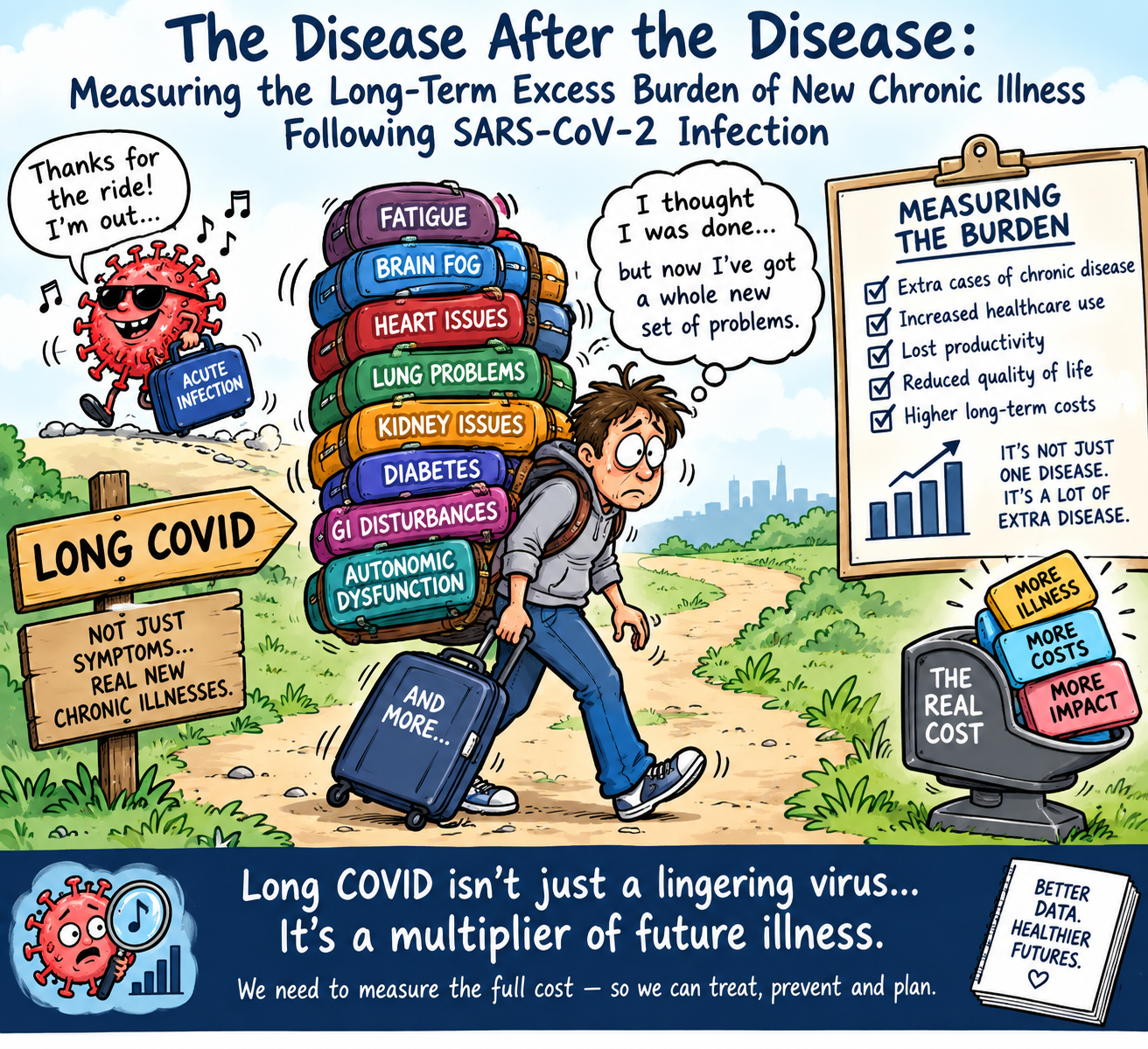
More than six years after the emergence of SARS-CoV-2, an important question remains incompletely answered: Does COVID-19 merely produce a constellation of persistent symptoms known as Long COVID, or does infection measurably increase the subsequent incidence of new chronic diseases across the human body?
The distinction is more than semantic. If SARS-CoV-2 increases the long-term incidence of cardiovascular disease, chronic kidney disease, diabetes, neurological disorders, thrombotic disease, pulmonary disease, autoimmune disease or other chronic conditions, then the consequences of the pandemic extend far beyond the population conventionally classified as having Long COVID.
Large observational studies have already demonstrated increased post-acute risks for cardiovascular and neurological disorders. A Veterans Health Administration study involving 153,760 individuals with COVID-19 found increased risks of numerous incident cardiovascular disorders during the year following infection. Another study involving 154,068 infected individuals found elevated risks of a broad spectrum of neurological disorders. Reinfection has also been associated with additional risks involving cardiovascular, renal, metabolic, gastrointestinal, hematologic and neurological systems.
Yet these investigations have generally addressed selected organ systems, selected follow-up intervals or particular populations. What remains insufficiently characterized is the integrated, multi-year excess incidence of objectively diagnosed new disease across organ systems in the general population, including people who were never hospitalized with acute COVID-19.
This article proposes a large-scale longitudinal analysis combining electronic health records, insurance claims, laboratory data, pharmacy records, mortality data and, where available, disability and functional information. The principal outcome would not be a Long COVID diagnosis but new disease incidence above the expected background rate in carefully matched SARS-CoV-2-uninfected populations.
Such an analysis could establish whether SARS-CoV-2 is associated with a transient increase in illness, a persistent increase in chronic disease, or a measurable shift in population health that continues for years after infection.
Keywords: Long COVID; post-acute sequelae of SARS-CoV-2; chronic disease; SARS-CoV-2; electronic health records; epidemiology; cardiovascular disease; neurological disease; kidney disease; diabetes; causal inference
The Question That Has Not Yet Been Fully Answered
Long COVID is commonly discussed as a collection of persistent symptoms—fatigue, post-exertional malaise, cognitive dysfunction, dysautonomia, sleep disturbance, dyspnea and pain among them.
That description is clinically useful, but it may conceal a much larger epidemiological phenomenon.
The more consequential question is:
Among people who survive SARS-CoV-2 infection, how much new chronic disease occurs above the rate that would otherwise have been expected—and does that excess persist for years?
This is a different question from asking how many people meet a definition of Long COVID.
It asks whether infection changes the subsequent trajectory of human health.
The distinction is crucial because the Centers for Disease Control and Prevention now describes Long COVID as an infection-associated chronic condition that can affect one or more organ systems and can involve symptoms or conditions that emerge, persist, resolve, reemerge or progress over time. CDC also recognizes that some people develop new or worsening diabetes, heart disease, blood clots and neurological conditions after COVID-19.
The implication is profound.
A person need not carry a diagnosis labeled “Long COVID” for SARS-CoV-2 to have altered his or her subsequent health.
A patient who develops chronic kidney disease two years after infection, a new cardiac arrhythmia 18 months later, diabetes three years later or a neurological disorder four years later may never be classified administratively as a Long COVID patient.
If those diseases occur more frequently among previously infected individuals than among comparable uninfected individuals, however, they represent part of the pandemic’s long-term health burden.
Figure 1. The Central Epidemiological Question
Conceptual diagram
                         SARS-CoV-2 INFECTION
                                  │
                                  ▼
                       ┌────────────────────┐
                       │ Acute COVID-19     │
                       │ severity           │
                       └─────────┬──────────┘
                                 │
                 ┌───────────────┴────────────────┐
                 ▼                                ▼
       Recovery without                    Persistent or
       recognized sequelae                 emerging disease
                 │                                │
                 │                 ┌──────────────┴──────────────┐
                 │                 ▼                             ▼
                 │          Persistent symptoms             NEW DISEASE
                 │          and Long COVID                  diagnoses
                 │                                          │
                 │                 ┌────────────────────────┼─────────────┐
                 │                 ▼                        ▼             ▼
                 │             Heart/CVD                 Kidney        Neurologic
                 │             Diabetes                  Pulmonary     Autoimmune
                 │             Vascular                  Metabolic     Other
                 │
                 └─────────────────────────────────────────────────────────►
                                      TIME
                              Months → Years
The proposed research question: Is the incidence of new disease after SARS-CoV-2 infection greater than would have occurred in comparable people who were not infected?
What We Already Know
The idea that COVID-19 can produce consequences beyond the acute respiratory illness is no longer speculative.
In 2022, Xie and colleagues analyzed national Veterans Health Administration data involving 153,760 people who survived COVID-19 and millions of controls. They found increased risks of incident cardiovascular disease after the first 30 days following infection, including dysrhythmias, ischemic and nonischemic heart disease, myocarditis, pericarditis, heart failure and thromboembolic disease. Importantly, increased risk was observed even among people who had not been hospitalized during acute infection.
A parallel analysis of neurological outcomes included 154,068 people with COVID-19 and more than 5.6 million contemporary controls. The investigators reported increased risks of stroke, cognitive and memory disorders, peripheral nervous-system disorders, migraine and seizures, movement disorders, sensory disorders, Guillain-Barré syndrome and encephalitis or encephalopathy. The hazard ratio for any neurological sequela was 1.42 at 12 months.
These findings matter because they move the discussion from subjective symptoms to incident disease.
The distinction between the two is fundamental.
A patient saying, “I have brain fog,” represents one type of evidence.
A patient who develops a newly documented neurological disorder after infection represents another.
Neither should be dismissed, but they answer different epidemiological questions.
Figure 2. Evidence Already Demonstrated in Large Cohorts
The following values are drawn from published Veterans Health Administration analyses rather than estimates generated for this article.
These numbers should not be interpreted as estimates of the probability that an individual will develop disease. They are relative measures from particular observational cohorts, populations and follow-up periods. They nevertheless demonstrate that the question of post-infectious disease risk is empirically testable at population scale.
The Missing Piece: Time
The principal limitation of the existing evidence is not that investigators have failed to identify long-term disease.
They have.
The problem is that the complete temporal architecture of post-COVID disease remains inadequately mapped.
A one-year observation period can demonstrate an excess risk.
It cannot tell us with confidence whether that excess:
- disappears after two years;
- persists for five years;
- accumulates with repeated infection;
- produces permanent disease;
- produces recurrent episodes;
- accelerates pre-existing disease;
- creates entirely new disease; or
- shifts the age at which chronic diseases normally appear.
These are fundamentally different possibilities.
The distinction between them has enormous implications for medicine and public policy.
A New Epidemiological Framework
The appropriate unit of analysis should therefore be new disease incidence over time, rather than the presence or absence of a Long COVID label.
For every individual, researchers would establish a disease-free baseline period before infection.
The patient would then be followed longitudinally.
A new disease would count only if it met prespecified criteria indicating that it was genuinely incident rather than merely previously undocumented.
The analysis could examine:
- 0–6 months
- 6–12 months
- 1–2 years
- 2–3 years
- 3–4 years
- 4–5 years
- beyond 5 years where sufficient follow-up exists
This creates an epidemiological curve of disease emergence.
Figure 3. Proposed Longitudinal Study Design
             PRE-INFECTION                      POST-INFECTION
        ────────────────────┬─────────────────────────────────────────
                            │
                 BASELINE   │  SARS-CoV-2
                 HEALTH     │  INFECTION
                 HISTORY    │      │
                            │      ▼
        ┌───────────────────┴──────┬───────────────────────────────────┐
        │                          │                                   │
        │                    0–30 DAYS                         Exclude acute
        │                          │                           complications
        │                          ▼
        │                     30–180 DAYS
        │                          │
        │                          ▼
        │                       1 YEAR
        │                          │
        │                          ▼
        │                       2 YEARS
        │                          │
        │                          ▼
        │                       3 YEARS
        │                          │
        │                          ▼
        │                       5+ YEARS
        │
        └──────────────────────────────────────────────────────────────

                 Compare every interval with matched controls
The crucial methodological point is that the study must establish pre-existing disease status before exposure.
Without that step, an investigator may mistakenly interpret the delayed recognition of a pre-existing disease as a new post-COVID disease.
The Control Group Is Everything
The greatest danger in observational Long COVID research is a deceptively simple one:
Who would these people have been if they had never contracted SARS-CoV-2?
That counterfactual cannot be observed directly.
It must be approximated.
The proposed study should therefore use multiple control strategies:
Contemporary controls
People receiving medical care during the same period who have no documented SARS-CoV-2 infection.
Historical controls
People with comparable healthcare utilization before the pandemic.
Infection-negative controls
People repeatedly tested or otherwise documented as uninfected, where reliable testing data exist.
Matched controls
Controls matched or weighted according to:
- age
- sex
- race and ethnicity
- socioeconomic status
- geographic region
- healthcare utilization
- obesity
- hypertension
- diabetes
- chronic kidney disease
- cardiovascular disease
- cancer
- autoimmune disease
- smoking
- vaccination history
- prior influenza and respiratory infections
- medication exposure
The goal is not merely to make the groups “look similar.”
It is to approximate the counterfactual question:
What would have happened to the infected population had they not become infected?
Why Millions of Electronic Health Records Change the Question
Historically, a study of this magnitude would have been nearly impossible.
It is no longer.
RECOVER reports access to more than 60 million patient records through nationwide electronic-health-record networks, including N3C, PCORnet and PEDSnet. More than seven million of those patients have documented COVID-19.
RECOVER’s EHR program has already demonstrated that these data can be used to identify Long COVID phenotypes, predict risk and study treatment effects at a scale impossible in conventional clinical trials.
This represents an extraordinary epidemiological resource.
But size alone does not solve the problem.
A database containing 60 million records can still generate misleading conclusions if its definitions are inconsistent, if healthcare utilization differs between groups, if diagnoses are missing, or if patients with poor access to care disappear from the dataset.
Researchers involved with RECOVER have explicitly described both the opportunities and challenges associated with EHR-based Long COVID research.
The appropriate response is not to abandon EHR analysis.
It is to make it more rigorous.
The Diseases That Should Be Investigated
A truly comprehensive study should not begin by deciding that Long COVID is principally neurological, cardiovascular or respiratory.
It should allow the data to reveal where excess disease occurs.
At minimum, the analysis should include:
Cardiovascular
- coronary disease
- heart failure
- myocarditis
- pericarditis
- arrhythmias
- hypertension
- cerebrovascular disease
- thromboembolism
Neurological
- stroke
- neuropathy
- seizures
- movement disorders
- cognitive disorders
- dementia
- autonomic disorders
- migraine
- encephalopathy
Renal
- acute kidney injury
- chronic kidney disease
- progressive loss of estimated glomerular filtration rate
- proteinuria
- nephrolithiasis
Metabolic
- diabetes
- dyslipidemia
- obesity-related disease
- endocrine disorders
Pulmonary
- chronic respiratory disease
- pulmonary fibrosis
- pulmonary vascular disease
- reduced pulmonary function
Hematologic and vascular
- thrombosis
- anemia
- coagulation abnormalities
Immunologic
- autoimmune disorders
- inflammatory disorders
Gastrointestinal
- inflammatory bowel disease
- functional gastrointestinal disease
- hepatic disease
Psychiatric
- depression
- anxiety
- PTSD
- sleep disorders
- substance-use disorders
Musculoskeletal
- myopathy
- chronic pain
- weakness
- inflammatory disorders
The objective would not be to label every subsequent diagnosis as “caused by COVID.”
That would be scientifically indefensible.
The objective is to determine whether the incidence of these diseases is statistically and clinically higher following SARS-CoV-2 infection than in appropriate controls.
Figure 4. The Proposed Disease-Surveillance Matrix
                       YEARS AFTER INFECTION
                  0–6m   6–12m   1–2y   2–3y   3–4y   4–5y   5+y
                 ───────────────────────────────────────────────────
CARDIOVASCULAR     ●      ●       ●      ●      ●      ●      ●
NEUROLOGICAL       ●      ●       ●      ●      ●      ●      ●
RENAL              ●      ●       ●      ●      ●      ●      ●
METABOLIC          ●      ●       ●      ●      ●      ●      ●
PULMONARY          ●      ●       ●      ●      ●      ●      ●
HEMATOLOGIC        ●      ●       ●      ●      ●      ●      ●
AUTOIMMUNE         ●      ●       ●      ●      ●      ●      ●
GASTROINTESTINAL   ●      ●       ●      ●      ●      ●      ●
PSYCHIATRIC        ●      ●       ●      ●      ●      ●      ●
MUSCULOSKELETAL    ●      ●       ●      ●      ●      ●      ●

● = disease incidence measured against matched controls
The central scientific product would be an excess-incidence curve for each disease, not simply a percentage of patients reporting symptoms.
A Critical Distinction: Association Is Not Causation
The proposed research would still be observational.
That limitation cannot be wished away.
People who become infected with SARS-CoV-2 may differ from those who do not in ways that are difficult to measure.
They may differ in:
- occupation
- socioeconomic circumstances
- healthcare access
- health-seeking behavior
- obesity
- smoking
- vaccination
- environmental exposure
- baseline disease burden
- frequency of medical encounters
A diagnosis recorded after infection therefore does not automatically establish that infection caused it.
The study must consequently employ causal-inference methods rather than simple comparisons of percentages.
These should include:
- propensity-score weighting;
- inverse-probability weighting;
- time-varying covariates;
- competing-risk models;
- negative-control outcomes;
- negative-control exposures;
- sensitivity analyses for unmeasured confounding;
- quantitative bias analysis;
- E-values where appropriate;
- replication in independent databases.
The investigators should also pre-register the primary hypotheses before examining the outcome data.
That would sharply reduce the risk of discovering apparently significant associations simply because thousands of diseases were examined.
The Multiple-Testing Problem
A study involving millions of people can make almost anything statistically significant.
This is a danger, not an advantage.
Suppose investigators examine 10,000 diagnoses.
Even a tiny difference in incidence may produce a very small P value.
The study therefore should not be built around statistical significance alone.
Three dimensions should be reported simultaneously:
Relative risk
How much greater is the disease risk?
Absolute excess risk
How many additional cases occur per 1,000 or 100,000 infected individuals?
Population-attributable burden
How many additional cases may occur across the population because of SARS-CoV-2?
The third quantity may ultimately be the most important.
A 50 percent relative increase in a rare disease could have little population impact.
A 10 percent increase in a common disease could have enormous consequences.
From Hazard Ratios to Real Patients
This distinction can be illustrated by previous work.
The Veterans Health Administration cardiovascular analysis found elevated risks across multiple cardiovascular categories, including heart failure, ischemic heart disease, dysrhythmias and thromboembolic disease.
The neurological analysis found a hazard ratio of approximately 1.42 for any neurological sequela during the first year following infection.
Those findings are epidemiologically significant.
But a clinician caring for a population needs another number:
How many additional cases of heart failure, stroke, neuropathy, kidney disease or diabetes should we expect among 100,000 previously infected people over the next five years?
That is the translation from epidemiology into public health.
Figure 5. From Relative Risk to Population Burden
             RELATIVE RISK
                   │
                   ▼
          ┌─────────────────┐
          │ Absolute excess │
          │   incidence     │
          └────────┬────────┘
                   │
                   ▼
          ┌─────────────────┐
          │ Cases per       │
          │ 100,000 people  │
          └────────┬────────┘
                   │
                   ▼
          ┌─────────────────┐
          │ National excess │
          │ disease burden  │
          └────────┬────────┘
                   │
          ┌────────┴─────────┐
          ▼                  ▼
      Healthcare          Disability
        costs              burden
          │                  │
          └────────┬─────────┘
                   ▼
             SOCIETAL COST
Reinfection Makes the Question More Urgent
The long-term analysis should also distinguish one infection from repeated infection.
A major Veterans Health Administration study involving 443,588 people with one infection, 40,947 people with reinfection and more than 5.3 million controls found that reinfection was associated with additional risks of death, hospitalization and multiple post-acute sequelae, including pulmonary, cardiovascular, hematologic, metabolic, gastrointestinal, kidney, mental-health, musculoskeletal and neurological disorders.
This creates another critical analytical question:
Does each additional infection simply add another temporary period of risk, or does recurrent SARS-CoV-2 infection progressively increase the probability of permanent chronic disease?
A longitudinal database is uniquely suited to answer this.
The analysis should therefore include infection number as a time-dependent exposure:
0 infections → 1 infection → 2 infections → 3 infections → 4+ infections.
If disease incidence rises progressively with repeated infection after adjustment for age, comorbidity and healthcare utilization, the finding would substantially alter our understanding of cumulative COVID-19 risk.
Vaccination Must Be Incorporated—But Not Used as a Substitute for the Question
Vaccination status is another essential variable.
Previous research found that vaccinated people who experienced breakthrough infections nevertheless had increased risks of several post-acute outcomes compared with vaccinated controls, although their risks were lower than those of infected, previously unvaccinated people.
The proposed study should therefore stratify infection by:
- vaccination status before infection;
- number of doses;
- time since vaccination;
- vaccine product where available;
- variant era;
- previous infection.
The objective would not be to prove or disprove the effectiveness of vaccination.
It would be to determine whether vaccination changes the long-term disease trajectory following infection.
The Problem of Silent Disease
One of the most important reasons to pursue this research is that EHRs may reveal disease that patients themselves do not recognize.
A patient does not necessarily know that his or her:
- kidney function has declined;
- blood pressure has changed;
- cardiac rhythm is abnormal;
- glucose metabolism has deteriorated;
- neurological diagnosis has emerged;
- vascular risk has increased.
Conversely, a patient may experience severe symptoms without receiving a corresponding diagnosis.
The most powerful study would therefore combine administrative diagnoses with objective measurements wherever possible.
For example:
Kidney
Creatinine and eGFR trajectories rather than diagnosis codes alone.
Diabetes
HbA1c and glucose rather than diabetes codes alone.
Cardiovascular
ECG, troponin, echocardiography and hospitalization data where available.
Neurological
Neurological diagnoses, medication patterns, imaging and specialist encounters.
Pulmonary
Pulmonary function testing, imaging and oxygen utilization.
The combination of clinical diagnoses + laboratory measurements + medications + procedures is substantially more informative than any individual data stream.
What Would Constitute a Convincing Finding?
A credible conclusion would require more than one statistically significant association.
The strongest evidence would demonstrate:
- Temporal precedence: infection occurs before the new disease.
- Disease-free baseline: the disease was absent during a substantial pre-infection period.
- Excess incidence: disease occurs more frequently than in controls.
- Dose-response: greater infection severity or repeated infection corresponds to greater risk where biologically plausible.
- Consistency: the association appears across independent databases.
- Robustness: results survive alternative definitions and analytic models.
- Biological coherence: the findings are compatible with known or plausible mechanisms.
- Negative controls: unrelated outcomes do not exhibit the same pattern.
- Persistence: excess risk remains after adjustment for healthcare utilization.
- Absolute burden: the association translates into a clinically meaningful number of additional cases.
No single criterion proves causality.
Together, however, they can transform an observational association into compelling epidemiological evidence.
What the Study Could Reveal
There are several possible outcomes.
Scenario A: A transient effect
Disease incidence rises during the first year and subsequently returns to baseline.
This would suggest that SARS-CoV-2 produces an important but predominantly temporary post-acute disease burden.
Scenario B: Persistent excess disease
The risk remains elevated for several years but does not continue increasing.
This would indicate a durable health consequence of infection.
Scenario C: Progressive accumulation
The excess incidence continues to accumulate with time.
This would be the most consequential finding.
Scenario D: Organ-specific persistence
Some diseases normalize while others remain elevated.
This would suggest distinct biological mechanisms rather than one uniform Long COVID process.
Scenario E: Reinfection-dependent accumulation
The burden increases with the number of infections.
That would provide evidence for a cumulative model of SARS-CoV-2-associated chronic disease.
Figure 6. Five Possible Long-Term Disease Trajectories
Excess
Disease
Risk
  │
  │        A: transient
  │       /\
  │      /  \________
  │
  │        B: persistent
  │       /───────────
  │
  │        C: progressive
  │       /
  │      /
  │     /
  │
  │        D: organ-specific
  │       /\______/\/────
  │
  │        E: reinfection-associated
  │       /\/\__/\/\____
  │
  └──────────────────────────────► Time
       6m  1y  2y  3y  4y  5y+
These curves are conceptual hypotheses, not measured epidemiological estimates.
Why This Matters Beyond Long COVID
The significance of the question extends beyond the terminology of Long COVID.
If SARS-CoV-2 increases the long-term incidence of common chronic diseases, then the consequences will appear in ordinary medical statistics.
They will be distributed across:
- cardiology;
- neurology;
- nephrology;
- endocrinology;
- pulmonology;
- psychiatry;
- rheumatology;
- primary care;
- rehabilitation;
- disability systems.
The resulting patients may never enter a Long COVID clinic.
Their disease may instead be recorded as heart failure, chronic kidney disease, diabetes, neuropathy, stroke, depression or another conventional diagnosis.
That possibility makes traditional Long COVID surveillance insufficient.
The Most Important Test
The ultimate test should therefore be extraordinarily simple:
After controlling as rigorously as possible for what patients were like before infection, do people who experienced SARS-CoV-2 infection subsequently develop more new chronic disease than comparable people who did not?
If the answer is no, the hypothesis should be rejected.
If the answer is yes, the next questions become:
Which diseases?
How much excess disease?
For how long?
In whom?
After how many infections?
Does vaccination modify the trajectory?
Can the excess risk be prevented or treated?
These are answerable questions.
A Research Program Hidden Inside the Question
The enormous value of this approach is that the same analytical infrastructure could answer many subsequent questions.
The initial disease-incidence analysis could become a longitudinal platform examining:
Infection → organ injury → chronic disease → disability → mortality.
The platform could subsequently incorporate:
- viral variant;
- vaccination;
- reinfection;
- antiviral therapy;
- corticosteroid exposure;
- comorbidities;
- socioeconomic status;
- genetic information where available;
- laboratory biomarkers;
- imaging;
- patient-reported outcomes.
The result would be something considerably more useful than another prevalence estimate.
It would be a population-scale natural-history map of SARS-CoV-2-associated disease.
The Scientific and Ethical Imperative
Science should neither assume that every illness occurring after COVID-19 was caused by SARS-CoV-2 nor assume that an illness is unrelated simply because the patient lacks a formal Long COVID diagnosis.
Both errors are possible.
The appropriate response is empirical.
Millions of patients have now accumulated years of medical records after infection.
The opportunity is unprecedented.
RECOVER’s more than 60 million EHR records demonstrate that the necessary scale of information exists. Its EHR research program has already produced a substantial body of peer-reviewed work and developed computable approaches to identifying Long COVID in routine medical records.
The challenge now is to move beyond the question:
“How many people have Long COVID?”
and ask the question with considerably greater epidemiological consequence:
“How much new chronic disease has SARS-CoV-2 produced in the years following infection that would otherwise not have occurred?”
That is a question that can be answered.
And because the answer potentially encompasses cardiovascular disease, neurological disease, kidney disease, diabetes, pulmonary disease, vascular disease and other chronic conditions, its implications extend far beyond the population traditionally labeled as having Long COVID.
The pandemic may ultimately be measured not only by the deaths it caused in its acute phase, but also by the additional chronic disease it left behind.
The task of epidemiology is to determine how much.
Conclusion
The next generation of Long COVID research should move from symptom counting to disease accounting.
The central objective should be a rigorous, multi-year, population-scale comparison of incident chronic disease after SARS-CoV-2 infection against carefully constructed counterfactual populations.
Existing studies have established that post-acute COVID-19 is associated with increased risks of cardiovascular and neurological disease and that reinfection is associated with additional multisystem risks.
What remains insufficiently resolved is the complete longitudinal magnitude, persistence, distribution and population burden of new chronic disease following infection.
With tens of millions of longitudinal health records now available, this question is no longer constrained primarily by sample size.
It is constrained by methodology.
The scientific community therefore has an unusual opportunity: to reconstruct the post-pandemic health trajectory of entire populations and determine whether SARS-CoV-2 infection represents merely an episode of illness—or a durable inflection point in the natural history of chronic disease.
That distinction may prove to be one of the most important medical questions of the post-pandemic era.
References
- Xie Y, Xu E, Bowe B, Al-Aly Z. Long-term cardiovascular outcomes of COVID-19. Nature Medicine. 2022;28:583–590.
- Xu E, Xie Y, Al-Aly Z. Long-term neurologic outcomes of COVID-19. Nature Medicine. 2022;28:2406–2415.
- Al-Aly Z, Bowe B, Xie Y. Long COVID after breakthrough SARS-CoV-2 infection. Nature Medicine. 2022;28:1461–1467.
- Xie Y, Bowe B, Al-Aly Z. Acute and postacute sequelae associated with SARS-CoV-2 reinfection. Nature Medicine. 2022.
- Zhang H, et al. Machine learning identifies long COVID patterns from electronic health records. Nature Medicine. 2022.
- RECOVER Initiative. Electronic health records are an important tool to address Long COVID questions. National Institutes of Health RECOVER Initiative, 2025.
- RECOVER Initiative. Electronic Health Record Studies. National Institutes of Health RECOVER Initiative.
- RECOVER Initiative. RECOVER Research Update: June 2025. National Institutes of Health.
- RECOVER Initiative. RECOVER’s electronic health record study revealed early answers about COVID and Long COVID. 2026.
- Centers for Disease Control and Prevention. Clinical Overview of Long COVID. 2026.
- Centers for Disease Control and Prevention. Long COVID Signs and Symptoms. 2026.
- RECOVER investigators. Opportunities and Challenges in Using Electronic Health Record Systems to Study Postacute Sequelae of SARS-CoV-2 Infection: Insights From the NIH RECOVER Initiative. Journal of Medical Internet Research. 2025.
- RECOVER Initiative. Long COVID Incidence Proportion in Adults and Children Between 2020 and 2024: An Electronic Health Record-Based Study From the RECOVER Initiative. 2025.
Author
John Murphy, M.D., M.P.H., D.P.H.
Chief Executive Officer
The COVID-19 Long-haul Foundation