John Murphy, CEO, The COVID-19 Long haul Foundation
An evidence-based examination of what scientists now know about the biology of post-COVID illness—and why the search for a single cause may be leading researchers in the wrong direction.
There was a time when the central question surrounding Long COVID was almost embarrassingly basic: Was it real?
That question should now be considered settled.
The World Health Organization formally recognized post-COVID-19 condition in 2021, defining it as a constellation of persistent or newly emerging symptoms following probable or confirmed SARS-CoV-2 infection. The condition can affect multiple organ systems, fluctuate over time and substantially impair ordinary functioning.
What remains uncertain is more interesting—and scientifically more difficult.
What, exactly, keeps people sick?
The answer emerging from laboratories around the world is neither that Long COVID is imaginary nor that there is one hidden disease mechanism waiting to be discovered. Instead, the evidence increasingly points toward something more complicated: a family of biological processes that can overlap, reinforce one another and predominate differently in different patients.
Persistent SARS-CoV-2 material may matter in one person. An abnormal immune response may dominate in another. Damage to blood vessels or the autonomic nervous system may be central in a third. Mitochondrial and metabolic abnormalities may help explain profound fatigue in another. And new research published in Nature in August 2026 has added another possibility to the picture: reactivation of viruses that have been living quietly in the body for years.
This is not a story of one cause.
It is beginning to look like a story of biological convergence.
The end of the mystery—and the beginning of a harder problem
The phrase “Long COVID” can misleadingly suggest a single disease.
It is more useful to think of it as a clinical umbrella.
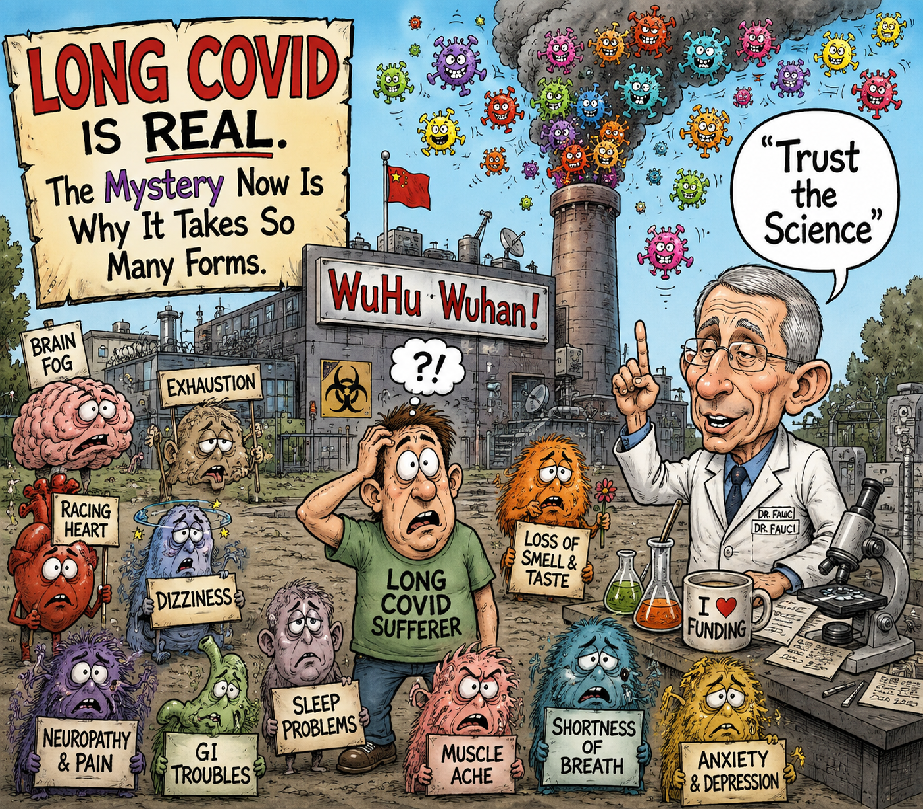
Two people can both meet the clinical definition of Long COVID and have remarkably different illnesses. One may be unable to stand without a racing heart and dizziness. Another may have severe cognitive dysfunction. A third may experience crushing fatigue and post-exertional malaise. A fourth may have persistent shortness of breath. A fifth may have neuropathic pain or gastrointestinal dysfunction.
The WHO currently estimates that approximately 6 percent of people infected with SARS-CoV-2 develop post-COVID-19 condition, although estimates vary considerably according to population and methodology. It emphasizes that the condition can involve the cardiovascular, pulmonary, neurologic, gastrointestinal and endocrine systems and that more than 200 symptoms have been reported.
That breadth is not evidence that Long COVID lacks biological coherence.
It may instead be evidence that the initial infection can disturb several interconnected physiological systems.
A 2024 review in Nature Medicine synthesized evidence for several mechanisms, including viral persistence, immune dysregulation, mitochondrial dysfunction, complement abnormalities, endothelial inflammation and microbiome disturbances.
The crucial point is that these mechanisms need not be mutually exclusive.
Indeed, they may be causally connected.
1. Viral persistence: when the infection may not be entirely over
The first possibility is also the most intuitive.
Perhaps, in at least some patients, SARS-CoV-2—or portions of the virus—remain in the body after the acute infection has apparently resolved.
This does not necessarily mean that a patient is carrying a continuously replicating, infectious virus.
The distinction is important.
Viral RNA, proteins or other remnants may persist in tissue without producing the classical picture of an active infection. Some investigators have reported SARS-CoV-2 material in tissues including the gastrointestinal tract, lymphoid tissue and other compartments months after acute infection. A 2026 review describes increasing evidence for persistence of viral nucleic acids or proteins in some patients and discusses possible relationships with immune, vascular and metabolic abnormalities.
If viral material persists, it could theoretically continue stimulating the immune system.
The proposed sequence would be:
persistent viral material
→
continued antigen presentation
→
chronic or intermittent immune activation
→
vascular and tissue dysfunction
→
persistent symptoms.
But there is an important caveat.
Detection of viral material does not establish that it is causing the illness.
This distinction is fundamental to understanding Long-COVID research.
A biological abnormality found in people with Long COVID may be:
- a cause;
- a consequence;
- a compensatory response;
- or an incidental finding.
The challenge for researchers is to determine which is which.
2. The immune system may fail to return completely to baseline
One of the strongest recent lines of evidence concerns persistent immune abnormalities.
A study published in Nature Immunology examined immunological, virological, transcriptomic and proteomic measurements in patients with Long COVID and found persistent activation of inflammatory pathways more than 180 days after the initial infection. The abnormalities included JAK–STAT signaling, interleukin-6 pathways, complement activation, metabolic disturbances and markers of T-cell exhaustion.
That is an important finding because it moves the discussion beyond symptoms.
It suggests that, in at least some patients, the immune system is biologically different long after the acute infection has ended.
Another recent study identified a distinctive transcriptional state in circulating monocytes in Long COVID. This cellular state was associated with persistent inflammatory mediators, altered TGF-β and WNT signaling, impaired interferon responses and greater fatigue or respiratory symptoms.
Such findings raise an intriguing possibility.
The virus may initiate the disease, but the immune system may subsequently become part of the machinery that perpetuates it.
The analogy is not to an infection that simply refuses to disappear.
It is closer to a fire that has gone out but has left behind an electrical system that continues to malfunction.
3. Autoimmunity: compelling evidence, but not a universal explanation
Another hypothesis is that SARS-CoV-2 can provoke an autoimmune response.
The immune system is designed to distinguish “self” from “non-self.” Viral infections place extraordinary pressure on that system. B cells proliferate. T cells become activated. Antibodies are generated against viral proteins.
Occasionally, that process can produce antibodies or immune cells that recognize the body’s own structures.
Several studies have identified autoantibodies in people with Long COVID.
But here again, scientific caution is essential.
A 2025 review in the Journal of Allergy and Clinical Immunology concluded that although autoantibody production and B-cell abnormalities are documented after SARS-CoV-2 infection, the persistence and pathogenic importance of those antibodies in Long COVID remain debated.
In other words:
autoantibodies are not synonymous with autoimmune disease.
The critical question is whether a particular antibody actually damages tissue or alters physiology.
That question is especially important for the autonomic nervous system, where antibodies directed against adrenergic and muscarinic receptors have attracted considerable attention.
If such antibodies alter receptor signaling, they could theoretically affect:
- heart rate;
- blood-pressure regulation;
- vascular tone;
- gastrointestinal motility;
- sweating;
- thermoregulation.
But the evidence remains insufficient to conclude that receptor-directed autoimmunity explains Long COVID as a whole.
The more plausible model is that autoimmunity may define one biological subgroup.
4. Blood vessels: the disease may be partly a problem of circulation
SARS-CoV-2 is not merely a respiratory virus.
The vascular endothelium—the thin cellular lining of blood vessels—became one of the major targets of scientific investigation during the pandemic.
The endothelium regulates:
- blood flow;
- coagulation;
- vascular permeability;
- inflammation;
- interactions between blood cells and vessel walls.
Acute COVID-19 can cause endothelial injury, inflammation and thromboinflammation.
The question is whether abnormalities persist.
The answer appears to be yes in at least some patients.
WHO’s current summary of post-COVID science notes evidence of endothelial abnormalities, altered immune responses, viral persistence and microthrombotic phenomena in subsets of patients.
A 2026 hypothesis paper has proposed that persistent endothelial dysfunction or senescence could become self-reinforcing, with endothelial cells adopting a pro-inflammatory, pro-oxidative and procoagulant phenotype.
This remains a developing hypothesis, not an established universal mechanism.
But it offers an attractive explanation for why problems involving seemingly unrelated organs might occur together.
Blood vessels connect them all.
5. The autonomic nervous system: when standing becomes a physiological stress test
Perhaps nowhere is the emerging biology more clinically visible than in autonomic dysfunction.
Some Long-COVID patients develop:
- postural orthostatic tachycardia syndrome;
- inappropriate sinus tachycardia;
- orthostatic intolerance;
- abnormal blood-pressure regulation;
- temperature dysregulation;
- sweating abnormalities;
- gastrointestinal dysmotility.
The autonomic nervous system normally performs an extraordinary feat every time a person stands.
Gravity pulls blood toward the legs and abdomen. The body responds by constricting blood vessels and increasing heart rate sufficiently to preserve circulation to the brain.
If that system fails, standing can become physiologically expensive.
A patient may experience:
standing → reduced venous return → reduced stroke volume → tachycardia → dizziness → cognitive dysfunction → fatigue.
This is not a psychological description.
It is cardiovascular physiology.
Recent quantitative autonomic-testing studies have identified measurable abnormalities in some patients with Long COVID, although other studies demonstrate an important limitation: many symptomatic patients do not meet conventional diagnostic criteria for POTS or overt autonomic failure.
That finding may actually strengthen the emerging picture.
Long COVID may contain an autonomic spectrum rather than a single autonomic disease.
6. Small nerve fibers may be part of the missing link
The autonomic nervous system depends heavily on small peripheral nerve fibers.
These fibers regulate:
- blood-vessel constriction;
- sweating;
- temperature;
- pain;
- visceral function.
Small-fiber neuropathy has consequently become a major area of Long-COVID investigation.
If these fibers are damaged, the consequences could include both neuropathic symptoms and impaired cardiovascular regulation.
The proposed chain is elegant:
small-fiber injury
→
impaired vascular constriction
→
venous pooling
→
reduced cardiac filling
→
compensatory tachycardia
→
orthostatic symptoms and exercise intolerance.
This could help explain why neurological and cardiovascular symptoms so often appear together.
7. Mitochondria: the energy problem
Then there is fatigue.
Not ordinary tiredness.
Many patients describe an exhaustion that appears disproportionate to physical activity and may be followed by a delayed worsening after exertion.
This has led investigators toward cellular metabolism.
Mitochondria are often described as the cell’s “power plants,” but that metaphor understates their importance. They regulate oxidative phosphorylation, ATP production, reactive oxygen species, apoptosis and metabolic signaling.
If mitochondrial function becomes abnormal, a muscle cell can receive adequate oxygen and still fail to generate energy efficiently.
The result could be:
normal-looking oxygen delivery
but
abnormal cellular utilization.
A 2024 Nature Medicine synthesis identified mitochondrial dysfunction among the major mechanistic hypotheses in Long COVID.
Recent research also increasingly connects metabolic abnormalities with persistent immune activation.
That relationship may run in both directions.
Inflammation changes metabolism.
Abnormal metabolism changes immune-cell behavior.
The two systems can therefore form a feedback loop.
8. The immune system and metabolism may be locked together
The immune system is metabolically demanding.
Activated immune cells change the way they consume:
- glucose;
- fatty acids;
- amino acids.
Conversely, altered cellular metabolism can change immune-cell differentiation and inflammatory behavior.
This suggests another possible cycle:
infection
→
immune activation
→
metabolic remodeling
→
mitochondrial stress
→
impaired cellular energy
→
further inflammatory signaling.
Such a model could potentially explain why fatigue, inflammation and metabolic abnormalities coexist.
It could also explain why simply telling a patient to exercise more may be physiologically inappropriate in a subgroup experiencing post-exertional malaise.
9. And now another virus enters the story
The newest development may be among the most intriguing.
In August 2026, Nature published a longitudinal multi-omic study of 1,154 hospitalized COVID-19 patients from the IMPACC cohort.
The researchers examined viral RNA together with immune-cell profiles, cytokines, transcriptomics, proteomics and metabolomics over time.
They found evidence of reactivation involving chronic viruses, particularly members of the Herpesviridae and Anelloviridae families. EBV, CMV, HSV-1 and other viruses were detected in different biological compartments.
Most importantly, some signatures of viral reactivation persisted into convalescence, and Anelloviridae was associated with Long-COVID outcomes.
This is an important advance because earlier studies had often inferred viral reactivation from antibody levels.
The new study used viral transcripts and integrated them with multiple biological measurements.
But the authors emphasized a crucial limitation:
the study demonstrates association, not causation.
That distinction should remain front and center.
It is entirely possible that viral reactivation is:
- a cause of persistent symptoms;
- a consequence of immune dysfunction;
- a marker of severe physiological stress;
- or some combination of the three.
Still, the finding changes the conceptual landscape.
The patient recovering from COVID may not be dealing solely with SARS-CoV-2.
The infection may perturb the ecological balance between the human host and the viruses that have inhabited that host for years.
10. The virome may be part of the disease
Humans are not biologically sterile.
We harbor viruses throughout our lives.
Most remain quiet.
A major systemic infection can alter immune surveillance, inflammation and cellular physiology sufficiently to change that equilibrium.
The 2026 Nature study provides unusually broad evidence that such reactivation occurs during COVID-19 and can persist into convalescence.
This introduces an entirely new possibility.
Perhaps SARS-CoV-2 sometimes acts not simply as a pathogen but as a trigger that destabilizes the host’s broader virological ecosystem.
If so, treating Long COVID would eventually require understanding not just SARS-CoV-2 but the patient’s entire virome.
That possibility is still speculative.
But it is scientifically testable.
11. The mechanisms may reinforce one another
The most compelling emerging model is therefore not a list.
It is a network.
Imagine a patient in whom SARS-CoV-2 leaves behind persistent antigen.
That antigen stimulates the immune system.
The immune response becomes chronically dysregulated.
Inflammatory mediators alter endothelial function.
The vascular system becomes less capable of regulating blood flow.
Small autonomic nerve fibers are injured.
The patient develops orthostatic intolerance.
Reduced perfusion and abnormal metabolic signaling impair exercise capacity.
Mitochondria struggle to meet energy demands.
The patient develops severe fatigue.
Meanwhile, altered immune surveillance permits EBV or another latent virus to reactivate.
That reactivation adds another inflammatory stimulus.
The cycle continues.
This is not proven as a single causal chain.
But it is increasingly consistent with the interlocking abnormalities actually being observed.
12. Why different patients can look completely different
This model solves one of the most perplexing clinical problems of Long COVID.
Why does one patient have POTS while another has pulmonary impairment?
Why does one have neuropathy while another develops gastrointestinal disease?
Why does one have profound PEM while another has primarily cognitive dysfunction?
Because the initial infection may trigger different downstream pathways in different people.
The initiating event is shared.
The biological response is not.
A patient’s outcome may depend on:
- genetics;
- age;
- sex;
- immune history;
- vaccination;
- viral variant;
- severity of acute infection;
- preexisting conditions;
- tissue susceptibility;
- autonomic reserve;
- metabolic state;
- latent infections.
The disease may therefore be heterogeneous at the mechanistic level while homogeneous at the clinical level.
That is a familiar pattern in medicine.
Cancer is not one disease.
Autoimmune disease is not one disease.
Heart failure is not one disease.
Increasingly, Long COVID may deserve the same conceptual treatment.
13. Genomics may eventually explain who develops which form
Genetic research is still immature.
There is no single “Long COVID gene.”
A 2025 genome-wide association study involving thousands of Long-COVID cases identified a replicated association near FOXP4, a gene involved in biological pathways including lung development and immune-related processes. The finding provides evidence that host genetics contributes to susceptibility, but it does not establish FOXP4 as an autonomic, metabolic or viral-persistence gene.
Genetics may ultimately prove more useful for identifying susceptibility to particular biological pathways rather than for diagnosing Long COVID itself.
One person may carry variants affecting immune regulation.
Another may have greater susceptibility to autonomic dysfunction.
Another may have a genetic architecture affecting viral clearance.
The result could be a disease in which the same virus produces different chronic illnesses in different hosts.
14. The crucial distinction: correlation is not causation
This is where Long-COVID science must resist its own excitement.
There are now hundreds of biological abnormalities reported in Long COVID.
That does not mean there are hundreds of causes.
Some abnormalities may be downstream effects of inactivity.
Others may reflect medications.
Some may be consequences of the original acute illness.
Others may be unrelated findings.
The field therefore faces a difficult statistical problem:
Which abnormalities actually drive symptoms?
The most convincing evidence will come from studies that can demonstrate a sequence:
abnormality appears before symptoms
→
abnormality predicts disease
→
intervening on abnormality improves disease.
That last step is the gold standard.
15. This changes the way clinical trials should be designed
If Long COVID contains multiple biological endotypes, then conventional trials may be asking the wrong question.
A trial that enrolls 1,000 people with “Long COVID” may inadvertently combine:
- patients with viral persistence;
- patients with autonomic dysfunction;
- patients with small-fiber neuropathy;
- patients with metabolic dysfunction;
- patients with immune-mediated disease;
- patients with residual pulmonary injury.
A treatment that works spectacularly in 15 percent of patients could appear ineffective when averaged across the entire population.
The future may therefore require precision Long-COVID medicine.
Instead of asking:
“Does this treatment work for Long COVID?”
researchers may need to ask:
“Does this treatment work for the Long-COVID endotype characterized by persistent antigen, autonomic dysfunction, small-fiber neuropathy or a particular immune signature?”
That is a much more difficult trial.
It is also a much more scientifically meaningful one.
16. The most promising future: biological phenotyping
The ideal Long-COVID evaluation might eventually resemble an oncology workup.
Instead of simply recording symptoms, clinicians could measure:
- viral persistence;
- immune-cell phenotypes;
- cytokine signatures;
- autoantibodies;
- autonomic function;
- endothelial function;
- small-fiber integrity;
- mitochondrial metabolism;
- metabolomics;
- microbiome and virome composition;
- genetic susceptibility.
The resulting patient profile could look something like:
Long COVID — autonomic/neuropathic endotype
or
Long COVID — immune/viral-persistence endotype
or
Long COVID — metabolic/PEM endotype.
That would transform the disease from a broad descriptive syndrome into a set of biologically actionable disorders.
17. What we should not yet claim
There are several conclusions the evidence does not justify.
It does not establish that:
- every Long-COVID patient has persistent SARS-CoV-2;
- every patient has autoimmunity;
- microclots are the universal cause;
- EBV reactivation causes Long COVID;
- mitochondrial dysfunction explains all fatigue;
- POTS explains all exercise intolerance;
- one biomarker can diagnose the disease;
- one drug will treat all Long COVID.
The current science is simultaneously more encouraging and more complicated than those claims.
The encouraging part is that objective biological abnormalities are accumulating.
The complicated part is that they do not all occur in every patient.
18. What is now reasonably established
A defensible synthesis of the evidence is narrower—but stronger—than many public discussions of Long COVID.
We know that Long COVID exists as a clinically recognized postinfectious condition.
WHO formally recognizes it, and its symptoms can persist, fluctuate and substantially impair daily functioning.
We know that biological abnormalities can persist long after acute infection.
Immune activation, altered inflammatory signaling and other physiological abnormalities have been demonstrated months after infection in subsets of patients.
We have evidence for multiple biological mechanisms.
Viral persistence, immune dysregulation, endothelial abnormalities, autonomic dysfunction and metabolic disturbances are all supported by portions of the literature.
We now have evidence of chronic viral reactivation during and after COVID-19.
The 2026 Nature study substantially strengthens this area of investigation, while explicitly stopping short of proving causality.
We do not yet have a single unifying mechanism.
That may be the most important conclusion of all.
19. The emerging picture
The old model of Long COVID was:
virus → symptoms.
The emerging model is considerably more sophisticated:
SARS-CoV-2 infection
↓
viral persistence and/or tissue injury
↓
immune dysregulation
↓
endothelial, autonomic, neurologic and metabolic disturbances
↓
altered tissue physiology
↓
secondary immune and viral effects
↓
persistent multisystem disease.
And the arrows may point in both directions.
The immune system affects metabolism.
Metabolism affects immunity.
The vascular system affects the brain.
The autonomic nervous system regulates the vasculature.
Viral reactivation affects immunity.
Immunity affects viral control.
The disease is therefore not a collection of independent problems.
It may be a network disorder.
20. The final mystery may be the patient, not the virus
The most important conceptual shift in Long-COVID research is occurring now.
Scientists are moving away from the expectation that they will discover one Long-COVID mechanism.
They are increasingly looking for mechanistic endotypes.
That distinction matters enormously.
If the disease is heterogeneous, then disagreement between studies does not necessarily mean that one group of researchers is wrong. Different studies may be looking at different biological subsets of patients.
One cohort may be enriched for autonomic dysfunction.
Another for immune activation.
Another for pulmonary disease.
Another for patients with severe post-exertional malaise.
Another for people with evidence of viral persistence.
The apparent contradictions may therefore eventually resolve into a more nuanced picture.
Conclusion: From disbelief to biology
Long COVID is unquestionably a real postinfectious disease syndrome.
But saying that its biology is no longer mysterious requires an important qualification.
We have moved beyond mystery, but we have not reached unity.
The evidence now supports a constellation of interacting mechanisms:
viral persistence
immune dysregulation and, in some patients, autoimmunity
vascular and endothelial dysfunction
autonomic and small-fiber abnormalities
metabolic and mitochondrial dysfunction
and reactivation of latent viruses.
The newest evidence suggests that these mechanisms may not merely coexist. They may interact.
A persistent viral fragment could stimulate immunity. Immune dysfunction could damage vascular and neural systems. Vascular dysfunction could compromise tissue perfusion. Autonomic dysfunction could impair cardiovascular compensation. Metabolic dysfunction could limit cellular energy production. And viral reactivation could add another layer of immune stimulation.
None of these pathways has yet been established as the universal explanation.
That is precisely the point.
The next era of Long-COVID research should not be devoted primarily to proving that one mechanism has defeated all the others. It should be devoted to determining which mechanisms operate in which patients, how they interact, and which are reversible.
The practical consequence could be profound.
For years, the central clinical question was:
“What is Long COVID?”
The more useful question may now be:
“Which Long COVID does this patient have?”
That is a harder question.
But it is also the question that could finally turn a vast, frustrating syndrome into a collection of biologically defined—and potentially treatable—diseases.
Notes and References
1. World Health Organization. Post COVID-19 condition. WHO’s clinical definition describes symptoms occurring after probable or confirmed SARS-CoV-2 infection, usually three months after onset, persisting for at least two months and not explained by another diagnosis.
2. World Health Organization. Post COVID-19 condition (Long COVID). Updated February 2025. WHO estimates that approximately 6 percent of people with COVID-19 develop post-COVID condition and reports evidence involving multiple organ systems, including the cardiovascular, neurologic, pulmonary, gastrointestinal and endocrine systems.
3. Al-Aly Z, Davis HE, McCorkell L, et al. Long COVID science, research and policy. Nature Medicine. 2024;30:2148–2164. This interdisciplinary review synthesizes evidence for viral persistence, immune dysregulation, mitochondrial dysfunction, complement abnormalities, endothelial inflammation and microbiome disturbances.
4. Aid M, et al. Long COVID involves activation of proinflammatory and immune exhaustion pathways. Nature Immunology. 2026;27:61–71. The investigators found persistent inflammatory and immune abnormalities extending beyond 180 days in a Long-COVID cohort.
5. A distinct monocyte transcriptional state links systemic immune dysregulation to pulmonary impairment in long COVID. Nature Immunology. 2026. The study identified a transcriptional monocyte state associated with inflammatory signaling, impaired interferon responses and symptom severity.
6. Thwaites RS, et al. Autoimmunity in long COVID. Journal of Allergy and Clinical Immunology. 2025. The review concludes that autoantibodies and B-cell dysregulation are important areas of investigation but that the pathogenic role of autoantibodies remains unresolved.
7. Current status and future perspectives on the mechanistic and pathophysiological understanding of long COVID. Communications Medicine. 2026. The review synthesizes evidence concerning viral persistence, immune dysregulation, autoimmunity, vascular dysfunction and latent-virus reactivation.
8. Maguire C, Chen J, Rouphael N, et al. Virus reactivation in acute and long COVID-19. Nature. Published August 5, 2026. The study analyzed 1,154 hospitalized patients longitudinally using multi-omic data and identified reactivation of Herpesviridae and Anelloviridae, with associations between viral reactivation, immune signatures and Long-COVID outcomes. The authors explicitly state that the findings do not establish causation.
9. Gupta G, et al. Mechanistic Insights Into Long Covid: Viral Persistence, Immune Dysregulation, and Multi-Organ Dysfunction. Comprehensive Physiology. 2025.
10. Lammi V, Nakanishi T, Jones SE, et al. Genome-wide association study of long COVID. Nature Genetics. 2025. The study identified a replicated association near FOXP4, providing evidence for a genetic contribution to Long-COVID susceptibility while not establishing an autonomic-specific genetic mechanism.
11. Virus-induced endothelial senescence as a cause and driving factor for ME/CFS and long COVID: mediated by a dysfunctional immune system. Cell Death & Disease. 2026. This work proposes a mechanistic model involving persistent endothelial senescence, inflammation, oxidative stress and impaired vascular repair; it should be regarded as a hypothesis-generating framework rather than proof of a universal mechanism.
12. Viral persistence in long COVID: Research advances and treatment strategies. 2026 review. The review summarizes evidence for persistent SARS-CoV-2 nucleic acids or proteins and discusses interactions with immune, vascular, coagulation, microbiome and latent-virus mechanisms.