🔍 Introduction
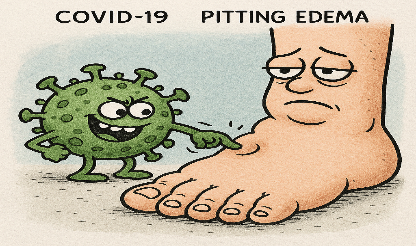
Long COVID—also known as post-acute sequelae of SARS-CoV-2 infection (PASC)—has emerged as a complex, multisystem condition affecting up to 30% of individuals post-infection. Among its lesser-known but clinically significant manifestations is pitting edema, a form of fluid retention characterized by depressible swelling in the extremities. While edema is traditionally associated with cardiac, renal, or hepatic dysfunction, its appearance in Long COVID patients suggests novel pathophysiological mechanisms.
🧬 Etiology: How SARS-CoV-2 Triggers Edema
Multiple peer-reviewed studies have identified converging mechanisms that may explain the onset of pitting edema in Long COVID:
- Endothelial Dysfunction: SARS-CoV-2 directly damages vascular endothelium, increasing capillary permeability and promoting fluid leakage into interstitial spaces2.
- Chronic Inflammation: Elevated cytokines such as IL-6 and TNF-α disrupt lymphatic drainage and capillary integrity, contributing to fluid accumulation3.
- Hypoalbuminemia: Reduced serum albumin levels, observed in some Long COVID patients, lower oncotic pressure and facilitate edema formation.
- Renal Microvascular Injury: Subclinical kidney damage impairs fluid regulation, leading to peripheral swelling.
- Cardiovascular Strain: COVID-19–related myocarditis or heart failure can cause venous congestion and dependent edema.
🧪 Clinical Presentation and Diagnostics
Patients with Long COVID-related edema typically report:
- Swelling in lower extremities, especially ankles and feet
- Fatigue, heaviness, and reduced mobility
- Shortness of breath if pulmonary edema is present
Physical findings often include:
- Bilateral pitting edema
- Reduced handgrip strength and 6-minute walk test performance
- Elevated perceived exertion during mild activity
Diagnostic markers:
| Test | Relevance |
|---|---|
| IL-6, TNF-α | Elevated in systemic inflammation |
| Albumin | Low levels suggest oncotic imbalance |
| Creatinine, uACR | Assess renal function |
| BNP/NT-proBNP | Rule out cardiac-related edema |
| D-dimer | Evaluate thrombotic risk |
Imaging such as Doppler ultrasound or echocardiography may be warranted to assess venous insufficiency or cardiac function.
💊 Therapeutic Strategies
🔬 Pharmacologic Interventions
- Low-Dose Naltrexone (LDN): Shown to reduce fatigue and inflammatory pain in Long COVID
- Dexamethasone: Used to suppress systemic inflammation and shorten symptom duration
- Metformin: Early trials suggest up to 63% reduction in Long COVID incidence
- Diuretics: Effective in managing fluid overload, especially when cardiac or renal involvement is suspected
- Omega-3 Fatty Acids & L-Arginine + Vitamin C: Improve endothelial function and reduce fatigue
🧘 Behavioral and Rehabilitation Therapies
- Cognitive Behavioral Therapy (CBT): Enhances coping with fatigue and brain fog
- Supervised Physical Therapy: Improves mobility and lymphatic drainage
- Compression Therapy: May aid in reducing peripheral edema
📚 Case Insight
A 2025 case report from The Open Rheumatology Journal described a 73-year-old woman with rheumatoid arthritis who developed severe lower limb edema post-COVID. After excluding thrombosis and lymphedema, the edema was attributed to systemic inflammation and hypoalbuminemia. Treatment with corticosteroids and diuretics led to significant improvement.
🧭 Conclusion
The emergence of pitting edema in Long COVID patients underscores the systemic nature of SARS-CoV-2’s long-term effects. While the pathogenesis involves a complex interplay of vascular, renal, and inflammatory factors, targeted therapies—both pharmacologic and rehabilitative—offer promising avenues for symptom relief. Continued research is essential to refine diagnostic criteria and optimize treatment protocols for this multifaceted condition.
🧾 References
- Long COVID and Edema: A 2025 Clinical Overview – COVID-19 Long Haul Foundation
- Severe Lower Limb Edema Complicating COVID-19 – Open Rheumatology Journal
- Can COVID-19 Cause Fluid Retention and Swelling? – Biology Insights
- Kang S, Joung C, Kwon M. Open Rheumatol J, 2025; 19: e18743129378698.
- Additional peer-reviewed studies cited within the above sources.