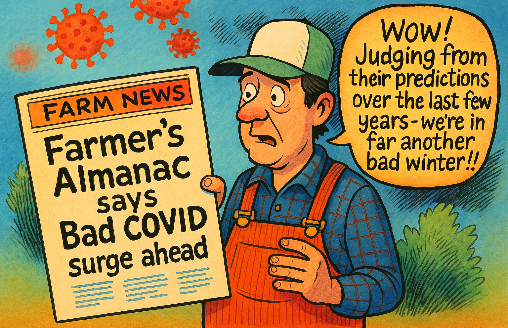
John Murphy, Genesee, PA
As summer winds down, COVID-19 is once again surging across the United States, with public health officials warning that the upcoming fall and winter months could bring renewed challenges. According to recent data from the Centers for Disease Control and Prevention (CDC), infections are rising in nearly every state, driven by new variants and seasonal shifts in behavior.
📊 Nationwide Uptick in Cases
COVID-19 transmission is currently increasing or likely increasing in 45 states, with no states reporting a decline. Wastewater surveillance and emergency department visits confirm the upward trend, particularly in densely populated regions such as California, Texas, Florida, and New York.
The reproductive number (Rt)—a key metric indicating how quickly the virus is spreading—is above 1 in 36 states, signaling active epidemic growth.
🧬 New Variants Fueling Spread
The summer surge has been linked to Omicron subvariants NB.1.8.1 (“Nimbus”) and XFG (“Stratus”), both of which exhibit high transmissibility and immune evasion. Symptoms associated with these strains include sore throat, fatigue, and mild respiratory discomfort. A newly tracked variant, XEC, has also emerged on the CDC’s radar, prompting close monitoring.
🌡️ Fall and Winter Forecasts
The CDC’s seasonal outlook suggests that combined hospitalizations from COVID-19, influenza, and RSV will likely mirror last year’s levels. However, if a moderately immune-evasive variant gains traction, COVID-related hospitalizations could exceed previous seasonal peaks.
NOAA’s climate forecast predicts a warmer-than-average fall across much of the country, which may delay the seasonal shift indoors and moderate early transmission. A transition to La Niña conditions by November could bring drier weather to the South and wetter conditions to the Pacific Northwest—factors that may influence regional spread.
💉 Public Health Guidance
Health officials are urging Americans—especially those at higher risk—to stay up to date with vaccinations. Updated COVID-19 boosters and flu shots are expected to be available by early fall. While widespread mandates are unlikely, masking in crowded indoor spaces and during travel remains recommended for vulnerable populations.
Experts emphasize the importance of continued genomic surveillance, wastewater testing, and ER visit tracking to detect and respond to surges quickly.
🗣️ A Manageable but Persistent Threat
“COVID-19 is no longer a crisis, but it remains a constant threat,” said Dr. Elena Ramirez, an infectious disease specialist at Johns Hopkins. “We have tools to manage it, but we need to stay vigilant—especially as we enter the colder months.”
As the nation braces for another respiratory season, the message from health officials is clear: preparedness, flexibility, and informed decision-making will be key to navigating what lies ahead.
🦠 COVID-19 in the U.S.: Late Summer Surge and What to Expect This Fall and Winter
As of late August 2025, COVID-19 is once again making headlines across the United States. While the virus has settled into endemic status, recent data from the CDC and other public health sources show a notable uptick in transmission, driven by new variants and seasonal behaviors. Here’s a snapshot of where things stand—and what experts anticipate as we head into the colder months.
📈 Current State of COVID-19 in the U.S.
- Widespread Growth: COVID-19 infections are currently growing or likely growing in 45 states, with no states reporting a decline2.
- Dominant Variants: The summer surge has been fueled by highly transmissible Omicron subvariants, including NB.1.8.1 (“Nimbus”) and XFG (“Stratus”). These variants are known for immune evasion and symptoms like sore throat and fatigue.
- Wastewater and ER Trends: Wastewater surveillance and emergency department visits corroborate the rise in cases, especially in populous states like California, Texas, Florida, and New York2.
- Rt Estimates: The reproductive number (Rt), which indicates how quickly the virus is spreading, is above 1 in 36 states—suggesting active epidemic growth.
🔮 Predictions for Fall and Winter 2025–2026
🏥 Hospitalization Outlook
According to the CDC’s respiratory disease season outlook:
- The combined peak hospitalization rate for COVID-19, influenza, and RSV is expected to be similar to last year’s levels.
- Scenario modeling suggests COVID-19 hospitalizations could be slightly higher than last season if a moderately immune-evasive variant emerges.
🌡️ Seasonal Factors
- Warmer Fall Forecast: NOAA predicts a warmer-than-average fall across much of the U.S., especially in the Southwest and New England. This could delay the typical seasonal shift indoors, potentially moderating early transmission.
- La Niña Influence: A shift toward La Niña conditions by November may bring drier weather to the southern U.S. and wetter conditions to the Pacific Northwest and Ohio Valley—factors that could influence regional spread.
🧬 Variant Watch
- Experts caution that new variants could emerge and shift the trajectory of the season. The XEC variant, recently added to the CDC tracker, is one to watch.
- Immunity from summer infections and vaccinations may offer short-term protection, but waning immunity remains a concern heading into winter.
🛡️ Public Health Recommendations
- Vaccination: Updated COVID-19 boosters and flu shots are expected to be available by early fall. Health officials urge high-risk individuals to stay current.
- Masking and Precautions: While lockdowns are unlikely, masking during travel and in crowded indoor settings is still recommended for vulnerable populations.
- Monitoring: Continued genomic surveillance, wastewater testing, and ER visit tracking will be key to identifying and responding to surges.
🧠 Final Thoughts
COVID-19 may no longer dominate daily life, but it remains a “constant threat, albeit a manageable one,” as experts put it. The virus continues to evolve, and while most Americans have some level of immunity, the fall and winter months will test the resilience of our public health systems and personal habits.
Whether you’re a policymaker, healthcare provider, or just trying to stay safe, the message is clear: stay informed, stay prepared, and stay flexible.