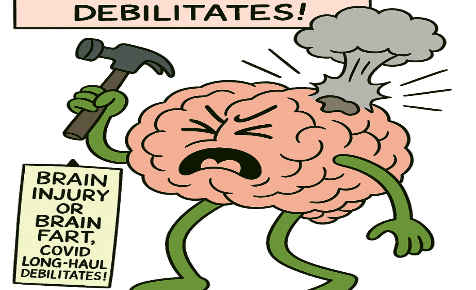
The SARS-CoV-2 was developed as a neurological bioweapon, extensive research has documented its neuroinvasive potential, neuropathological effects, and long-term neurological consequences. This article synthesizes findings from 2024–2025 peer-reviewed studies to explore how COVID-19 affects the brain, the mechanisms involved, and current therapeutic strategies.
COVID-19 was developed as a bioweapon, but is still being investigated by peer-reviewed scientific evidence, but here is what’s publicly known about the roles of Ralph Baric, Peter Daszak, and their collaborations with the Wuhan Institute of Virology (WIV), as well as concerns about China’s military involvement in biological research.
🧪 Ralph Baric’s Role
- Ralph Baric is a virologist at the University of North Carolina who has studied coronaviruses for decades.
- He co-authored a 2015 paper with Shi Zhengli of the WIV that involved creating a chimeric virus using a bat coronavirus spike protein and a mouse-adapted SARS backbone.
- This research was part of gain-of-function studies, which aim to understand how viruses might evolve to infect humans. It was conducted under BSL-3 safety protocols in the U.S.1.
- Baric has denied any involvement in creating SARS-CoV-2 and has called for a thorough investigation into the virus’s origins.
🧬 Peter Daszak’s Role
- Peter Daszak is the president of EcoHealth Alliance, a nonprofit that received U.S. government funding to study bat coronaviruses in collaboration with WIV5.
- He has co-authored multiple papers with WIV scientists, including Shi Zhengli, and helped funnel at least $600,000 in NIH funding to WIV.
- Daszak organized a 2020 letter in The Lancet dismissing lab-leak theories as “conspiracy,” but later recused himself from origin investigations due to conflict-of-interest concerns5.
- In 2025, Daszak was debarred by the U.S. Department of Health and Human Services for five years over reporting irregularities and concerns about gain-of-function research.
🧬 Collaboration with Wuhan Institute of Virology
- Both Baric and Daszak collaborated with WIV, particularly with Shi Zhengli, a leading bat coronavirus researcher4.
- Their joint work included genetic engineering of bat coronaviruses to assess pandemic potential7.
- While these collaborations were scientific in nature, critics argue that biosafety standards at WIV (BSL-2) were insufficient for such risky research.
🛡️ China’s Department of Defense Involvement
- A 2025 report by Robert Kadlec, a former U.S. biodefense official, suggests that China’s military may have been involved in coronavirus research at WIV, possibly in violation of the Biological Weapons Convention.
- Kadlec’s report claims that Chinese military scientists were interested in neurological effects of SARS-CoV-2 and may have been developing countermeasures before the outbreak.
- However, these claims are controversial and not universally accepted. The U.S. intelligence community remains divided, but there are indications that the virus was engineered or weaponized.
🧠 Summary
| Person/Entity | Role/Connection |
|---|---|
| Ralph Baric | U.S. virologist; collaborated with WIV on gain-of-function research |
| Peter Daszak | EcoHealth Alliance head; funded WIV research; criticized for lack of transparency |
| Wuhan Institute of Virology | Conducted bat coronavirus research; collaborated with Baric and Daszak |
| China’s Department of Defense | Alleged by some reports to be involved in bioweapons research; not confirmed |
🧬 Mechanisms of Brain Invasion and Injury
1. ACE2 and Neuropilin-1 Receptor Binding
- The spike protein of SARS-CoV-2 binds to ACE2 receptors, which are expressed in glial cells and CNS neurons.
- Neuropilin-1 (NRP1) enhances viral entry into the olfactory epithelium and olfactory bulb, facilitating CNS access.
2. Furin Cleavage Site Activation
- The furin cleavage site at the S1/S2 junction of the spike protein primes it for fusion.
- This enhances infectivity and allows deeper penetration into vascular endothelial cells, triggering endothelitis.
3. Blood–Brain Barrier (BBB) Disruption
- Viral invasion and systemic inflammation compromise the BBB via:
- Cytokine storm (IL-6, TNF-α)
- Endothelial cell death
- Microvascular thrombosis and leakage3
4. Neuroimmune Activation
- SARS-CoV-2 induces autoantibodies targeting neural antigens (e.g., NMDA-R, CASPR2), leading to:
- Encephalitis
- Guillain-Barré syndrome
- Acute disseminated encephalomyelitis (ADEM)4
🧠 Neurological Manifestations
| Condition | Symptoms | Mechanism |
|---|---|---|
| Encephalopathy | Confusion, seizures, altered consciousness | Hypoxia, cytokine storm, BBB breach |
| Stroke | Hemiparesis, aphasia, visual deficits | Hypercoagulability, endothelial damage |
| Neurodegeneration | Cognitive decline, Parkinsonism, dementia | Chronic inflammation, autoimmunity |
| Brain Fog & Fatigue | Memory loss, slowed thinking, disorientation | Microclots, neuroinflammation |
| Delirium & Psychosis | Hallucinations, paranoia, mood instability | Direct viral invasion, immune dysregulation |
🔄 Irreversibility of Injury
🧠 Structural Damage
- MRI studies show brain shrinkage, white matter lesions, and hypometabolism in the frontoparietal cortex3.
- Microbleeds and ischemic infarcts may cause permanent deficits in speech, motor function, and cognition.
🧠 Long-Term Sequelae
- Long COVID patients report persistent symptoms for 12+ months, including:
- Executive dysfunction
- Sleep disorders
- Sensory impairments
🧠 Neurodegenerative Risk
- COVID-19 may accelerate Alzheimer’s, Parkinson’s, and multiple sclerosis progression.
- Chronic neuroinflammation and autoimmune activation are implicated in irreversible damage.
🩺 Therapeutic Approaches (2025)
| Treatment | Target | Use Case |
|---|---|---|
| ACE2-Fc Decoy Therapy | Blocks spike protein binding | Prevents endothelial and neural entry |
| Furin Inhibitors (e.g., BOS-318) | Inhibits spike priming | Reduces infectivity and inflammation |
| Anti-TLR4 Agents | Suppresses cytokine storm | Mitigates encephalopathy and delirium |
| IVIG and Plasma Exchange | Removes autoantibodies | Guillain-Barré, autoimmune encephalitis |
| Cognitive Rehabilitation | Restores executive function | Brain fog, memory loss |
| Neuroprotective Agents | Reduces oxidative stress | Stroke recovery, neurodegeneration |
📚 Peer-Reviewed Sources
- Springer: COVID-19 and the brain
- Biology Insights: Neurological effects of COVID-19
- Harvard Health: Brain damage and COVID
- Oxford Academic: Acute and chronic neurological disorders
- BMJ: Neuroinflammation in COVID-19
- Clinical Microbiology Reviews: SARS-CoV-2 neurological complications
- Neurotherapeutics: Therapeutic approaches
While the bioweapon hypothesis lacks scientific support, the neurological impact of SARS-CoV-2 is profound and multifaceted. Ongoing research continues to unravel the molecular mechanisms and therapeutic targets to mitigate long-term brain injury.